A 145-year-old heritage building in Kelvin Grove has been given a remarkable second chance, thanks to a thoughtful restoration project by Lockhart-Krause Architects that has transformed the landmark into a specialised children’s speech therapy centre.
The building, which dates back to the 1880s, has witnessed decades of change throughout Brisbane’s history. Originally constructed during Queensland’s colonial period, it has served the community in various capacities over the years – housing everything from a confectionery shop and hotel to a private home, music store, and multiple restaurants.

Photo Credit: Christopher Frederick Jones, CFJ Photography
However, time hadn’t been kind to the structure. Years of modifications, including a Spanish Mission-style facade added during the 1930s, had hidden much of the building’s original architectural character. The sandstone brickwork, ornate window details, and classical proportions that defined its heritage value had been obscured by unsympathetic renovations.
Enter Lockhart-Krause Architects, a practice founded in 2018 that specialises in collaborative, people-focused design. Director Jesse Lockhart-Krause and his team saw an opportunity to breathe new life into the structure whilst respecting its historical significance.


Photo Credit: Christopher Frederick Jones, CFJ Photography
The renovation approach was carefully considered, balancing preservation with practical modernisation. Rather than simply restoring the building to its original state, the architects created a thoughtful dialogue between old and new. One section preserves the heritage character, whilst a contemporary addition complements the original structure’s scale, materials, and architectural rhythm.


Photo Credit: Christopher Frederick Jones, CFJ Photography
For the Brisbane Therapy Collective, the client behind the project, the transformation has exceeded expectations. The ground floor now features a welcoming reception area positioned along the original sandstone boundary wall, creating a naturally lit waiting space for families. Twelve consulting suites and staff facilities occupy the upper level, strategically positioned to maximise natural light and provide views towards Mount Coot-tha and Mount Nebo.

Perhaps most impressively, the previously dark basement has been opened up to create dedicated spaces for indoor and outdoor play therapy and music therapy sessions – crucial facilities for children’s developmental support.

The restoration work has revealed hidden gems within the building’s bones. Original sandstone walls have been exposed, timber joists that had been concealed for decades are now visible features, and a heritage brick fireplace has been lovingly restored. These historical elements now work alongside modern functional upgrades to create spaces that are both characterful and practical.


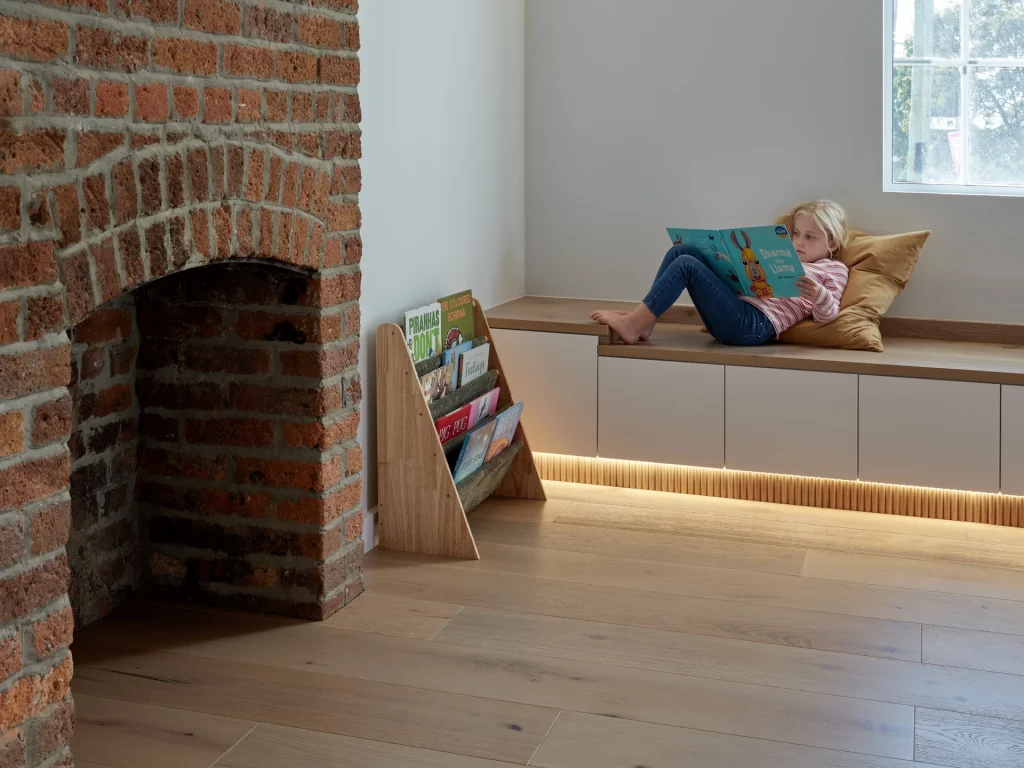
The project represents more than just an architectural achievement – it’s a model for how heritage conservation can serve contemporary community needs. By housing a children’s therapy centre, the building continues its long tradition of serving local families, whilst the sensitive restoration approach ensures its historical significance is preserved for future generations.

Lockhart-Krause Architects describes their philosophy as architecture “focused on people”, and this project exemplifies that approach. The collaboration between architects, builders Charles Warren Constructions, and the Brisbane Therapy Collective demonstrates how heritage buildings can be successfully adapted for modern healthcare delivery.
For Kelvin Grove residents, the project signals positive change in their neighbourhood. The building once again stands as a proud example of Brisbane’s architectural heritage, whilst providing essential services for local families. It’s a reminder that our historic buildings don’t need to be museum pieces – with thoughtful design, they can continue to play active roles in community life.
The success of this adaptive reuse project offers hope for other heritage buildings facing uncertain futures. It proves that with vision, collaboration, and respect for history, Brisbane’s architectural treasures can continue to serve new generations whilst maintaining their connection to the past.
Published 30-July-2025