



Paddington occupational therapist Rebecca Khan has been seeing a pattern that often surprises parents. Children who can run, play and follow classroom routines are still refusing to use the school toilet.
Ms Khan, a senior occupational therapist and founder of Kids That Go, has spent years working with families dealing with toileting struggles. She has noticed more children arriving at school without the confidence to use public bathrooms, leading many to hold on until they get home.
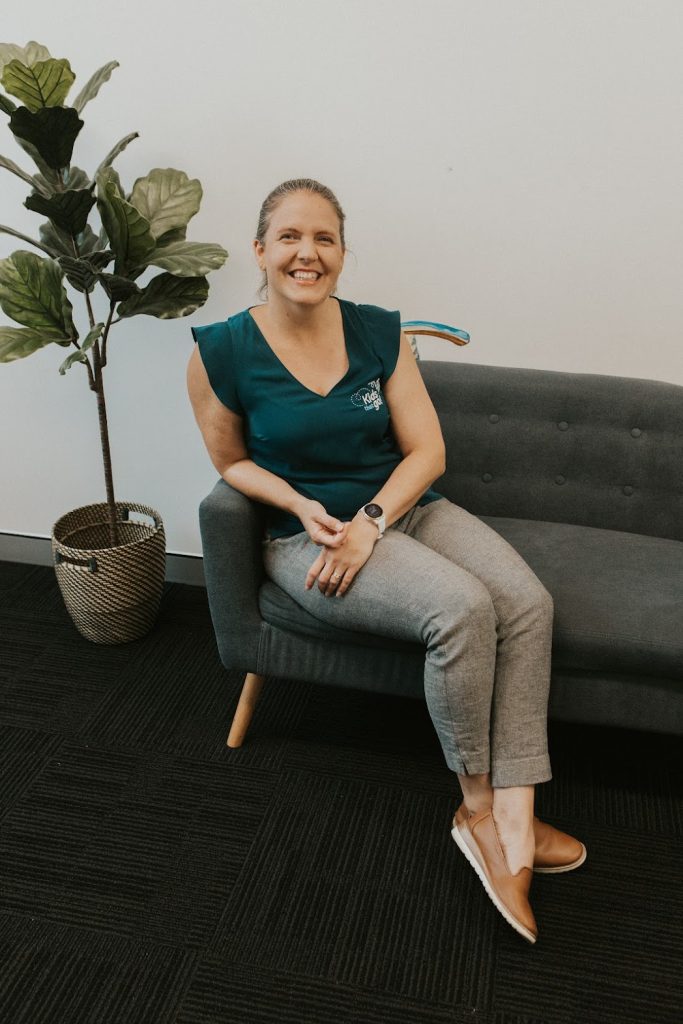
Photo Credit: Supplied
A daily struggle that follows children into the classroom
For many children, the school day includes a silent effort to ignore the body’s signals. Ms Khan has observed that some children are so used to holding on that they begin to lose their natural awareness of when they need to go.
This pattern is reflected in recent research commissioned by Kleenex Australia, which found that almost half of children aged three to eight have held in a bowel movement during the school day. A significant number also report feeling stressed or overwhelmed when faced with using a public toilet.

Teachers are noticing it too. Many report seeing children hesitate or avoid the bathroom several times a week, and in some cases, accidents occur after long periods of holding on. The issue is not limited to younger students, with primary school teachers also reporting similar behaviours.

School bathrooms can feel unfamiliar and confronting
The reasons are often simple, but powerful. School toilets can feel different from home. They may be noisier, less private, or harder to keep clean throughout the day.
Children also face social pressures. Some worry about being teased, while others are too focused on playtime or classroom activities to stop and go. For many, it comes down to feeling safe.
Parenting expert Genevieve Muir explains that children need to feel calm and secure before their body can relax enough to do a poo. When a child feels unsettled or rushed, the body tends to tense, making it harder to go.



“For many kids, this is simply about safety. Pooing is a biological process, and like sleep and eating, the body needs to feel calm and secure in order to do it. School is a different environment, and for some children, it takes time to feel comfortable enough.”
Parents feel stuck between concern and embarrassment
At home, parents are often left trying to manage the situation without clear answers. Many say their child refuses to use public toilets, even after toilet training has been completed.
Research shows a large number of parents are unsure how to build their child’s confidence in this area. Some feel uncomfortable raising the topic with other parents, while others worry about how accidents might be viewed at school.
This hesitation can make the issue harder to address. When conversations around toileting are avoided, children may pick up on that discomfort and feel the same way.
A children’s book aims to change the conversation
To help families navigate this stage, Kleenex has partnered with Jessica Rowe to create a children’s book called I Can’t Wait! My First School Poo.
The book, available through early learning centres, libraries and allied health services, uses simple storytelling to help children understand that going to the toilet at school is a normal part of growing up. It was developed with input from experts, including Genevieve Muir, to give parents and educators a shared way to talk about the topic.
The aim is to make these conversations feel ordinary rather than awkward. By using humour and familiar situations, the story encourages children to feel more at ease with their bodies.

Building confidence takes time and support
Ms Khan’s work in Paddington shows that most children move through this phase with the right support. Small steps, such as helping children feel connected and relaxed during the school day, can make a difference.
Over time, as children become more familiar with their environment and routines, their confidence tends to grow. For many families, the breakthrough comes unexpectedly, when a child finally feels ready and manages their first school bathroom visit.
The experience may not be widely discussed, but it is one shared by many. With more open conversations and practical support, both parents and educators are working towards making it a more comfortable part of childhood.
Published 24-April-2026