


Worst House in One of the Best Streets in Auchenflower Gets Epic Renovation

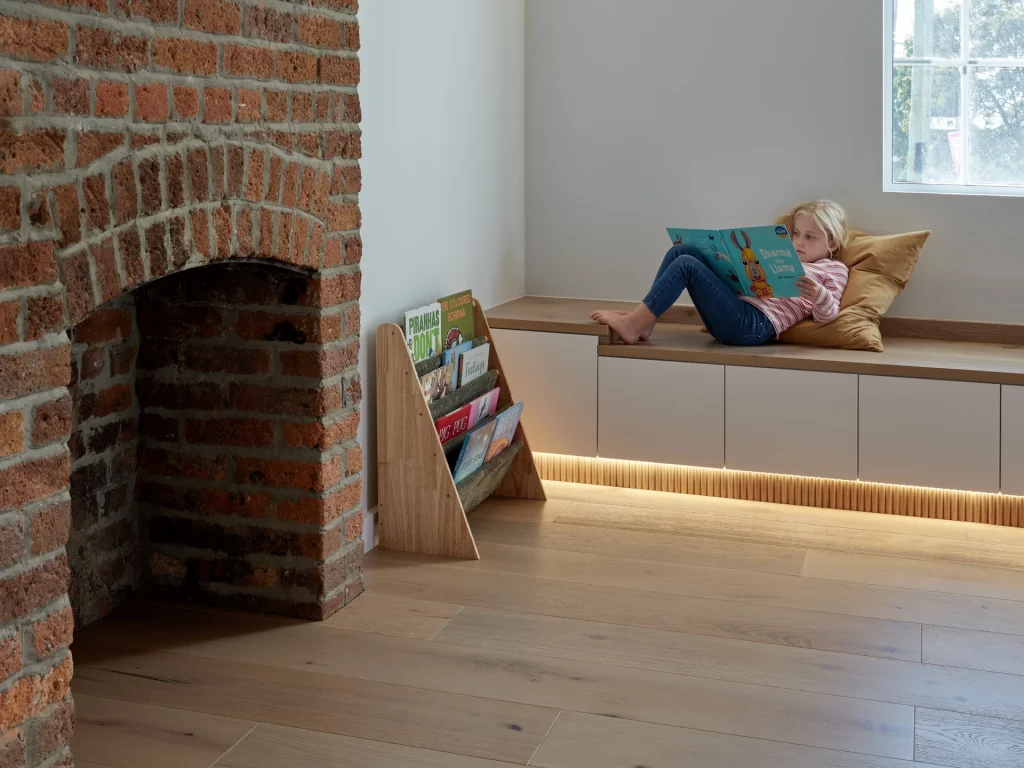
The worst house on one of the most coveted streets in Auchenflower has been transformed into a luxury residence after a mammoth renovation that tested the limits of a local family’s determination and budget.


Photo Credit: Tim Douglas

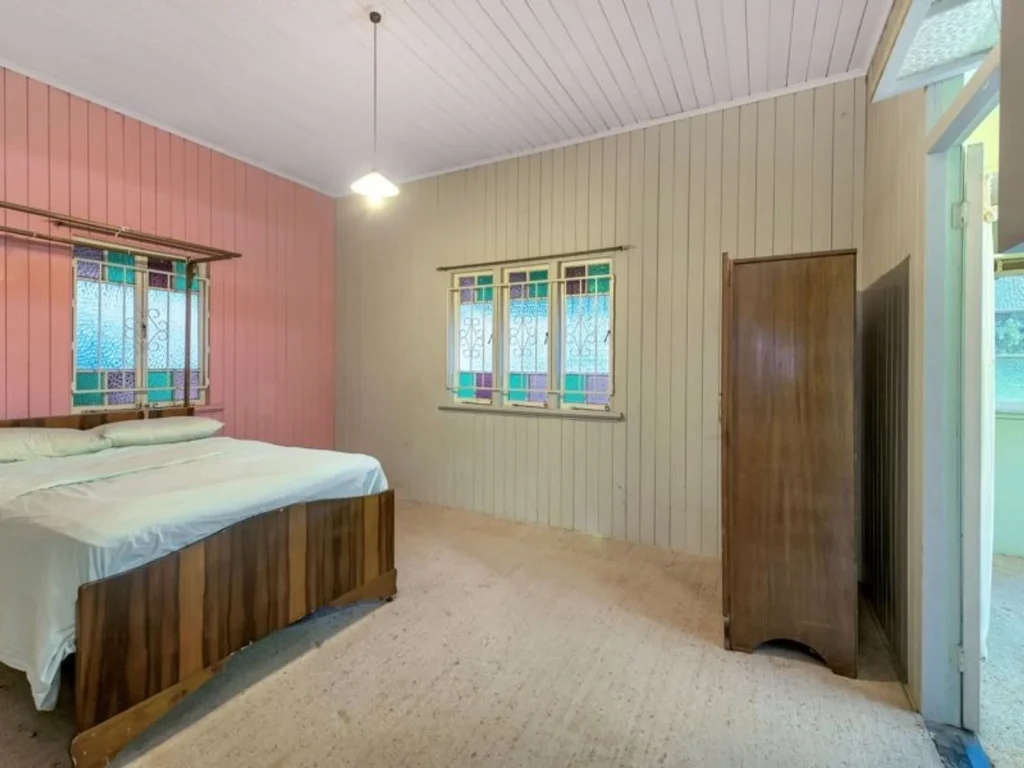
Anita and Paul Brown purchased the dilapidated property at 112 Annie Street for $1.45 million in 2021, drawn by its prime location despite its shocking condition. The house literally shook when walked through, featured dated pink and green decor, and harboured a backyard overrun with native monsteras sheltering countless huntsman spiders.
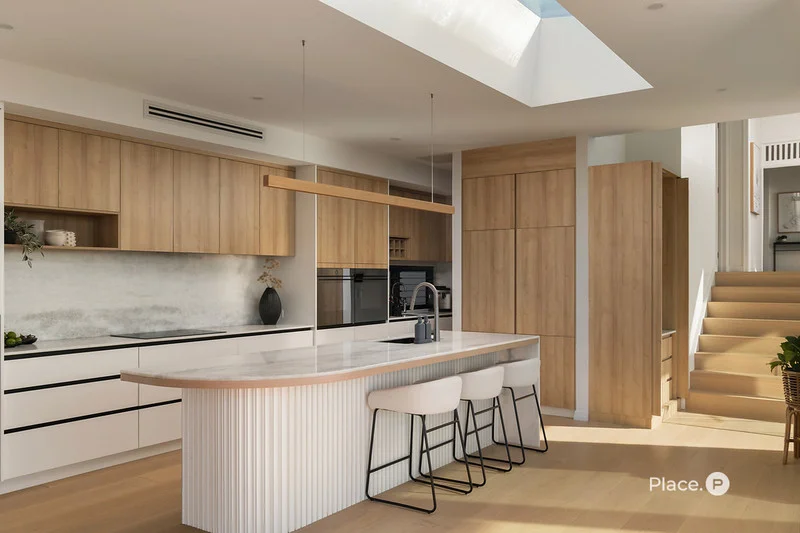
Three years and approximately $5 million later, the home now called Aura has been reborn as a three-level residence featuring six bedrooms, four bathrooms, a pool, wine cellar, and a self-contained granny flat. The renovation was completed over 18 months, with the original house raised and relocated on the block.

“It was honestly so dodgy. Back then my husband was a big guy, weighing about 140 kilograms and the whole place shook when he walked through it,” Mrs Brown said.
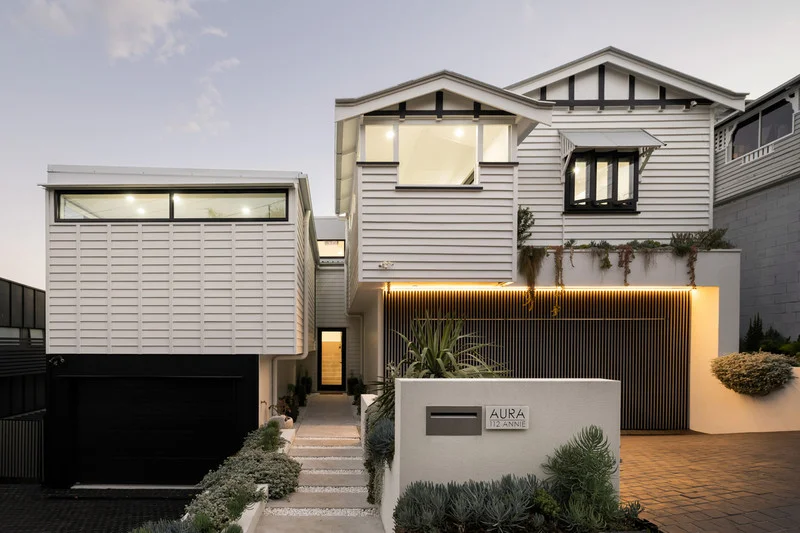
The couple, who have two young children, saw potential where others saw problems. The property was one of the last unrenovated homes on the street, and its position just three houses from the top made it particularly attractive.
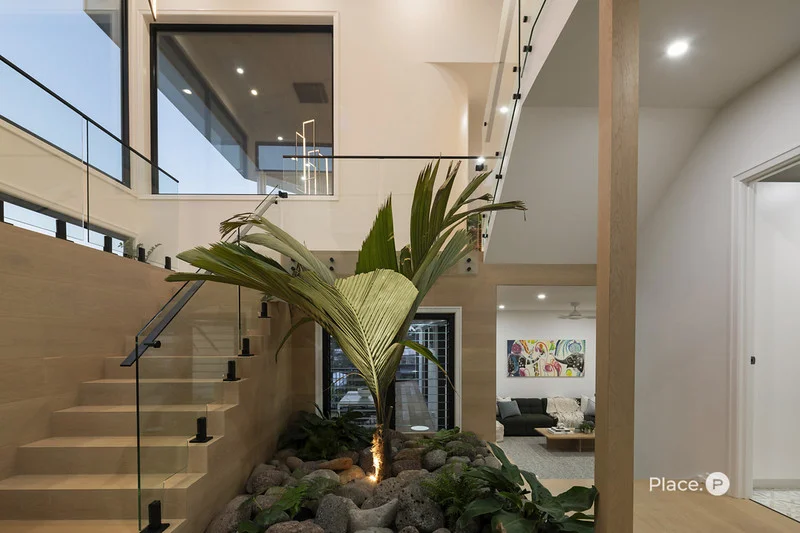
To better understand the property before beginning work, the Browns moved into the rundown house for 12 months, studying how the sun moved across the site and where breezes came through. This informed their decision to install an entire wall of double-glazed glass along the eastern side to maximise the Brisbane city views.

The sloping block presented the biggest technical and financial challenge, with substantial money invested in retaining walls that remain hidden but essential to the home’s structural integrity.
Mr Brown took on the monumental task of clearing the monstera jungle by hand to make way for construction, an effort his wife describes as “the most epic thing ever”. The physical demands of the project saw Mr Brown’s weight drop from 140 kilograms to around 90 kilograms.
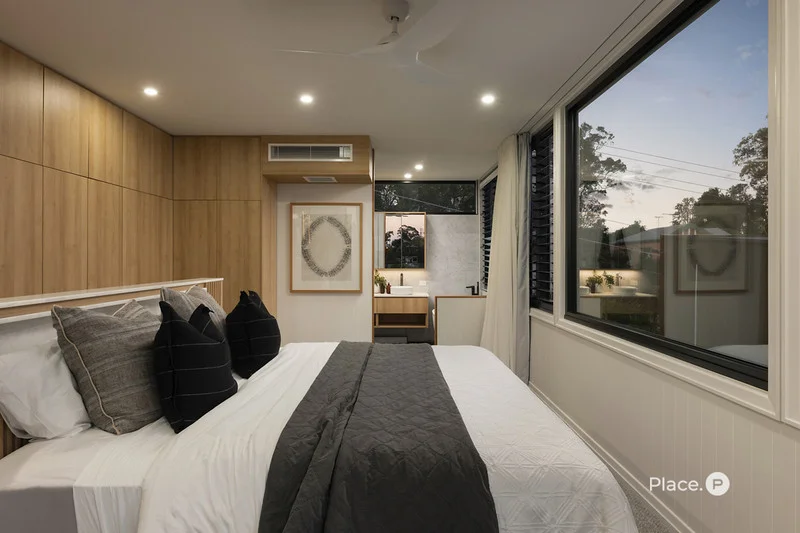
The renovation budget blew out significantly due to pandemic-related delays, soaring construction costs, and extensive custom ordering including bespoke windows. Turkish marble was hand-selected by Mr Brown on an overseas trip, adding to the home’s luxury finishes which include rainfall showers and multiple living areas.

To fund the project, the Browns liquidated three other investment properties. Mrs Brown, who bought her first house at 19 in Lismore for $100,000 while still studying, has built a substantial property portfolio over the years through strategic purchases and renovations.
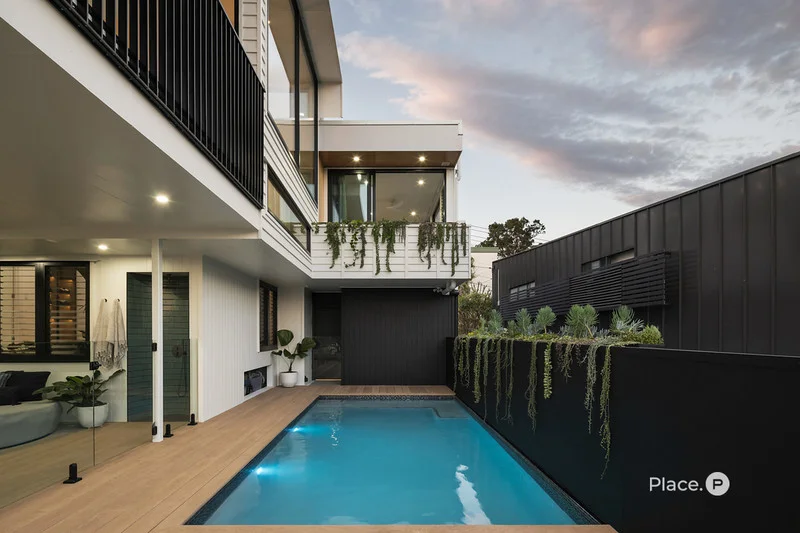
The home is now listed for best offer by 1 November through Place Nundah’s Thomas Coussens and Place Ascot’s Drew Davies. While the agents haven’t disclosed a specific price expectation, the total investment of approximately $6.45 million provides an indication of the property’s value.
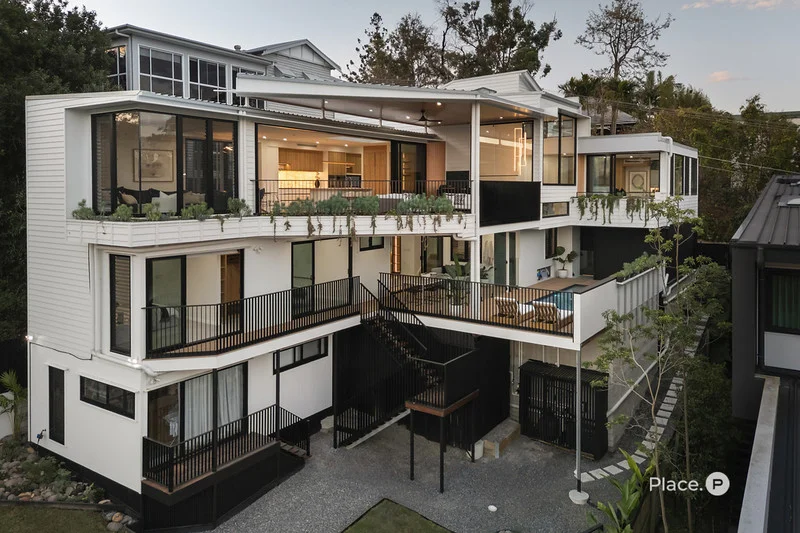
Mr Davies said the renovation quality surpasses anything he’s seen in the market, with strong interest from both interstate and local buyers following a pre-sale social media campaign.

Mrs Brown’s property advice, which she plans to pass on to her daughters Olivia, 11, and Penelope, 6, is straightforward: “Buy the biggest block of land you can afford as close the city as possible. It’s all about land banking now.”


Despite the enormous effort invested in creating what she calls “the ultimate family home”, Mrs Brown acknowledges it will be difficult to hand over the keys when the property sells.

Published 12-October-2025

145-Year-Old Kelvin Grove Landmark Transformed into Speech Therapy Hub

A 145-year-old heritage building in Kelvin Grove has been given a remarkable second chance, thanks to a thoughtful restoration project by Lockhart-Krause Architects that has transformed the landmark into a specialised children’s speech therapy centre.


The building, which dates back to the 1880s, has witnessed decades of change throughout Brisbane’s history. Originally constructed during Queensland’s colonial period, it has served the community in various capacities over the years – housing everything from a confectionery shop and hotel to a private home, music store, and multiple restaurants.

252 Kelvin Grove Rd before renovation
Photo Credit: Christopher Frederick Jones, CFJ Photography

However, time hadn’t been kind to the structure. Years of modifications, including a Spanish Mission-style facade added during the 1930s, had hidden much of the building’s original architectural character. The sandstone brickwork, ornate window details, and classical proportions that defined its heritage value had been obscured by unsympathetic renovations.

Enter Lockhart-Krause Architects, a practice founded in 2018 that specialises in collaborative, people-focused design. Director Jesse Lockhart-Krause and his team saw an opportunity to breathe new life into the structure whilst respecting its historical significance.

252 Kelvin Grove Rd after renovation, now housing Brisbane Therapy Collective’s office
Photo Credit: Christopher Frederick Jones, CFJ Photography

The renovation approach was carefully considered, balancing preservation with practical modernisation. Rather than simply restoring the building to its original state, the architects created a thoughtful dialogue between old and new. One section preserves the heritage character, whilst a contemporary addition complements the original structure’s scale, materials, and architectural rhythm.

252 Kelvin Grove Rd after renovation, now housing Brisbane Therapy Collective’s office
Photo Credit: Christopher Frederick Jones, CFJ Photography

For the Brisbane Therapy Collective, the client behind the project, the transformation has exceeded expectations. The ground floor now features a welcoming reception area positioned along the original sandstone boundary wall, creating a naturally lit waiting space for families. Twelve consulting suites and staff facilities occupy the upper level, strategically positioned to maximise natural light and provide views towards Mount Coot-tha and Mount Nebo.

Photo Credit: Christopher Frederick Jones, CFJ Photography

Perhaps most impressively, the previously dark basement has been opened up to create dedicated spaces for indoor and outdoor play therapy and music therapy sessions – crucial facilities for children’s developmental support.

Photo Credit: Christopher Frederick Jones, CFJ Photography

The restoration work has revealed hidden gems within the building’s bones. Original sandstone walls have been exposed, timber joists that had been concealed for decades are now visible features, and a heritage brick fireplace has been lovingly restored. These historical elements now work alongside modern functional upgrades to create spaces that are both characterful and practical.

Photo Credit: Christopher Frederick Jones, CFJ Photography

The project represents more than just an architectural achievement – it’s a model for how heritage conservation can serve contemporary community needs. By housing a children’s therapy centre, the building continues its long tradition of serving local families, whilst the sensitive restoration approach ensures its historical significance is preserved for future generations.

Photo Credit: Christopher Frederick Jones, CFJ Photography

Lockhart-Krause Architects describes their philosophy as architecture “focused on people”, and this project exemplifies that approach. The collaboration between architects, builders Charles Warren Constructions, and the Brisbane Therapy Collective demonstrates how heritage buildings can be successfully adapted for modern healthcare delivery.

For Kelvin Grove residents, the project signals positive change in their neighbourhood. The building once again stands as a proud example of Brisbane’s architectural heritage, whilst providing essential services for local families. It’s a reminder that our historic buildings don’t need to be museum pieces – with thoughtful design, they can continue to play active roles in community life.


The success of this adaptive reuse project offers hope for other heritage buildings facing uncertain futures. It proves that with vision, collaboration, and respect for history, Brisbane’s architectural treasures can continue to serve new generations whilst maintaining their connection to the past.

Published 30-July-2025

Historic Paddington Cottage Gains New Life After Renovation

A pre-1900s Paddington cottage has been transformed through careful renovation rather than expansion, proving the enduring value of preserving heritage homes.


Photo Credit: SPACE Property

Partners Elizabeth Hall and Ruairi Roberts, co-directors of Hall + Roberts Studio, approached their own home renovation with both professional expertise and personal passion. Their goal extended beyond improving their living space—they wanted to demonstrate how smaller, older homes can be revitalised without sacrificing character or comfort.

Photo Credit: SPACE Property

“We hope to prove through this project that small and rundown housing stock isn’t a wasted investment,” Roberts explained in the original reporting. “These houses often get overlooked, knocked down and replaced with oversized echo chambers to the detriment of our neighbourhood’s character.”

Photo Credit: SPACE Property

The couple made strategic changes to maximise space without extending the home’s footprint. They removed the rear deck and low tin roof, replacing them with a large sliding door and Juliette balcony that dramatically increased natural light throughout the home.

Photo Credit: SPACE Property

“The natural light this immediately introduced was critical to the success of the new layout,” Hall noted.

In a thoughtful reconfiguration, they swapped the positions of the living area and kitchen, enabling better connection between the kitchen and outdoor spaces while enhancing privacy. Rather than dedicating space to a formal dining area, they installed an oversized concrete island bench that serves dual purposes as both dining table and work surface.

Photo Credit: SPACE Property

The renovation also included a colour refresh, replacing what was described as a “’90s palette” of pale purple, burgundy, and light blue with a more cohesive scheme featuring Dulux Whisper White, Mildura, and Black accents.


Outside, the removal of the rear deck revealed enough space for a sunken courtyard, which the couple transformed into a subtropical garden sanctuary. The front yard was also redesigned with a more open boundary to enhance connection with neighbours.

Published 8-April-2025

Red Hill Renovation Wins Australian House of the Year

A Red Hill couple’s decade-long renovation project has been crowned Australian House of the Year at the 2024 Houses Awards.

Photo Credit: zuzana&nicholas


Zuzana Kovar and Nicholas Skepper transformed a 113-year-old worker’s cottage into a modern, multi-functional home that impressed judges with its innovative use of space and environmental considerations.


The couple purchased the two-storey property on a corner block in 2011, attracted by its potential for both living and working spaces. “We always imagined that’d be a great spot for an architecture studio,” Skepper said, referring to the revealed understorey on the side street.


Working within a compact 200 square metres, Kovar and Skepper made clever design choices to maximise the home’s functionality. They swapped living and bedroom areas to optimise natural light and ventilation, a simple yet effective change that significantly improved the home’s livability.

The renovation focused on flexible spaces, with the largest room serving as both an office and additional living area. “Our studio table doubles as a dining table for a large group,” Skepper explained, highlighting the home’s adaptability for various occasions.


Houses Awards head juror Alexa Kempton praised the design for its efficient use of space and its response to the evolving nature of work. The home successfully integrates professional and personal life while maintaining appropriate separation between spaces.


Contrary to the trend of maximising built area, the Red Hill renovation preserved the backyard, offering a valuable outdoor space for the couple’s young children. Large sliding glass doors create a seamless indoor-outdoor connection without sacrificing garden area.

Photo Credit: zuzana&nicholas


The project also emphasised sustainable practices, retaining original materials and recycling items where possible. This approach, combined with the preservation of green space, addresses growing concerns about urban density and environmental impact in Brisbane’s inner suburbs.

Published 2-August-2024