




Paddington’s reputation for antiques and vintage finds has been built over decades, but one address on Latrobe Terrace has played an outsized role: a former suburban picture theatre that became an antiques centre in 1985.
Today it is Empire Revival. For decades before that, generations of Brisbane shoppers knew it as the Paddington Antique Centre.
Its arrival helped cement an antiques identity along a strip that had already been serving Paddington shoppers for generations.
Before the Antiques Came the Shopping Strip
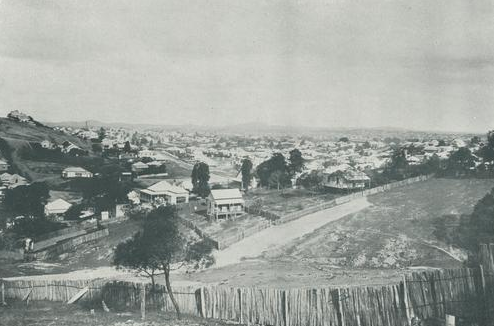
Given and Latrobe Terraces developed alongside Paddington as the suburb grew in the late 19th century.
The tram line reached Paddington in 1898, helping drive residential development and strengthening the terraces as the suburb’s main commercial route.

By the early 20th century, shops and other businesses were well established along the strip.

One of its biggest landmarks arrived at the end of the 1920s.
From Picture Palace to Empty Auditorium
The Plaza Theatre was built on Latrobe Terrace in 1929 and opened as a cinema during the early years of talking pictures.
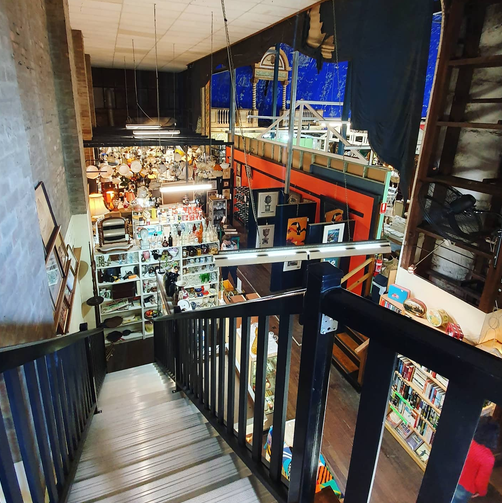
It was an unusual suburban theatre. Designed as an “atmospheric” cinema, its auditorium evoked an outdoor setting, with a blue ceiling and decorative elements suggesting a Spanish courtyard.


The Plaza became a popular local meeting place, but television changed Brisbane’s cinema business in the late 1950s. Audiences dwindled and the Plaza stopped operating as a cinema in 1961.
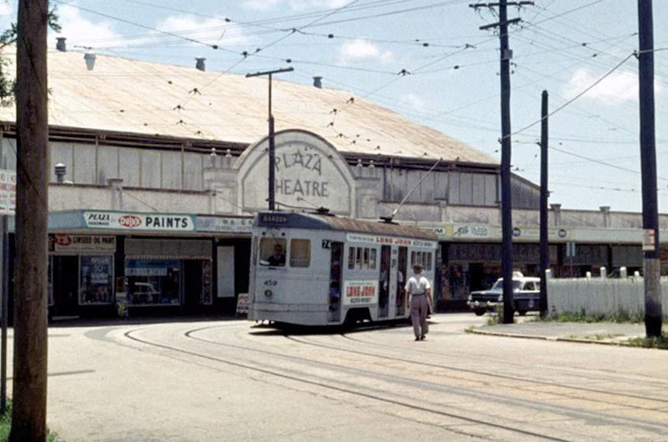
A level floor was installed and the auditorium became an indoor basketball venue. That use ended in 1968, and the building subsequently spent years mostly vacant or in other uses.
Then came the change that would reshape its identity.
Antiques Move Into the Plaza
The Paddington Antique Centre opened in the former theatre in 1985.
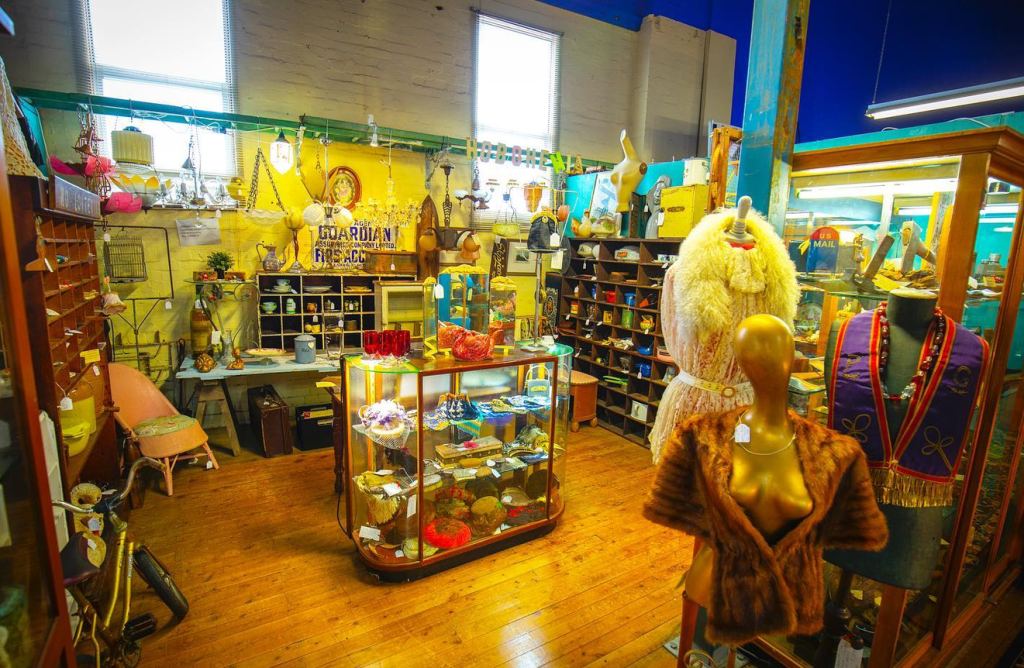
Its scale set it apart. Instead of a conventional antique shop, numerous independent dealers could trade within the old auditorium, bringing furniture, jewellery, collectables and other vintage pieces together under one roof.
The building itself became part of the attraction.
Its former stage, decorative details and cavernous auditorium provided a setting suited to merchandise drawn from earlier eras.
Paddington now had a large antiques destination on its established shopping strip.
[PHOTO: Interior of former Plaza Theatre operating as an antiques centre]
A Reputation That Stuck
Over the following decades, antiques, vintage goods and speciality retail became closely associated with Paddington’s shopping identity.
The former Plaza became the most visible symbol of that connection.
Its significance extends beyond retail. The former theatre was entered on the Queensland Heritage Register in 2003, recognised in part as a rare surviving example of a suburban atmospheric cinema.
The antiques business also survived changes in ownership and name.
In 2008, Suzy Baines took over the Paddington Antique Centre. It later became Empire Revival, broadening its mix beyond traditional antiques.
Today, the approximately 1,000-square-metre space houses more than 50 small businesses, including antique dealers alongside jewellers, artisans, collectors and interior specialists.
More Than 40 Years of Antiques
Paddington’s reputation was not created by a single shop.
Given and Latrobe Terraces had already been commercial streets for generations, and the suburb’s retail mix has continued to change.
But the conversion of the Plaza Theatre in 1985 provided antiques with a prominent and enduring home.
More than 40 years later, people are still browsing old furniture, jewellery, collectables and vintage pieces beneath the remnants of a theatre built for an entirely different era.
For a suburb known for giving old things another life, the building itself may be the best example.
Published 10-August-2026

