



Queensland Parliamentary Inquiry Recommends New Restrictions on E-Bikes and E-Scooters

A parliamentary inquiry into e-mobility safety has recommended that riders under 16 be banned from operating e-bikes and e-scooters in Queensland, that all riders hold at least a learner’s licence, and that devices capable of exceeding 25km/h be reclassified as motorcycles — recommendations that AMA Queensland, whose head office sits in Kelvin Grove, has formally welcomed as measures that will save lives.


The inquiry, tasked in May last year with investigating safety issues including increasing crashes, injuries and fatalities, released its report in early March 2026 containing 28 recommendations across safety, lithium-ion battery fire risk, retail of devices, enforcement and community education. The recommendations represent what the inquiry described as a new national standard for the management of e-scooters and e-bikes.

What Prompted the Inquiry

The scale of the problem drove the inquiry’s formation. In 2025, 12 Queenslanders died in e-mobility-related incidents, including children, and more than 6,300 people presented to emergency departments with injuries. AMA Queensland described most of those incidents as likely preventable.

The human cost of the current regulatory environment is reflected in the inquiry report itself, which personally names eight-year-old Zeke Hondow, who died in October 2025 after being struck by a high-powered e-motorcycle while riding home from school on the Sunshine Coast. His mother Kloe Weedon began advocating for age limits within weeks of his death and welcomed the report’s recommendations, describing the proposed changes as significant and expressing hope they would be adopted swiftly.

The 28 Recommendations at a Glance

The inquiry’s central recommendation is that e-bikes and personal mobility devices be restricted to riders aged 16 and over. Alongside the age restriction, all riders would be required to hold at least a Queensland Class C learner licence, which requires completion of an online learning programme. The age and licence requirements would not apply to e-wheelchair users.

Inquiry on new restrictions for e-mobility devices
Photo Credit: Andrew Quilty

On speed, the inquiry recommends reducing the footpath speed limit for all e-mobility devices to 10km/h. Devices with a top speed above 25km/h would be reclassified as motorcycles or mopeds, requiring riders to hold an appropriate driver’s licence, the vehicle to be registered, and use restricted to roads only. The inquiry also recommends that all e-mobility devices with an electrical power source be defined as motor vehicles under legislation, simplifying enforcement.

Additional recommendations include giving police the power to seize and impound illegal e-mobility devices on a first offence, including the ability to dispose of or destroy a device. Parents and guardians would be liable for penalties when children under 16 breach e-mobility regulations. Riders would also be subject to the same alcohol and drug rules that apply to other road users.

On infrastructure, the inquiry recommends embedding e-mobility into strategic transport planning through high-quality, connected and separated pathway networks, and a community safety campaign rollout for riders, drivers and the broader community.

AMA Queensland’s Response

AMA Queensland, based at Kelvin Grove, made a formal submission to the inquiry in June 2025 and appeared at hearings in August last year. The organisation had been advocating for an under-16 ban well before the report’s release, writing to transport authorities in November 2025 urging action ahead of the inquiry’s findings.

AMA Queensland president Dr Nick Yim said the recommended age restriction was a sensible and responsible outcome. He noted that 16 is the age at which Queenslanders begin learning to drive, acquiring road rules knowledge and developing the awareness needed to share roads safely. Yim said emergency doctors had treated significant injuries in paediatric and adolescent patients whose consequences extended beyond the individuals to their families, friends and treating clinicians over the long term.

Yim also welcomed the recommended speed reclassification threshold, the alcohol and drug rules alignment and the infrastructure recommendations. AMA Queensland has advocated for active travel infrastructure improvements, particularly around schools, parks and hospitals, and sees e-mobility as having a genuine role in affordable transport access, physical activity and emissions reduction — provided it operates within a safe regulatory framework.

Bicycle Queensland chief executive Matt Burke supported the age restriction but raised concerns about the licence requirement, arguing it was without precedent internationally and would significantly affect food delivery riders and tourists using hire schemes.

Why These Restrictions Benefit the Paddington and Kelvin Grove Community

The Paddington and Kelvin Grove area sits within a dense inner-Brisbane corridor where e-scooters and e-bikes share footpaths, bike lanes and roads with pedestrians, cyclists and school students. The proposed restrictions address the specific conditions that produce the most serious injuries: young riders without road rules training, devices travelling at speeds incompatible with shared path use, and no enforceable consequence for illegal devices.
Photo Credit: mPGC / Facebook

A footpath speed limit of 10km/h, combined with the reclassification of high-powered devices as motorcycles, directly reduces the risk to pedestrians on the busy shared paths that run through Paddington, Kelvin Grove and the surrounding inner west. The licence requirement, if adopted, ensures that riders on local streets have at minimum completed Queensland’s online road rules programme before operating a device in traffic.

For families in the area, the parental liability provisions mean that the consequences of a child riding illegally extend to adults in a position to prevent it — creating a practical incentive for households to understand and follow the new rules. For the broader community, reinvestment in dedicated cycleways and separated pathways, as recommended by the inquiry, would reduce the conflict points between e-mobility users and pedestrians that currently make shared paths hazardous.

What Happens Next

The recommendations are not yet law. The report has been tabled and is under review, with implementation of paid parking and resident permits possible in late 2026 and into 2027 subject to that process. The full report and its 28 recommendations are available through the Queensland Parliament website. AMA Queensland’s statement on the report is available here.


Published 6-March-2026.

Local Cybersecurity Worker Still Missing as Torture Charges Laid

The search for a missing Kelvin Grove cybersecurity worker has taken a disturbing turn, with police charging two men with torture as investigations continue across multiple locations in Queensland.


Andrew Burow, 56, vanished from his Lorimer Terrace home on August 20, though his disappearance wasn’t reported to police until four days later on August 24. The father and cybersecurity professional has been living in the inner-Brisbane suburb for nine years, close to the Queensland University of Technology campus.

Police have now charged 38-year-old Anthony Perrett and 26-year-old Billy Howard with torture in connection with Mr Burow’s disappearance. Both men faced Maroochydore Magistrates Court earlier this week, with proceedings adjourned.

The investigation has rapidly expanded beyond Brisbane, with Queensland Police establishing an incident centre under Operation Veer. Crime scenes have been declared at multiple properties, including Mr Burow’s Kelvin Grove home and locations on the Sunshine Coast.

Forensic teams have been conducting extensive searches at a Kokoda Avenue property in Bli Bli, with neighbours reporting concerning observations. Local residents recalled seeing a fire burning at the property early Tuesday morning that appeared unusually dark and carried the smell of chemicals.

The investigation has extended to rural areas, with additional crime scenes declared at Black Pinch Road in Pomona and Kamala Drive in nearby Lake MacDonald, both locations inland from Noosa.

Detective Acting Superintendent Craig Williams confirmed police are working around the clock to locate Mr Burow. According to police sources cited by Queensland Police, the disappearance is considered completely out of character for the 56-year-old, prompting serious concerns from both investigators and family members.

Mr Burow works as a cybersecurity manager and has extensive experience as a project manager across various companies, holding qualifications in IT and management. Property records show he owns multiple properties in the Brisbane area.

Before his disappearance, Mr Burow had contacted a real estate agent about potentially selling his house, though the significance of this action remains unclear in the investigation.

Friends who spoke to media outlets described Mr Burow as genuinely friendly and someone who cared deeply about people. They expressed hope he would be found safe.

A neighbour in Kelvin Grove told media she found it concerning that she hadn’t seen Mr Burow around recently, noting the family she lives with also hadn’t heard anything.

Police describe Mr Burow as Caucasian with a fair complexion, sandy to reddish hair, and bluish-green eyes.

Brisbane Region Crime Coordinator Detective Acting Superintendent Craig Williams emphasised the thoroughness of the investigation, with officers remaining committed to working continuously until Mr Burow is located.

The Kelvin Grove community, known for its proximity to QUT and mix of students and long-term residents, has been following developments closely as the investigation unfolds.


Anyone with information about Mr Burow’s whereabouts is urged to contact Queensland Police immediately.

Published 28-August-2025

Queensland Ballet Offers Free Boys-only Classes to Boost Male Participation

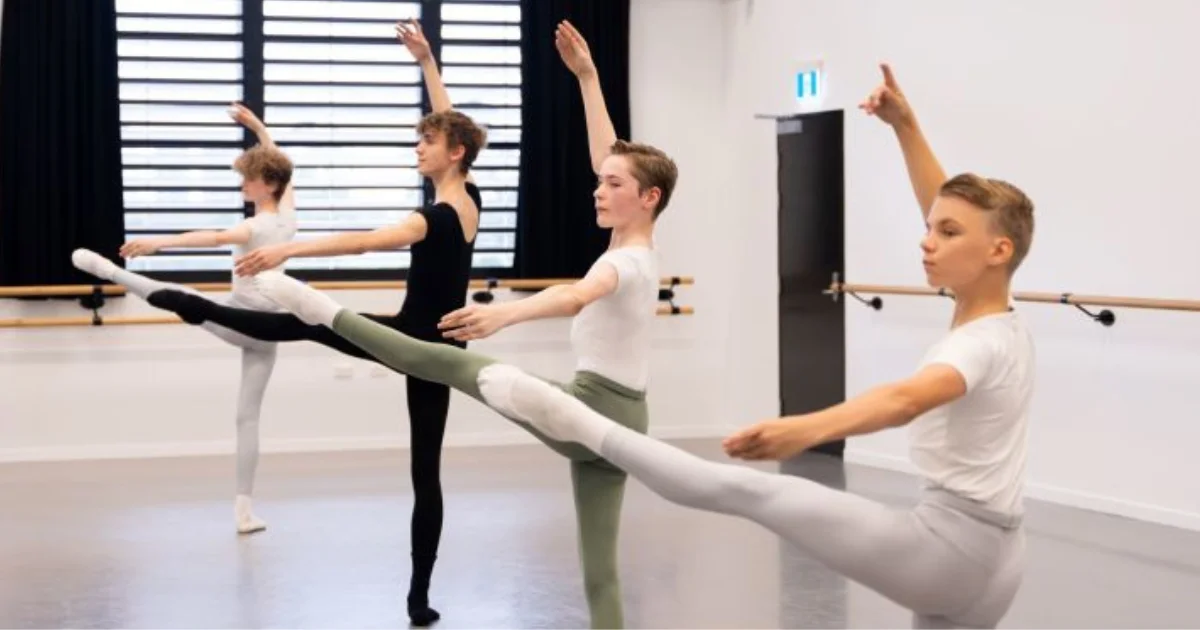
Queensland Ballet is offering free weekly ballet classes for boys in a bid to boost male participation in the artform and challenge lingering stereotypes.


Read: Queensland Ballet Academy In Kelvin Grove Receives $10 Million Funding for Expansion Plan


The Ballet Boys Project, open to boys aged 11 to 14, runs at Queensland Ballet’s West End studios and the Academy at Kelvin Grove. The second semester of the boys-only program began on 16 July 2025. No fees, uniforms or auditions are required, with organisers aiming to remove barriers that may stop boys from trying ballet.

Queensland Ballet
Photo credit: Queensland Ballet

Students who join the classes train with professional male teachers, focus on male-specific ballet technique, and practise in purpose-built studios. The boys-only format also gives them the chance to build friendships with peers, many of whom were previously the only male in their local ballet schools.

For 12-year-old Lucas, one of the students, the classes began as a way to improve his hip hop but quickly turned into a genuine love for ballet. Alfred, 13, who once danced as the only boy in his town’s school, said it has been a welcome change to learn alongside others his age and to pick up skills from them as well.

Photo credit: Queensland Ballet

Beyond dance skills, the program is designed to support physical and personal development. Boys gain strength, flexibility, and coordination that can complement other sports, while also building resilience and confidence. The mentoring from experienced male dancers helps them see ballet as a pathway that values athleticism as much as artistry.

Queensland Ballet says the initiative is part of a wider effort to address the global decline in male dancers, which it sees as a sustainability issue for the artform. By making ballet more accessible, the company hopes to ensure stronger participation from boys and men in the years ahead.


Read: Stage Career of Sarah Bakker Traces Back to Kelvin Grove


Some students take part to improve coordination and fitness for other sports, while others are pursuing ballet more seriously. Across the board, participants are benefiting from the focus on strength, power and athleticism — qualities that highlight ballet as a discipline demanding as much rigour as any sport.

Published 28-August-2025

Kelvin Grove Students Shine Bright in CGEN 2025

When the lights rose at the Brisbane Convention and Exhibition Centre for Creative Generation – State Schools Onstage 2025 (CGEN 2025), audiences witnessed more than just music and movement. 


Read: Paddington Theatre Couple Belinda and Michael Lewis Reunite Onstage in Powerful New Musical


They experienced the hard work and passion of more than 2,000 students from across Queensland. Among them were standout participants from Kelvin Grove State College, each bringing their own flair and determination to the stage.

CGEN 2025
Photo credit: Kelvin Grove State College/Facebook

Archie Loveland

As a Year 8 solo featured instrumentalist, Archie Loveland took on one of the most visible roles in the production. Playing in front of a full orchestra and a sea of cast members had been daunting at first, but he found his rhythm by focusing on the music and tuning out the nerves. One of the highlights for him was working alongside industry professionals, an experience he found both fun and inspiring. He also came away with a new appreciation for the technical crews, particularly the sound team whose efforts helped power the show behind the scenes.

Layla Todd

Also in Year 8, Layla Todd performed as a senior feature dancer with enthusiasm and resilience. After missing a rehearsal, she caught up quickly by studying choreography videos, determined to be in sync with her peers for the next session. For her, one of the most rewarding aspects of the experience was the sense of community she discovered within her dance class. Making new friends from other schools and collaborating closely on stage left a lasting impression.

Hannah and Zara Todd

Although not yet at Kelvin Grove, Layla’s younger sisters Zara and Hannah Todd, from Marshall Road State School, also took part in this year’s show as featured junior dancers. For the Todd siblings, performing together was both exciting and meaningful. They shared moments on stage and off, working around a large car prop in their “Chitty Chitty Bang Bang” segment and enjoying the fun of meeting new friends from across the state. Their involvement added a heartwarming family dynamic to the production, creating memories that would stay with them long after the curtain fell.

CGEN 2025
Photo credit: Kelvin Grove State College/Facebook


Read: Urban Village Decline in Kelvin Grove Raises Concerns for Traders and Residents


Whether playing a solo, dancing in the spotlight, or supporting each other backstage, the students from Kelvin Grove State College left their mark on CGEN 2025. Through intensive rehearsals, creative challenges and moments of growth, they embodied this year’s theme, “The Next Chapter,” a tribute to the rising stars shaping the future of the performing arts in Queensland.

Published 6-August-2025

145-Year-Old Kelvin Grove Landmark Transformed into Speech Therapy Hub

A 145-year-old heritage building in Kelvin Grove has been given a remarkable second chance, thanks to a thoughtful restoration project by Lockhart-Krause Architects that has transformed the landmark into a specialised children’s speech therapy centre.


The building, which dates back to the 1880s, has witnessed decades of change throughout Brisbane’s history. Originally constructed during Queensland’s colonial period, it has served the community in various capacities over the years – housing everything from a confectionery shop and hotel to a private home, music store, and multiple restaurants.

252 Kelvin Grove Rd before renovation
Photo Credit: Christopher Frederick Jones, CFJ Photography

However, time hadn’t been kind to the structure. Years of modifications, including a Spanish Mission-style facade added during the 1930s, had hidden much of the building’s original architectural character. The sandstone brickwork, ornate window details, and classical proportions that defined its heritage value had been obscured by unsympathetic renovations.

Enter Lockhart-Krause Architects, a practice founded in 2018 that specialises in collaborative, people-focused design. Director Jesse Lockhart-Krause and his team saw an opportunity to breathe new life into the structure whilst respecting its historical significance.

252 Kelvin Grove Rd after renovation, now housing Brisbane Therapy Collective’s office
Photo Credit: Christopher Frederick Jones, CFJ Photography

The renovation approach was carefully considered, balancing preservation with practical modernisation. Rather than simply restoring the building to its original state, the architects created a thoughtful dialogue between old and new. One section preserves the heritage character, whilst a contemporary addition complements the original structure’s scale, materials, and architectural rhythm.

252 Kelvin Grove Rd after renovation, now housing Brisbane Therapy Collective’s office
Photo Credit: Christopher Frederick Jones, CFJ Photography

For the Brisbane Therapy Collective, the client behind the project, the transformation has exceeded expectations. The ground floor now features a welcoming reception area positioned along the original sandstone boundary wall, creating a naturally lit waiting space for families. Twelve consulting suites and staff facilities occupy the upper level, strategically positioned to maximise natural light and provide views towards Mount Coot-tha and Mount Nebo.

Photo Credit: Christopher Frederick Jones, CFJ Photography

Perhaps most impressively, the previously dark basement has been opened up to create dedicated spaces for indoor and outdoor play therapy and music therapy sessions – crucial facilities for children’s developmental support.

Photo Credit: Christopher Frederick Jones, CFJ Photography

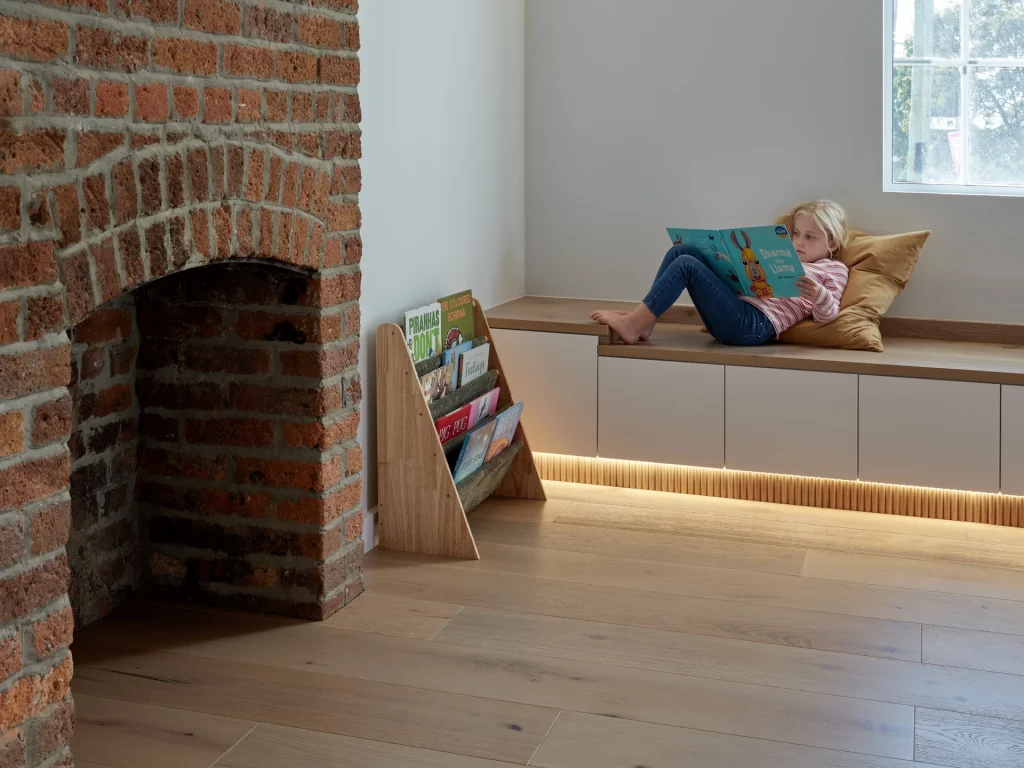
The restoration work has revealed hidden gems within the building’s bones. Original sandstone walls have been exposed, timber joists that had been concealed for decades are now visible features, and a heritage brick fireplace has been lovingly restored. These historical elements now work alongside modern functional upgrades to create spaces that are both characterful and practical.

Photo Credit: Christopher Frederick Jones, CFJ Photography

The project represents more than just an architectural achievement – it’s a model for how heritage conservation can serve contemporary community needs. By housing a children’s therapy centre, the building continues its long tradition of serving local families, whilst the sensitive restoration approach ensures its historical significance is preserved for future generations.

Photo Credit: Christopher Frederick Jones, CFJ Photography

Lockhart-Krause Architects describes their philosophy as architecture “focused on people”, and this project exemplifies that approach. The collaboration between architects, builders Charles Warren Constructions, and the Brisbane Therapy Collective demonstrates how heritage buildings can be successfully adapted for modern healthcare delivery.

For Kelvin Grove residents, the project signals positive change in their neighbourhood. The building once again stands as a proud example of Brisbane’s architectural heritage, whilst providing essential services for local families. It’s a reminder that our historic buildings don’t need to be museum pieces – with thoughtful design, they can continue to play active roles in community life.


The success of this adaptive reuse project offers hope for other heritage buildings facing uncertain futures. It proves that with vision, collaboration, and respect for history, Brisbane’s architectural treasures can continue to serve new generations whilst maintaining their connection to the past.

Published 30-July-2025

Alleged Stolen Vehicle Collision Leaves Kelvin Grove Resident’s Property Damaged

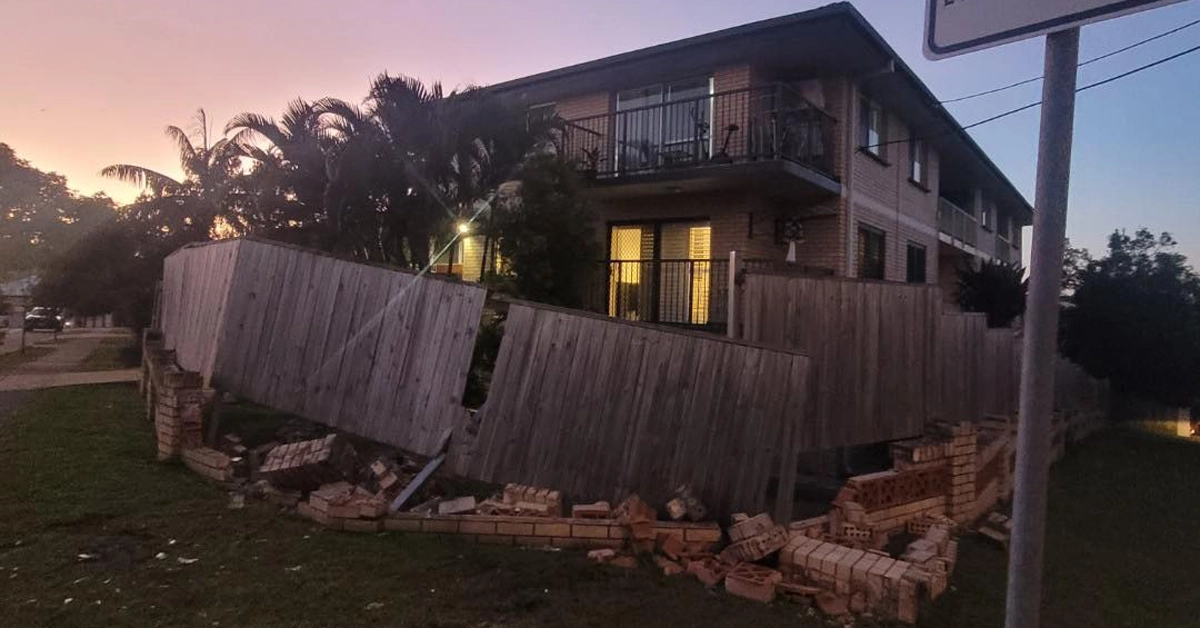
A Friday night collision involving an allegedly stolen vehicle has left a Kelvin Grove resident dealing with significant property damage after the crash destroyed their front fence and damaged a wall.


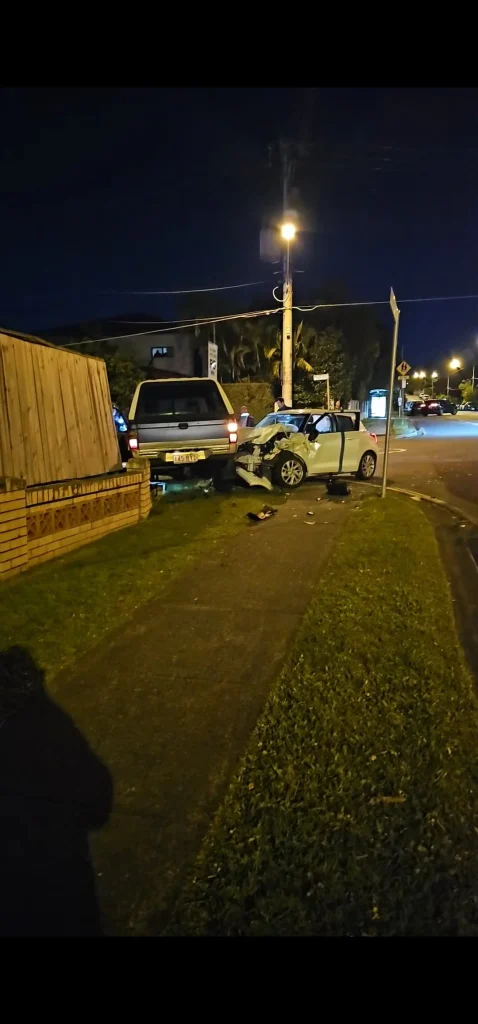
The incident unfolded just after 10:20pm on 4 July at the intersection of Herston Road and Picot Street, when a white Suzuki Swift and blue Mitsubishi Triton collided in what would become a significant police matter.

Photo Credit: Facebook / Anonymous participant 878

According to Queensland Police Service, both occupants of the Suzuki have been charged with unlawful use of a motor vehicle. The extensive list of charges paint a picture of an evening that went dramatically wrong for the pair.

The driver, a 28-year-old Mitchelton man, faces a lengthy court battle ahead with charges including receiving tainted property, stealing, dangerous operation of a vehicle, and driving under the influence. He’s also been charged with the unusual offence of having his face masked with intent to commit an indictable offence, as well as drug possession charges and driving whilst disqualified.

His passenger, a 22-year-old woman from Numinbah Valley in the Gold Coast hinterland, faces charges of unlawful use of a motor vehicle and stealing petrol.

The crash’s impact extended well beyond the vehicles involved, with the corner property bearing the brunt of the collision. Social media images from the scene showed the complete destruction of the resident’s front fence, leaving debris scattered across the footpath.

Photo Credit: Facebook / Anonymous participant

For the innocent driver of the Mitsubishi Triton, the night ended more fortunately. Queensland Ambulance Service confirmed they escaped the collision without injury and face no charges in connection with the incident.

The Suzuki’s female passenger complained of back pain following the crash but didn’t require hospital transport, according to ambulance service representatives.

The legal proceedings are now set to unfold over the coming months. The Mitchelton man has been remanded in custody and is expected to appear before Brisbane Magistrates Court on 25 July. The woman from Numinbah Valley will face court separately on 5 August.


The intersection of Herston Road and Picot Street returned to normal traffic flow following the emergency response, but for one Kelvin Grove resident, the cleanup and repair work is just beginning.

Published 7-July-2025

Urban Village Decline in Kelvin Grove Raises Concerns for Traders and Residents

Kelvin Grove’s urban village is experiencing a downturn, with shop closures, rising vacancies, and reduced student numbers affecting local traders and the broader community.


Background and Development of Kelvin Grove Urban Village

Kelvin Grove’s urban village was established in 2003 as part of the redevelopment of the former Gona Barracks site. The project aimed to deliver affordable housing, educational facilities, and a mixed-use precinct. It included the QUT campus expansion, the Roundhouse Theatre, and a combination of residential and commercial properties, and was recognised with planning and design awards.

Kelvin Grove urban village
Photo Credit: Google Maps

Falling Foot Traffic and Business Challenges

The village’s commercial viability has long depended on international students attending the nearby QUT campus. A fall in student numbers, influenced by higher visa fees and stricter migration policies, has led to reduced spending and lower foot traffic. 

Businesses such as Domino’s and DannyBoys, which had been fixtures in the precinct, have closed. Vacant shopfronts are now common across Musk Avenue, Blamey Street, and Carraway Street. Traders have reported that higher rents and limited discretionary spending by students have contributed to business closures.

Expert Insights and Structural Factors

Planning experts have pointed to structural challenges within Kelvin Grove’s urban village. The precinct lacks the population density or major attractions that support foot traffic in older urban villages such as those in Sydney and Melbourne. Without a significant drawcard or substantial parking, maintaining commercial viability has proven difficult. The design focused on serving the immediate local population, which has come under pressure as economic conditions have changed.

Kelvin Grove property
Photo Credit: Google Maps

Community Sentiment and Social Concerns

Residents have raised concerns about rising crime and antisocial behaviour in the village. Reports have included thefts, break-ins, discarded syringes, and overnight disturbances near local businesses. 

Data shows that crime rates in the central hub are higher than in surrounding streets. While the Saturday markets continue to draw some visitors, weekday activity has decreased significantly.

Property Trends and Future Outlook

Despite challenges, unit prices in Kelvin Grove have increased, with investors drawn by anticipated infrastructure developments linked to Brisbane’s 2032 Olympics. Local agents noted that commercial space in the area is tightly held and often leased quickly when available. 


Experts have indicated that the future viability of the precinct may depend on reducing its reliance on student populations and introducing broader attractors or improved access to support foot traffic.

Published 4-July-2025

New Study at Kelvin Grove Aims to Unravel Causes of Childhood Myopia

Children in the Kelvin Grove area will participate in a significant new optometry study launched by Queensland University of Technology (QUT), which seeks to understand and combat the global rise in childhood Myopia, a condition predicted to affect half the world’s population by 2050.


The research project is set to begin recruitment later in 2025 and will run until June 2027. It is based at the QUT Centre for Vision and Eye Research, located at the Kelvin Grove campus in Brisbane.

A Growing Concern for Children’s Eyesight

Myopia
Photo Credit: Pexels

Myopia, commonly known as short-sightedness, is an eye condition that requires glasses or contact lenses for clear distance vision. It typically develops during childhood as the eye grows longer too quickly. This extended eye shape not only causes vision problems but also increases the risk of serious eye diseases later in life, such as retinal detachment, macular degeneration, glaucoma, and cataracts. This makes it a major public health challenge worldwide.

Dr. Rohan Hughes, a QUT optometry researcher leading the study, noted that rates of myopia have been steadily increasing globally over the past two decades. He highlighted that about 20 per cent of Australian children are already short-sighted by the age of 12. 

While this statistic is concerning, it is still better than in some East Asian countries like Singapore, China, and Hong Kong, where myopia affects around 50 to 60 per cent of 12-year-olds. Australian children are thought to develop myopia more slowly due to more time spent outdoors, less urbanisation, and a less demanding educational culture.

Inside the Groundbreaking Study

This new QUT optometry study aims to explore how lifestyle and environmental factors affect children’s eyesight and the development of myopia. The project has received a substantial boost, funded through a $250,000 Meta Myopia Award from the American Academy of Optometry Foundation.

Dr Hughes and his team, which includes Dr. Emily Pieterse, Professor Steve Vincent, and Professor Scott Read from the QUT Centre for Vision and Eye Research and School of Clinical Sciences, will follow more than 100 children aged six to 12 for one year. They will track changes in eye growth and vision, along with behaviours such as screen time, reading habits, outdoor play, diet, and sleep. Participants will be recruited with assistance from local schools and optometrists. The study will employ sensor equipment and questionnaires to monitor children’s activities and use regular eye scans to measure eye growth.

Dr Hughes stated that the project will specifically concentrate on “pre-myopic” children, who have been identified as particularly vulnerable to developing short-sightedness due to their current vision, age, or hereditary risk factors. He explained that researchers already believe modern lifestyle factors are significant contributors to myopia, describing the cause as “multifactorial,” involving a complex interaction of genetic, environmental, and lifestyle elements that are not yet fully understood. 

Many children and adults now spend less time outdoors and more time indoors doing close-up work, often for long periods, in poor lighting, and without sufficient eye breaks. This study aims to comprehensively quantify these characteristics and explore their link to eye growth and vision changes in children at risk. The hope is that the project will offer insights that contribute to strategies for delaying or preventing myopia in children.

Expert Advice for Healthy Eyes

Myopia
Photo Credit: Pexels

The QUT Centre for Vision and Eye Research offers practical advice for parents in the community to help protect their children’s eyesight:

  •  Children should have an eye test before starting Prep, or earlier if there are any concerns about their vision. Optometrists are able to see children of any age.
  • Regular eye tests are important, ideally at least every two years, especially for children whose parents have myopia or other eye conditions.
  •  Encourage children to spend two or more hours outdoors each day (aiming for 14 hours per week), remembering to stay sun-safe with sunglasses, hats, and sunscreen.
  • Advise children to hold books, video games, and screens at least 30cm or more away from their eyes.
  •  Encourage regular breaks from sustained near-work activities like reading, homework, and screen time, ideally after no longer than 30 minutes.


QUT’s Commitment to Vision Research

The QUT Centre for Vision and Eye Research is dedicated to shaping the future of vision through its ongoing research efforts and working to address vision problems affecting Australians every day. 

The Centre is globally recognised for its research and its strong national and international collaborations. In the most recent (2018) Australian Research Council (ARC) Excellence in Research Australia (ERA) evaluation, the Centre’s research was rated “Above World Standard,” achieving high impact and engagement with end-users.

Published Date 19-Jun-2025

Stage Career of Sarah Bakker Traces Back to Kelvin Grove

Kelvin Grove-trained performer Sarah Bakker has returned to Brisbane to appear in “Dusty The Musical – In Concert”, following a stage career across Australia, Broadway, and London’s West End.


Kelvin Grove Performer Returns to Brisbane Stage

Sarah Bakker, who began her performance training in Kelvin Grove, is back on the Brisbane stage from 5 to 8 June for “Dusty The Musical – In Concert” at QPAC’s Concert Hall. She joins a 17-member cast brought together by Prospero Arts, portraying Lynne from Dusty Springfield’s early vocal trio, the Lana Sisters.

Sarah Bakker
Photo Credit: Sarah Bakker/Instagram

International Career Built on Local Foundations

Ms Bakker studied at Queensland Dance School of Excellence and The Young Conservatorium, both based in Brisbane, with QDSE operating out of Kelvin Grove State College. These formative years provided a strong technical foundation in dance, vocal performance, and stage presence. She went on to build an extensive career in musical theatre, first appearing in Australian productions of “Mary Poppins”, “Chicago”, and “The Phantom of the Opera”.

She was 23 when she secured her first role on Broadway, joining “Mary Poppins” at the New Amsterdam Theatre, where she performed as understudy after playing the role more than 130 times in Australia. Later, she returned to Broadway to again understudy Christine in “The Phantom of the Opera” and took part in several UK productions, including “Follies in Concert” at the Royal Albert Hall and West End shows like “An American in Paris”, “Chess”, and “Mrs Henderson Presents”. Ms Bakker also performed in “Evita” during a European tour, gaining valuable international touring experience.

Kelvin Grove performer
Photo Credit: Sarah Bakker/Instagram

Adapting Theatre for Working Parents

Now based in Sydney with her two children, Ms Bakker said short-run, semi-staged shows like “Dusty” provide rare flexibility for performers with families. With a condensed rehearsal period and limited performance schedule, these formats enable experienced artists to contribute without long touring commitments.


She is also part of an online community of over 650 mothers in the performing arts industry, advocating for greater inclusion and job-sharing models. Her latest appearance at QPAC brings her career full circle, returning to the venue where she once played Little Cosette in “Les Misérables” as a child.

Published 7-June-2025

How a Kelvin Grove Group Helps Newcomers Stitch Into Community Life

A knitting group in Kelvin Grove has brought together women from 26 different countries, demonstrating how local volunteering can foster strong community bonds and support newcomers to Australia.


The “Knitting English” program began in 2010 and was recently recognised as a finalist for the Queensland Volunteering Impact Award at the Queensland Volunteering Awards.

The awards, now in their tenth year, celebrate the significant contributions of volunteers and organisations across Queensland. The 2025 ceremony, which took place on Friday, 16 May, at Brisbane City Hall, honoured individuals and organisations making a difference in their communities.

A Thread of Connection

Kelvin Grove
Photo Credit: Communify

The Knitting English group started with a simple act of kindness: knitting blankets for children affected by the Haiti earthquake. Over the past 15 years, it has grown into a vibrant initiative that creates blankets, toys, beanies, and teddies for children impacted by natural disasters, poverty, domestic violence, and displacement, including refugee families and First Nations communities. Beyond local efforts, their creations have even reached baby penguins affected by oil spills.

At its core, the program combines English conversation practice with knitting. This approach creates a welcoming space where women from diverse backgrounds can improve their language skills, build friendships, and offer support to one another.

Organisers say it helps promote cultural exchange, reduce social isolation, and provide a strong sense of belonging for women whose first language is not English. Every item made by the group is seen as more than just a handmade gift; it represents a connection, a conversation, and an act of care shared across different communities.

Celebrating Volunteer Contributions

Kelvin Grove
Photo Credit: Communify

The Queensland Volunteering Awards acknowledge the tireless work of volunteers from all walks of life. A new category, the Queensland New Volunteer Award, was introduced this year to recognise adult volunteers new to Australia and have been volunteering for less than two years, highlighting how fresh perspectives and enthusiasm from newcomers enrich Queensland communities.

Other award categories include the Queensland Lifetime Contribution to Volunteering Award, Queensland Youth Volunteer of the Year Award, Queensland Excellence in Volunteer Management Award, and Queensland Volunteer of the Year Award. These categories aim to ensure that volunteers from all sectors and backgrounds receive recognition for their efforts.

The Queensland Volunteering Impact Award

Kelvin Grove
Photo Credit: Communify

The Queensland Volunteering Impact Award specifically recognises volunteering programs or activities that have made a positive, measurable, and lasting social and/or economic impact on the Queensland community.

This award is divided into three sub-categories: Community, Government, and Corporate. The Kelvin Grove Knitting English group was a finalist in the Community category. This award celebrates volunteer initiatives’ broad and positive effects on people’s lives and the wider community.


The Power of Connecting Communities

Volunteering is also celebrated during National Volunteer Week, which runs from 19 to 25 May. This year’s theme, “Connecting Communities,” highlights how volunteering brings people together, builds social cohesion, and strengthens communities nationwide.

Volunteering Australia’s CEO, Mark Pearce, stated that volunteers are essential for inclusive communities, especially during difficult times like natural disasters and rising living costs. He explained that volunteers offer crucial support during emergencies, help people access vital services, strengthen community connections, and support local events.

Mr Pearce added that volunteering benefits others and deeply impacts the volunteers themselves, fostering lasting relationships, community engagement, and a feeling of belonging. He also noted that volunteering is about building connections, sharing knowledge, and creating spaces where people feel they belong.

Published Date 21-May-2025