



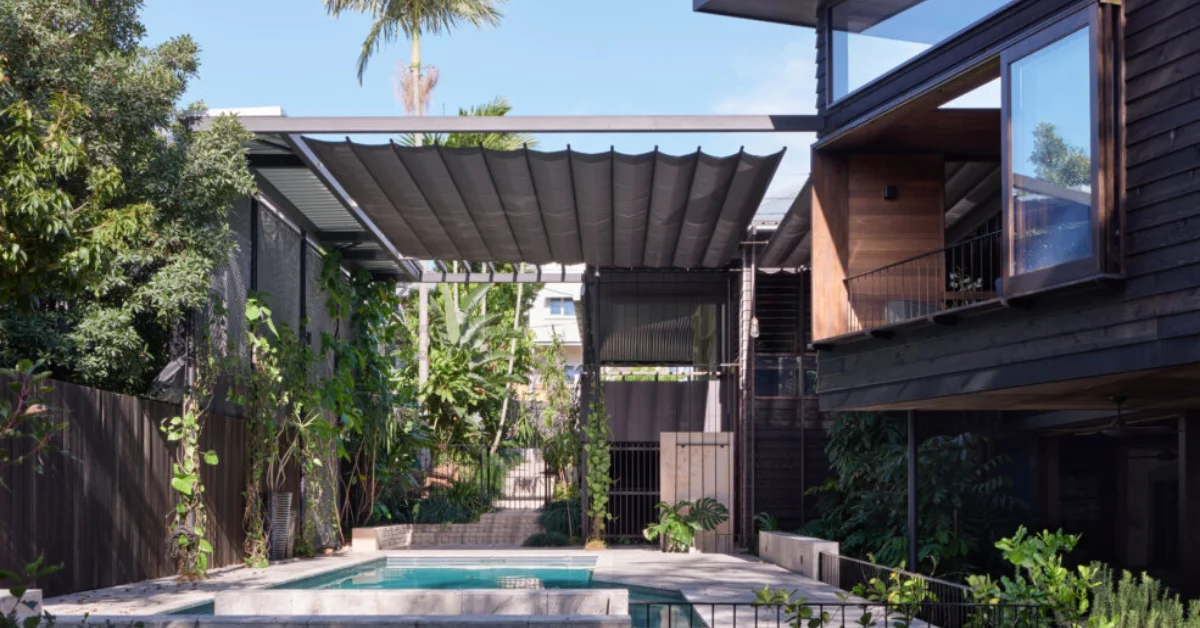
A Paddington house that burned to the ground just months after a major renovation has been shortlisted for one of Australia’s leading residential architecture awards, earning national recognition for its remarkable story of rebuilding.
Read: Remembering the Paddington Tram Depot Fire
Hakea House, designed by Brisbane firm Bligh Graham Architects, has made the shortlist for the House Alteration and Addition Over 200sqm category at the 2026 Houses Awards. The category recognises achievement in the design of a renovation, extension, or substantial reworking of an existing detached or semi-detached home.
The story behind the house is as remarkable as the building itself. In 2021, after a series of COVID-related delays, architect Christopher Bligh completed a striking extension to the back of a 1920s workers’ cottage. The addition included a treehouse-inspired master bedroom, an origami-style ceiling and a two-storey vine mesh screen. Five months later, a fire started by a mosquito repellent burner tore through the property, destroying most of the original cottage.
Bligh’s extension survived, largely because it was connected to the main house by only a narrow junction, and his firm was subsequently commissioned to design a new home around it.

A home designed in reverse
“The Hakea House is named after a native tree that blooms after fire. Tragically this project for the most part came about after the existing house was largely reduced to ash in a fire,” Bligh Graham Architects said.

The name proved fitting in more ways than one. The pre-fire house had consisted of three sections: the original 1920s heritage cottage at the front, a two-storey extension added in 2008, and the rear extension completed by Bligh Graham in 2021. With the rear section the only part to survive, the architects faced the unusual challenge of designing a new home not for an existing structure, but for an existing addition.
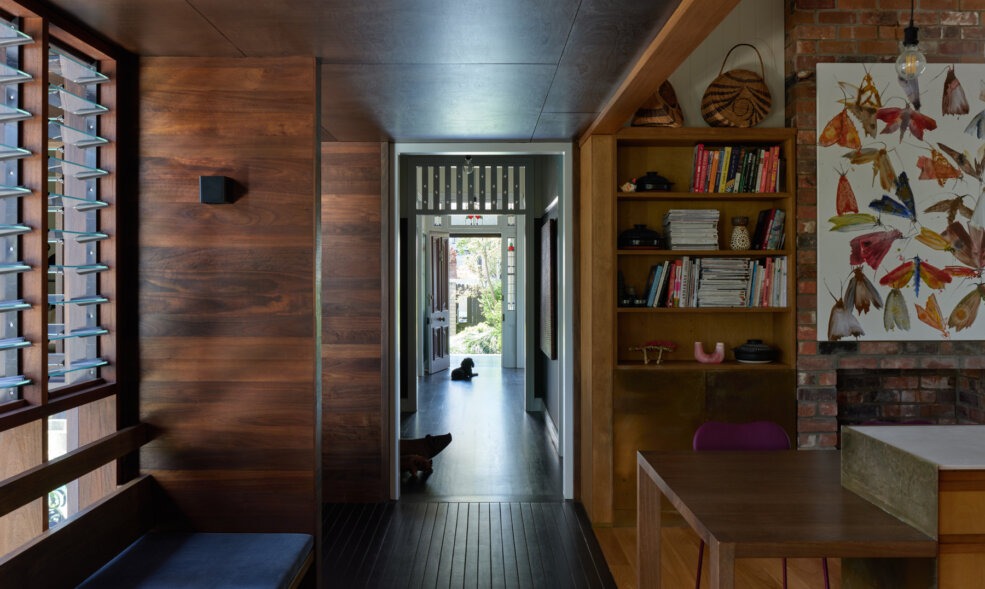
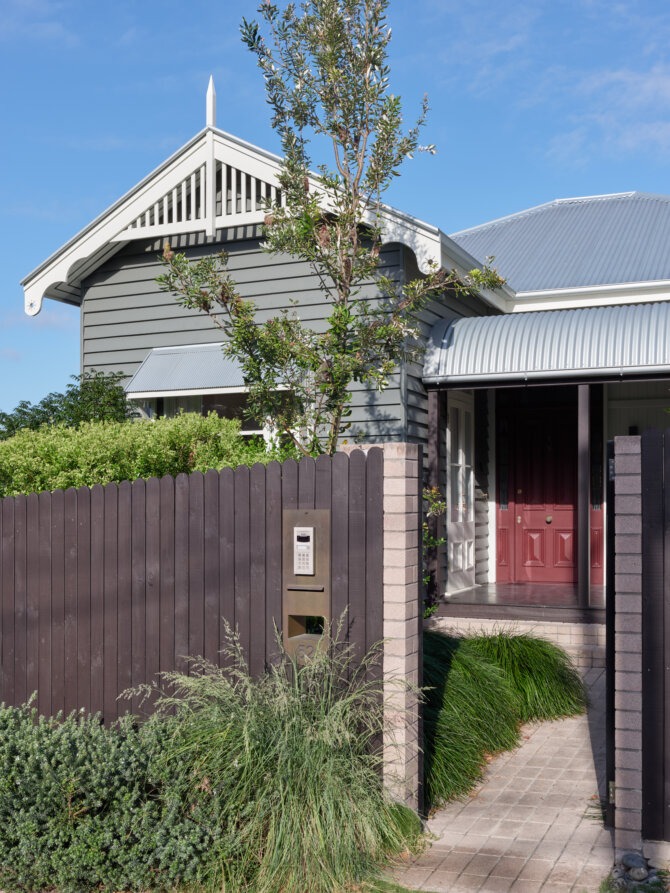
The front cottage was rebuilt largely to its original form to preserve the streetscape character of the property and avoid complications with local officials. Some original facade elements, along with salvaged windows and doors from the blaze, were incorporated back into the rebuild. The backyard pool and a brick fireplace also survived the fire and were retained.
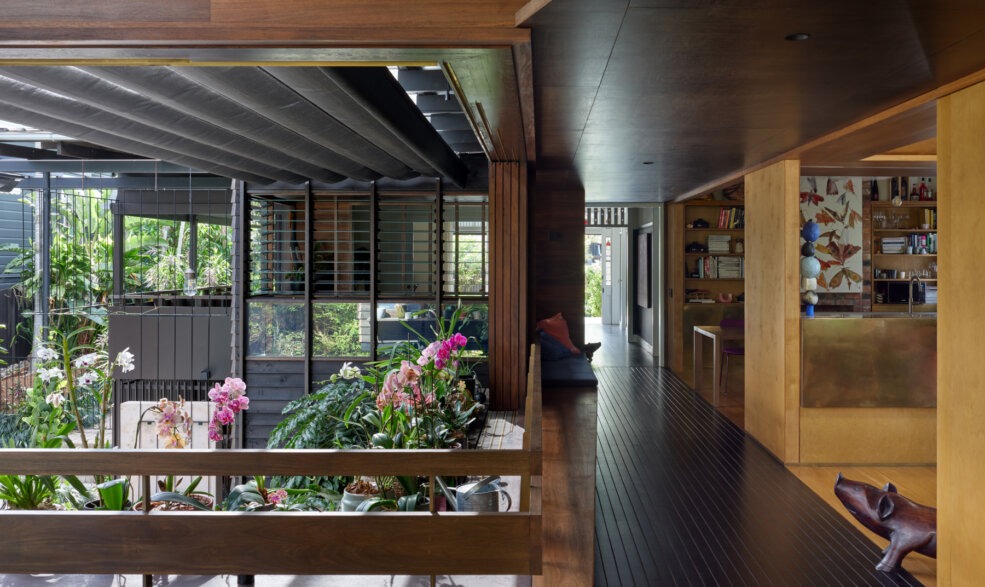
The new middle section of the house serves as the architectural bridge between the traditional front cottage and the playful rear extension. It pulls back from the pool terrace to create a dramatic, north-facing double-height garden court that draws light and greenery into the heart of the home, while also enabling a visual connection between the upper living spaces, the mid-level pool terrace and the lower secondary living area.


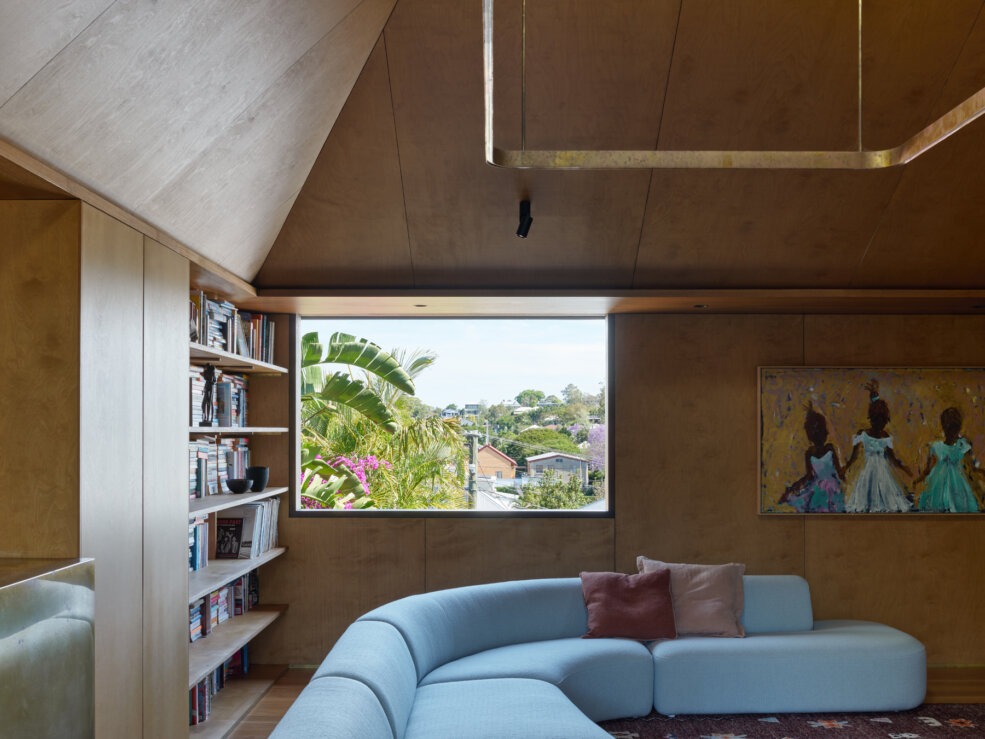
The design is deeply considered in its response to Brisbane’s subtropical climate. Darker timber tones push back against the city’s prevailing taste for bright white interiors. The home also incorporates an extensive suite of environmental design measures: passive ventilation is maximised through high-level windows, sliding batten screens and generous openings; the layout is oriented to capture northern light and winter sun; and hardwood timber salvaged from the demolished sections of the original structure was recycled back into the build. The home runs on a 15-kilowatt solar system with battery storage, captures 23,000 litres of rainwater, and uses low-VOC interior paint throughout.
The family who lost their home in the blaze are, by their architect’s account, delighted with the result.
Read: Worst House in One of the Best Streets in Auchenflower Gets Epic Renovation
About the Houses Awards
Run annually by Houses magazine and presented by Architecture Media, the Houses Awards are widely regarded as a leading benchmark for residential architecture in Australia.
The program spans eleven categories, from new builds and apartment design to sustainability, heritage and emerging practice. This year, twenty Queensland projects feature among the national shortlist. Winners across all categories will be announced on 4 September 2026.
Published 11-June-2026