



Gelomics, a biotech company headquartered in Kelvin Grove, has built an AI-powered platform that grows functional human tissue models in the lab, giving pharmaceutical researchers an alternative to animal experiments during early-stage drug development.
The company shares its address with the Queensland University of Technology’s Centre for Biomedical Technologies, a fitting overlap given that Gelomics founder and CEO Dr Christoph Meinert developed the underlying science while completing his PhD in regenerative medicine at the same university.
Founded in 2018, the company has grown from a university research idea into a platform now used by around 250 research laboratories across 23 countries, including Australia, New Zealand, Singapore, the United States, Japan and several European nations.
The challenge facing drug development
The problem Gelomics set out to solve is a well-documented one in pharmaceutical research. More than 90 per cent of drug candidates that pass years of animal testing still fail once they reach human clinical trials, a gap that reflects just how differently animal and human biology can respond to the same compound.

“The issue is that these models don’t translate well to human biology. For example, results from mouse studies rarely correlate with human outcomes,” Meinert said. “Instead of testing drugs and compounds in animals, we can actually generate tissues that look, feel and behave and react to drugs just like real human tissues in the lab.”

Around 200 million animals are used globally each year for pharmaceutical research, a figure Meinert points to directly when describing the company’s purpose. “At a high level, success means a reduction in unnecessary animal testing. That’s a core part of our mission.”
From four hours to ten minutes
Gelomics’ platform, built around its LunaGel photocrosslinkable tissue culture system, takes human cells, including stem cells or patient-derived cancer cells, and embeds them in a hydrogel that mimics the protein environment of real human tissue. The cells then grow and organise into tissue-like structures resembling miniature functional organs, from beating cardiac tissue through to liver structures.
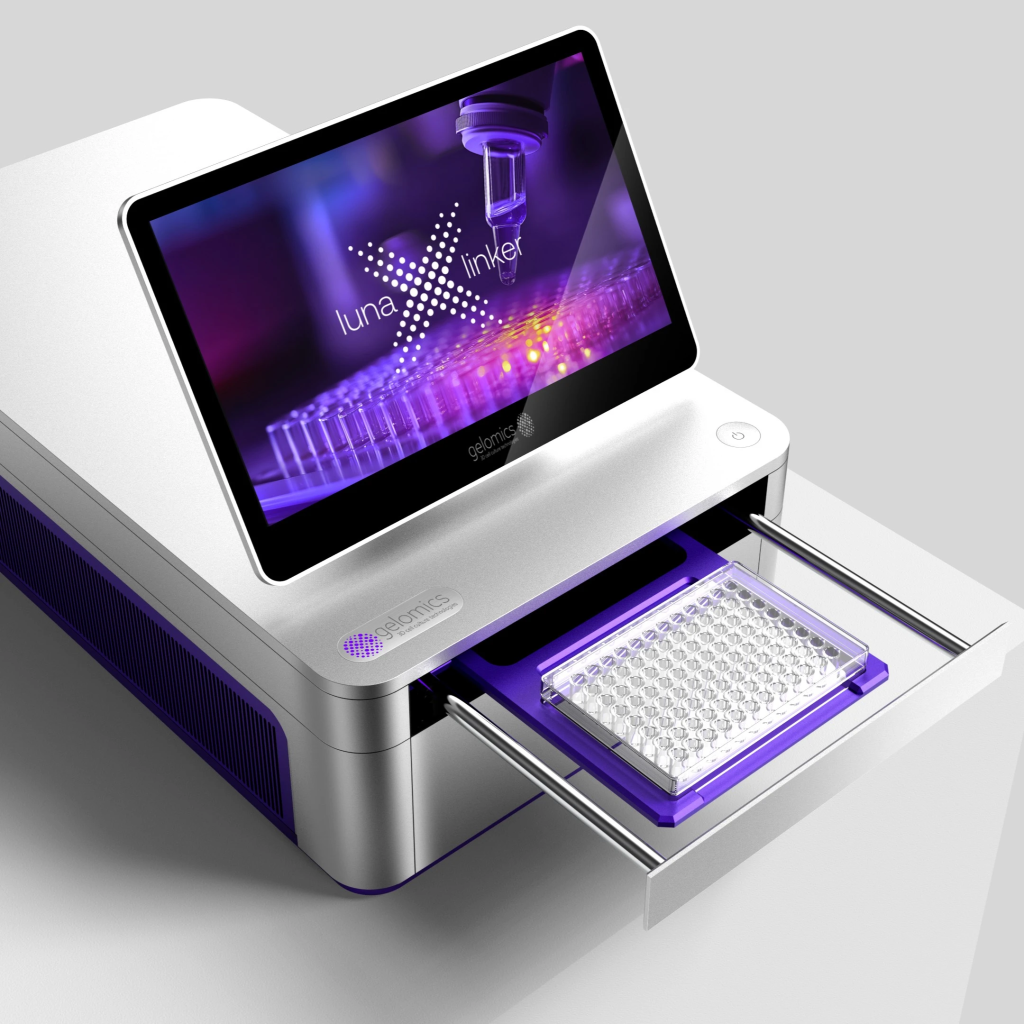
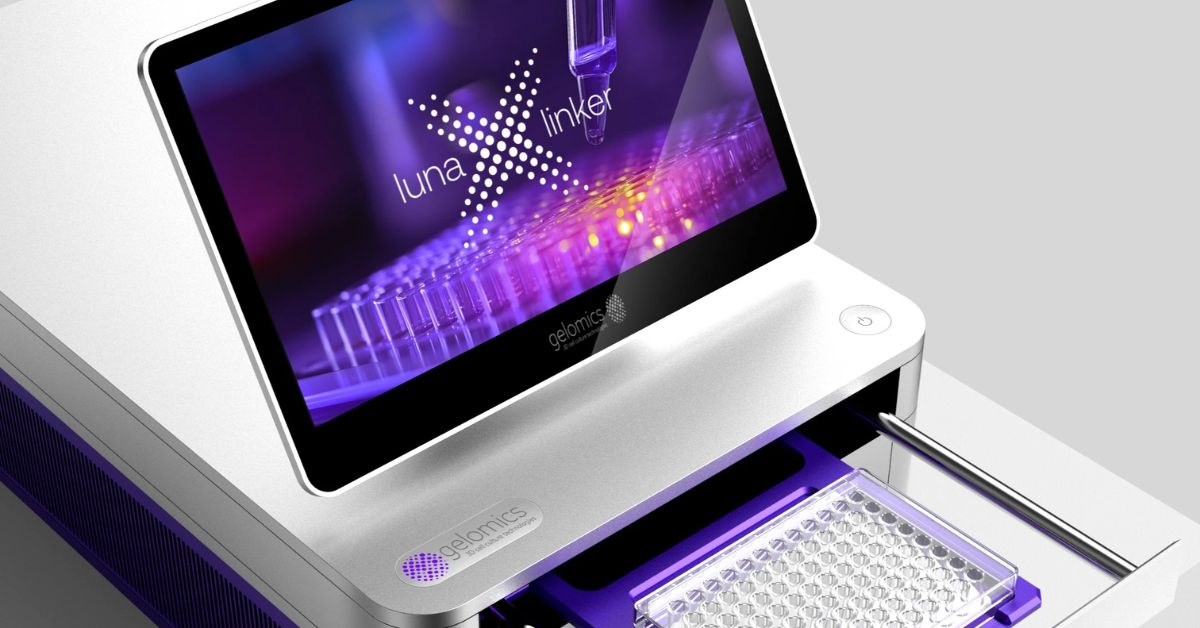
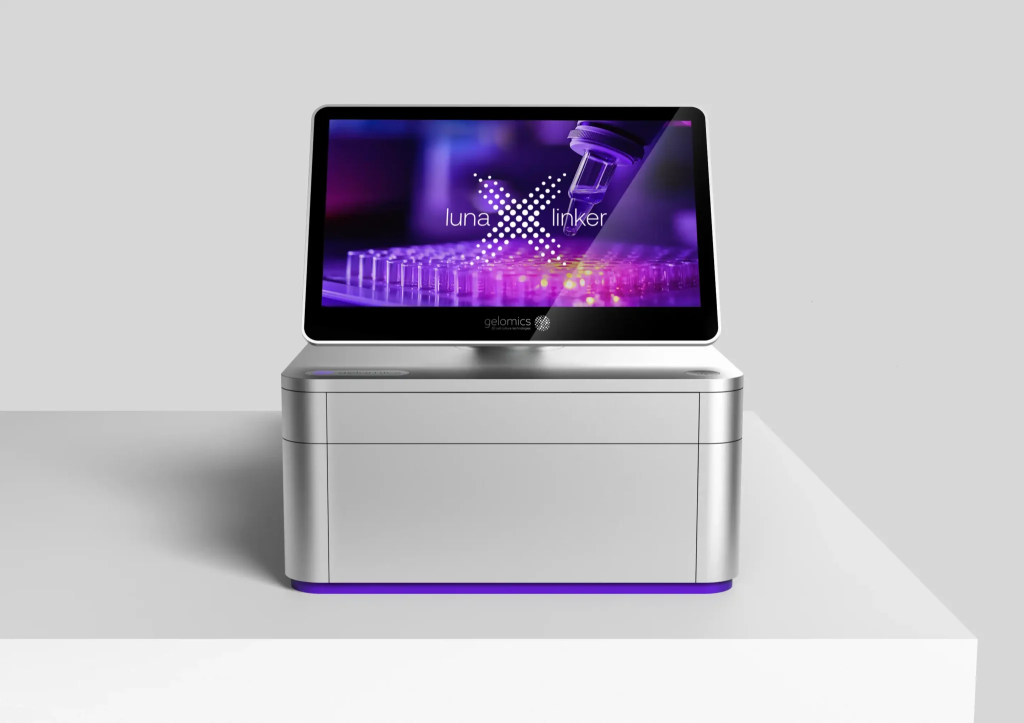
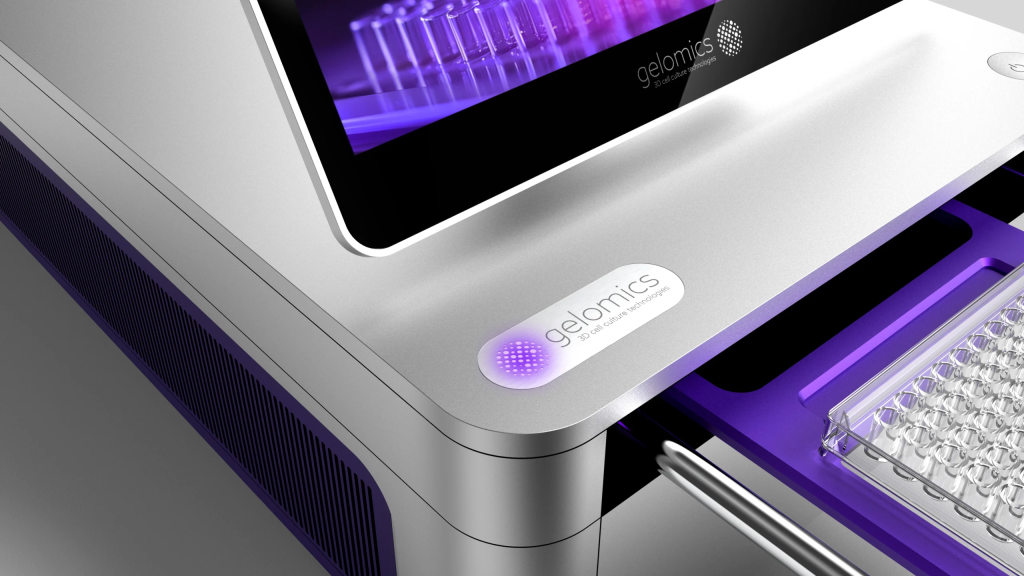
What used to take roughly four hours to produce manually can now be completed in about 10 minutes, thanks to an integrated laboratory device using photocuring technology to rapidly form the gel with precise mechanical properties.


Researchers begin by planning experiments through a cloud-based system, where a deep-research AI agent summarises the current state of a given research field and identifies relevant literature before generating a full experimental protocol.
Pharmaceutical companies working with Gelomics have reported an estimated 15 per cent reduction in their animal testing requirements, alongside cost reductions of around 20 per cent, according to Meinert.
The Brisbane partnership behind the scale-up
Gelomics’ growth from a working lab prototype into a globally distributed platform was supported through a collaboration with ARM Hub, the Queensland-based AI and advanced manufacturing organisation, delivered through its AI Adopt Centre. The engagement was funded through two ARM Hub accelerators backed by the Australian Government’s $17 million AI Adopt Program.
ARM Hub Founder and CEO Professor Cori Stewart said the partnership filled a specific gap. “Christoph and the Gelomics team had the science working in the lab,” she said. “What they needed was secure cloud infrastructure that would give pharmaceutical clients confidence their data was protected. We worked with them to build that foundation, which opened the door to a Google accelerator and a path to scaling globally.”
Stewart frames Gelomics as a case study in capturing value locally rather than exporting Australian-developed intellectual property for someone else to commercialise. “Pharma companies need better tools for testing, regulators are pushing them toward lab-grown models, and Australia has the research talent to build those tools,” she said.
ARM Hub Chief Commercial Officer Sam Jesudian pointed to the practical infrastructure challenge underpinning the science. “To demonstrate the capabilities of NAM technologies, large datasets and live-cell imaging data are needed to validate through sensor-and-image-based systems, and that requires the right infrastructure,” he said.
Regulators are paying attention too
Gelomics’ work sits within the growing field known as New Approach Methodologies, or NAMs, non-animal testing tools that regulators worldwide are increasingly encouraging as part of drug approval pathways. For NAMs to gain wider acceptance, they need robust data and computing systems behind them to support regulatory decision-making, which is precisely where the cloud infrastructure built through the ARM Hub partnership becomes relevant.
Since launching in 2018, Brisbane biotech Gelomics has secured a $2.2 million pre-seed round backed by Jelix Ventures, the Queensland Investment Corporation and AngelLoop. Paired with recent federal commercialisation grants, the capital injection pushes the startup’s total funding well past the $3 million mark
The company was named winner of KPMG’s national Tech Innovator award, recognition that reflects how far the platform has travelled from its origins in a QUT PhD project to a tool now relied upon by research institutions from Harvard to Oxford.
For more information on Gelomics and its LunaGel platform, click here.
Published 17-June-2026