Online grocery shopping via Woolworths has now been made more convenient as the superstore, located at 107 Latrobe Terrace in Paddington, recently launched its Delivery Now service.
Under this delivery scheme, Woolworths customers may receive their purchases within a two-hour window. The company is introducing this very first speedy delivery service in Brisbane to keep abreast with the competition.
At least 38 Woolworths sites across Brisbane, Melbourne, and Sydney have already adopted Delivery Now. Aside from Paddington, residents in these suburbs in Brisbane may also take advantage of the short-term service seven days a week from 9:00 a.m. to 7:00 p.m.:
Ascot
Ashgrove
Bulimba
Camp Hill
Spring Hill
The company is looking to expand this service to more stores in Queensland based on the customers’ feedback and demands.
Woolworths’ Delivery Now has a delivery fee of $19 for 30 commonly needed items, such as food ingredients and baby products. When a customer is too sick to get up and buy medication, availing of Delivery Now’s two-hour service will also come quite handy.
This service, however, is different from the superstore’s existing delivery scheme, which charges a $15 delivery fee for grocery purchases amounting to $100 and up. Delivery Now, will also not be able to fulfill purchases of deli items, which requires preparation, and bulky items that might not fit in the delivery vehicle.
Zero-waste is more than just a fad… it’s a lifestyle. If you need some help in easing the transition to waste-free living, don’t miss Biome’s DIY Workshops in Paddington this month.
The “Introduction to Zero Waste” by founder Tracey Bailey and Biome Collective facilitator Jacq Driscoll will teach you how to reduce landfill waste in your life. It’s coming soon and those who have bought a ticket will be notified via mail about the event date.
If you’re looking forward to join any workshop this month, here are other events happening at Biome’s Collective Space in Paddington in April 2019:
Slow Fashion Pop Up Weekend (6th and 7th of April)
Biome joins the Fashion Revolution Week, a global movement towards a fashion industry that respects both people and planet. They will be showcasing their garments and accessories for one weekend only.
‘Blue Jean Sisters Project’ Make a Doll Workshop (13 April, 10:00 am – 12:00 pm)
Blue Jean Sisters’ is a project by artist Belinda Smith that raises awareness on human trafficking and sexual exploitation in the fashion industry. Participants need to have basic sewing skills to join. Those who cannot come in the morning session may join in the afternoon session, from 1:00 pm to 3:00 pm of the same date.
‘Linen Jumpsuit Workshop with Common Stitch’ (14 April, 10:00 am – 2:00 pm)
Learn how to make your own beautiful linen jumpsuit from scratch using deadstock fabrics pre-destined for landfill. You will be guided every stitch of the way by local and sustainable design team – Common Stitch. Sizes range from 6 to 20.
‘Lip Balm & Solid Perfume’ (17 April, 10:00 am – 11:00 am)
Come along to this hands-on workshop where you will learn to make an all natural lip balm and solid perfume using ingredients from their Naked Beauty Bar. You can make and take three personalised products.
Clothes Swap Event (20 April, 10:00 am – 12:00 pm)
Do you have clothes that no longer spark joy? Maybe they will for someone else! Be part of the circular economy at a Biome Clothing Swap, where you can exchange your unwanted clothing that are still in great condition.
Does your skin care routine leave you feeling dazed and confused? At this workshop, learn waste free skin care habits using simple, toxin free ingredients. You can make and take three personalised products.
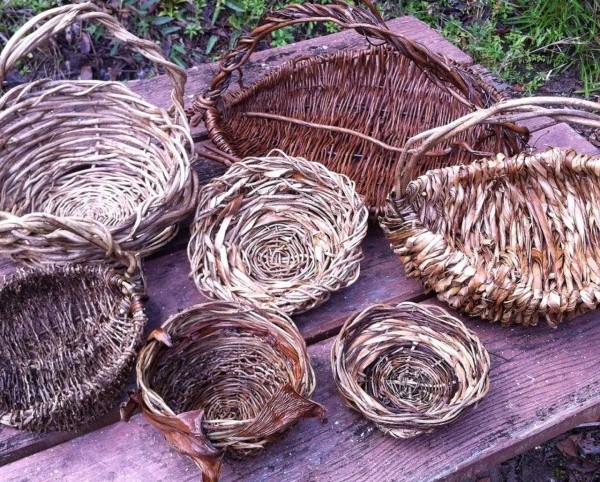
‘Basket Weaving Workshop’ with Wild Baskets(27 April, 1:00 pm – 4:00 pm )
One of their popular workshops, the basket weaving workshop will show you how to make and complete one bespoke melon Basket with Wild Baskets. It uses weed vines that are strangling the native environment, sourced from revegetation sites.
For further information about the upcoming DIY Workshops, check out the Biome website.
The Spring Hill Reservoirs in Wickham Terrace are definitely amongst the suburb’s most important hidden gems as they continue to serve the community for almost 150 years.
In Queensland, the service reservoirs are the first of a series of inground reservoirs. Moreover, they totally stand out as these are the only ones known to have been built of brick with arched baffle walls rather than concrete.
From being a part of Brisbane’s vital water reservoir, the heritage-listed structures now serve as great and unique performance space and live venue.
The Wickham Terrace service reservoirs are particularly significant in demonstrating the demographic growth as well as improvement in living standards and local politics in Brisbane during the years of early self-government.
The construction of the reservoirs is particularly a response to the growing population in Brisbane in the 1870s. When residents started to complain about mains not servicing higher areas, the Board of Waterworks decided to construct a smaller Service Reservoir near the observatory on Wickham Terrace.
The First Service Reservoir
Tenders for the construction of a reservoir in either concrete or brick were called in 1870.
The Board accepted a tender from Henry Holmes specifying the use of concrete. However, Holmes requested to change the walls to brick after preliminary excavations and the identification of cracks in concrete samples. Subsequently, he offered to withdraw his contract.
The Board of Waterworks then decided to complete the contract under its own Clerk of Works. Interestingly, 69,000 locally produced bricks were purchased to complete the reservoir.
The first reservoir was finally completed and filled with water on 24 February 1871.
Meeting Growing Demands in Brisbane
The Reservoir was an 18-metre by 9-metre open-air structure. It held 570,000 Litres or 126,000 gallons of water which came to a depth of 4.15 metres. The reservoir was filled for 10 hours every night to keep up with water demand for the following day.
The first reservoir had a significant effect on the standard of living in Brisbane as it helped in lowering water charges in the area.
In December 1872, a further 60 cm was added to the walls of the reservoir to increase its capacity and by 1876, an additional main from Enoggera Dam was laid to allow water to be reticulated to higher parts of town.
Service Reservoirs (2009). Photo credit: Heritage Branch staff/Queensland Heritage Register
Brisbane’s population surge in the late 1870s saw the need to construct an additional reservoir. W Innes and Son built the second and much larger reservoir in 1882.
Just a few years after the addition of the new reservoir, the Board of Waterworks also made other improvements in Brisbane’s water supply system to keep up with the population boom of the 1880s. These include the construction of the Gold Creek dam in 1885-1886, and the Highgate Hill service reservoir, which was of mass concrete rather than arched brick walls, in 1889.
The Board of Waterworks also considered roofing both reservoirs to prevent animals from falling into the water. However, these additions did not take place at the time since the Board was more concerned about the leaking condition of the reservoirs.
Furthermore, due to the declining gravity water supply, the service reservoirs only supply water to the lower parts of the city. The larger reservoir, on the other hand, retained water in case of emergency. Both reservoirs were removed from use between 1898 and 1906.
Spring Hill Reservoirs (interior). Photo credit: CC BY-SA 4.0/Reubot/Wikimedia Commons
Several improvements were made in the Spring Hill Reservoirs in the 1900s. They were again brought back into service to support the increasing needs of the growing city. Both reservoirs were roofed and the internal walls of the smaller reservoir were cement rendered to prevent leaking.
The service reservoirs remained to be an integral part of the Brisbane water supply system until 3 September 1962 when the water main from Enoggera Dam collapsed. The reservoirs were shut down since due to their comparatively small capacity and low elevation, they were unable to serve the new high-rise buildings within the inner city.
Service Reservoirs from SE (2016) Photo credit: Vic Bushing/Queensland Heritage Register
Brisbane City Council received several suggestions for the redevelopment of the Wickham Terrace service reservoirs in the 1980s. These include included converting the area into an art gallery, bus exchange, restaurant, and theatre in the round.
Unfortunately, poor access, fire risk, and ventilation issues delayed the redevelopment of the structure.
As part of Queensland’s 150th-anniversary celebrations, the service reservoirs had restoration works including the replacement of the roof. The revitalisation of the reservoirs increased the potential for public access.
In 2014, following a two-year negotiation with the Brisbane City Council, the Brisbane based Underground Opera Company completed a $150,000 temporary fit-out to allow the staging of a series of opera performances within the large reservoir. This was the first time that the public has been able to access the space.
Opera in the Reservoirs 2014. Photo credit: Underground Opera Company/Facebook
With the successful redevelopment of the space, the Spring Hill Reservoir now serves as a unique venue for various performances. Several events are now being scheduled in the venue including the popular Opera in the Reservoir.
Apart from providing an excellent space for live performances, the Spring Hill Reservoirs continue to be a reminder of the importance of having a reliable, accessible, and clean water supply. The structures also help in illustrating the technical advancements in the early development of Brisbane and Queensland.
Paddington’s restaurant scene will liven up with the addition of Nota, a sophisticated diner and bar offering modern European cuisine inspired by the best of local and seasonal produce.
Located in Given Terrace, in a space that was once occupied by French restaurant Montrachet, Nota has an inviting and warm ambiance, with exposed brick walls and rustic-themed interiors.
Not only is it nice to come here for the relaxing vibe, the food has also been getting a warm reception from impressed visitors. Barely into its first month, Nota has already been receiving rave reviews from locals, for offerings like the warm lamb salad and slow-cooked octopus.
Apart from gastronomic delights designed to whet your appetite, Nota also has cocktails, small-batch wines, and a selection of local beers curated by Matt Kirkegaard for that perfect post-work getaway with friends.
A brainchild of Cheese Platter owner Sebastiaan de Kort and business partner Kevin Docherty, the restaurant’s name literally means “familiar” in Latin. The owners wanted to create an environment where guests can share a meal with their nearest and dearest without the confinement of fine dining etiquette.
Nota is open on Wednesdays and Thursdays for dinner, from 5:00 pm until late and on Fridays and Saturdays from 11:00 am to 3pm and 5pm until late.
For more information and bookings, check out Nota’s website or follow them on Facebook.
Leafy suburb Auchenflower is home to some of Brisbane’s popular restaurants, bars, and the heritage-listed — “Moorlands.” Auchenflower has also earned the distinction as one of the most resilient suburbs in Brisbane which recorded phenomenal house price growth from 2008 – 2018, according to the latest report.
Auchenflower posted a house price growth of 73.5 percent for a 2018 median house price of $1,145,000 from $660,000 in 2008, according to the latest report from Domain Group.
There were 77 houses sold from 1 Feb 2018 – 1 Feb 2019, bringing the median house price in Auchenflower to $1,065,000, which is up by $303,500 from its 2010 level and is more than double the Queensland median house price of $490,000, data from realestate.com.au says.
Aside from Auchenflower, a number of other Brisbane suburbs also managed to stay afloat despite the challenges that came and went between the period of 2008 to 2018. Several of these suburbs performed exceptionally well and recorded outstanding house price growth, according to the latest report from Domain Group.
New Farm was the top suburb for house median price growth with an increase of 76.2 percent, from $900,000 in 2008 to $1.586 million by the end 2018. Joining New Farm are Bulimba (74.1%), Auchenflower (73.5%), Wishart (65.1%), Hendra (63.3%), Grange (63.2%), Hawthorne (62.5%), Sunnybank (62.4%), Camp Hill (59.8%), and St Lucia (58.0%).
Other suburbs which posted strong price growths from 2008-2018 are Alderley (56.9%), Norman Park (55.7%), Upper Mount Gravatt (54.7%), Paddington (52.4%), Kuraby (52.4%), Tarragindi (52.3%), Mansfield (52.2%), Greenslopes (51.7%).
Property experts attribute these exceptional growths to several factors such as pleasant amenities, good schools, urban renewal, open spaces and sporting facilities, and the quality of housing and renovations.
Fans of Studio Ghibli, new and old, have something to happy about as the Elizabeth Picture Theatre in Brisbane CBD will be screening some of the most celebrated films from the Japanese animation studio.
From 21 February until 12 May 2019, the Elizabeth will show Studio Ghibli movies Thursday nights and Sunday afternoons.
This is not the first time that the Elizabeth is hosting a film fest dedicated to the much-celebrated animation house. Its Ghibli festival last year was such a hit that the cinema is bringing it back this year.
The festival will also include the first animated feature created by Studio Ponoc, which was founded by former Studio Ghibli lead film producer, Yoshiaki Nishimura.
If you haven’t seen all the Ghibli films, this is an opportune time to catch up. All tickets at $12.
Schedule:
21 February
6:00 p.m.
24 February
4:00 p.m.
9 May
6:00 p.m.
12 May
4:00 p.m.
Spirited Away
Ten-year-old Chihiro and her parents unknowingly came upon a magical world. When Chihiro’s parents started feasting on the food at an empty restaurant stall, they turned into pigs.
Now, Chihiro has to find a way to bring back her parents, before she forgets her name and be forever trapped in the spirit world.
Teenage witch Kiki leaves home as part of her mandatory year of independent life. Accompanied by a talking black cat named Jiji, the trainee witch uses her flying ability to set up a delivery service. She wakes up one day realising that she can no longer fly and not able to talk to her cat.
Running time: 103 mins
Rated TBC
7 March
6:00 p.m.
10 March
4:00 p.m.
Mary and the Witch’s Flower
This 2017 Japanese animated fantasy film produced by Studio Ponoc tells the story of Mary Smith who finds a mysterious flower that can give her the power to become a witch for a night.
This is Studio Ponoc’s first feature film.
Japanese version (subtitled)
Running time: 103 mins
Rated CTC
14 March
6:00 p.m.
17 March
4:00 p.m.
Princess Mononoke
Set in the late Muromachi period, the story follows the young Emishi prince Ashitaka’s involvement in a struggle between the gods of a forest and the humans who consume its resources.
Running time: 134 mins
Rated M (Moderate animated violence)
21 March
6:00 p.m.
17 March
4:00 p.m.
My Neighbor Totoro
When two girls move to the country to be near their ailing mother, they have adventures with the wonderous forest spirits who live nearby.
Running time: 86 mins
Rated TBC
28 March
6:00 p.m.
31 March
4:00 p.m.
Laputa: Castle in the Sky
The film follows the adventures of a young boy and a girl who try to keep a magic crystal from falling into the hands of a group of military agents. They search for a legendary floating castle promising enormous wealth and power to those who can unlock its secrets.
The movie has been regarded as a milestone in the steampunk genre, influencing Japanese pop culture and inspiring many films, media and games in Japan and beyond.
Running time: 124 mins
Rated G
4 April
6:00 p.m.
7 April
4:00 p.m.
Grave of the Fireflies
The film follows the story of siblings, Seta and Setsuko, as they struggle to survive during World War II in Japan.
Running time: 89 mins
Rated TBC
11 April
6:00 p.m.
14 April
4:00 p.m.
Howl’s Moving Castle
Set in a kingdom where both magic and early 20th-century technology exist, the film follows the story of young Sophie after she is turned into an old woman by a witch’s curse. She encounters a wizard named Howl, and gets caught up in his resistance to fighting for the king.
Running time: 115 mins
Rated PG
25 April
6:00 p.m.
25 April
4:00 p.m.
Whisper of the Heart
Shizuku is a bookworm keen on becoming a writer. One night, she notices that all of her library books have all been checked out previously by a certain Seiji Amasawa. She eventually meets Seiji and a love story between the two develops.
Running time: 111 mins
Rated PG
2 May
6:00 p.m.
5 May
4:00 p.m.
When Marnie Was There
Anna Sasaki is sent to the country for health reasons. There, she meets a mysterious girl named Marnie. As their friendship unravels, Anna learns the truth about her family and foster care.
Japanese version (subtitled)
Running time: 103 min
Rated PG
Calling all vintage and recycled fashion wear enthusiasts and bargain hunters; the 2019 edition of BBCGS is happening this 23rd of February and then again on 23rd of March at Bizzell’s Garage on Latrobe Terrace.
A great array of recycled vintage and preloved items from famous brands will be on sale to keep you busy browsing such as Ralph Lauren, Nike, Tommy Hilfiger, Adidas, The North Face, Champion, Lacoste, FILA, Wrangler, Hugo Boss, and Guess, to name a few.
If that’s not enough, they will also be throwing in a good mix of decorative pieces, records, DVDs, CDs, jewelry, and succulents. Prices range from $1 to $100+, which of course depends on the rarity, brand, and condition of the item.
So save either dates, or better yet, come to both events. The Brisbane’s Biggest Clothing Garage Sale event at Bizzell’s Garage 93 Latrobe Terrace, Paddington is on 23 February and 23 March 2019.
Lil J’s Vintage, formerly known as Ralphy Baby, started out as a blog documenting hard-to-find Ralph Lauren clothing items. Lil J’s Vintage owner Jacqueline Cowan transformed a hobby into a full-fledged online store with monthly pop-up stores and markets happening around Brisbane focusing on affordable and rare streetwear garments.
Paddington had the most average views per property listing than any other suburb in Brisbane, making it the most in-demand suburb for houses in 2018, according to the latest report from realestate.com.au.
With an average of 4,884 views per property listing in 2018, Paddington claims the top spot as Brisbane’s most in-demand suburb as Indooroopilly and Windsor trail behind with 4,648 and 4,486, respectively.
Paddington has also recorded a remarkable price growth over the past 12 months, ending 2018 with a median house price of $1,150,000 from $1,000,000 a year before. CoreLogic’s Propertyvalue.com.aualso shows similar median price change for Paddington with a 15 percent increase in the last 12 months — higher than the national average median price change of 4.30 percent — for a median sale price of $1,200,000.
Paddington houses are also selling fast, ten days faster than the Greater Brisbane average, in fact, at 26 days median time on market. A total of 178 houses have been sold from 1 February 2018 to 1 February 2019.
Rounding out the top 10 most in-demand suburbs are Coorparoo, Red Hill, Toowong, Wilston, Newmarket, Holland Park, and Chandler.
Brisbane dwellings’ price growth over the past 12 months was almost flat, with a median price of $490,000 or a price change of 0.1 percent year-on-year and -0.2 percent quarter-on-quarter. Houses median price was up 0.3 percent year-on-year whilst unit median price was down with a -0.5 percent change, according to the Australian Property Market Report – January 2019. Brisbane inner city was the best performer among metro regions with a price change of 2.0 percent year-on-year.
At first sight, several buildings and places around Rosalie may seem ordinary, but historical trails such as the Rosalie Heritage Trail will reveal rich stories of the past, all worth revisiting.
The Rosalie Heritage Trail is a 2.1 kilometre-trail that may take a full-hour walk to explore.
Photo Credit: State Library of Queensland
First Stops on Nash Street
Begin your walk on the Rosalie Heritage Trail at the corner of Baroona Road and Nash Street. A commemorative plaque set on this site will tell you that Rosalie had three incidences of the worst flooding — in 1893, 1974 and 2011 — that burdened the village.
Since Rosalie is geographically low-lying, torrential rains expectedly bring some risks. However, amid the damages and the muddy ground, this force of nature will never dampen the spirit of the community as neighbours help clean up Rose Village each and every time.
Photo Credit: Wikimedia Commons/Rae Allen
Walk further to Nash Street and visit the Rosalie School of Arts and Commemorative Hall. Opening in 1928, this historic landmark is a memorial to the heroes of World War I. Then, head next door to the Beverly Theatre, the site of the first outdoor movie establishment. Today, however, this area is filled with choice dining places.
Then walk across the other side of Nash Street to find a building with a red roof. This used to be the Tram Shelter No. 6, which was built during the Great Depression and stopped operations when buses came to Paddington in the 1960s.
Crossing Elizabeth Street and Given Terrace
From Nash Street, cross Elizabeth Street, where you’ll find the site of The Little Citizen’s Free Kindergarten, one of the first kindies in Brisbane, which was built in 1935. Today, it’s the C & K Rosalie Community Kindergarten and Preschool.
Turn right when you reach the intersection on Fernberg Road to spot the Marist Brothers Monastery. Walk across the trail to the Given Terrace and you won’t miss the Sacred Heart Church. Restored as a brick building from a modest wood building in 1918, this Catholic institution remains a vital presence in the community.
Photo Credit: Google Plus/Rogerova Cesta
About 100 metres away is the Our Lady of Help Christian Convent, which was built in 1919 for the Sisters of Mercy. Five nuns from the congregation arrived in Brisbane during this period to educate Brisbane children at the nearby Sacred Heart School.
More on Fernberg and Haig Road
Retrace your steps from Given Terrace and back to Fernberg Road to find Lucerne. This gorgeous detached house is one of the oldest private residences in Brisbane. Built by the bricklayer James Young around 1862, a part of Lucerne today is a bed and breakfast place.
Continue on Fernberg Road and walk along the beautiful stone kerbs and garden beds. These were built to beautify Brisbane for Queen Elizabeth II’s visit in 1954.
Past the Fernberg planting boxes, cross Baroona Road and you’ll get to the former site of the Milton Congregational Church at the corner of Baroona and Haig Road. Opened in 1887, it was one of the earliest churches in the district. The church was demolished sometime in the 1960s.
Proceed along Haig Road to Gregory Park, named after Queensland’s Surveyor General and one of Australia’s most influential explorers, Sir Augustus Charles Gregory. Gregory Park has ample green space, tennis courts and other sporting facilities, picnic areas, and shaded playgrounds. It’s hard to believe that this used to be marshland.
Walk further along Haig Road and you’ll be in the site of the once premier international tennis centre in Queensland, the Milton Tennis Centre. Since hosting its first Davis Cup match in 1952, the tennis centre managed to host more Davis Cup matches than any other city in Australia. Today, the site is called Frew Park, named after Robert Frew, who was lovingly named as the ‘father of Queensland tennis.’
Bird’s eyeview of Frew Park, former site of the once famous Milton Tennis Centre. (Photo Credit: Brisbane City Council)
There are also other interesting sites worth checking out as you go done memory lane on the Rosalie Heritage Trail. These include the Glenworth villa, the Boondah timbre house, and the Baroona, which is one of Rosalie’s oldest houses, and the Fernberg, Government House.
While some of the sites along the trail are private properties and inaccessible to the public, walking through this trail can give you a glimpse of the rich history of Rosalie.
Has the time come to bring “big boot”, the former Boots Camping marker, back to Paddington?
Suggestions to bring the iconic boot back to Paddington surfaced when the property where it currently stands recently went up for sale. With the Boots Camping no longer operating at the site, historical societies believe that it’s time to bring the “big boot” back to its roots. It made sense, they say, to return it to Paddington because of its historical connection with the suburb. A community skating park now stands at the former big boot site.
Whilst the Council already took the initial steps to bring the boot back to Paddington, after considering the cost of relocating “big boot”, however, it was deemed that the proposal was not a viable option at this time.
Former site of “big boot” in Caxton St | Paddington, Queensland
The five-metre fiberglass boot first stood on the roof of Spaghetti Emporium restaurant at the corner of Caxton and Hale streets, in 1976. The marker was a tip of the hat to the former boot and footwear factory — the Morris Boot Factory, that was built in 1930 and eventually closed after four decades. Apart from the fiberglass boot, the Spaghetti Emporium also served beverages in boot-shaped glasses.
Controversy hounded the establishment after rumours of empty dog food tins being found in the industrial bins by food and hygiene inspectors, circulated. The building later became the Brisbane Underground nightclub after the restaurant closed in 1979. In 1990, the building was demolished to give way to the Hale Street city bypass and “big boot” was moved to Chermside at the corner of Gympie and Rode Roads.