The Government House, located at 170 Fernberg Road in Paddington, opens its doors at least twice a year to the general public.
On Saturday, the 1st of June, the heritage-listed site, which is also known as the Fernberg, will be hosting another Open Day and guided tour from 12:00 p.m. to 4:00 p.m.
Visitors to the Government House will have the opportunity to see parts of the property up close for free. Guests will also be allowed to take videos or photos (no flash) of the premises for their keepsakes.
Vendors will be present on the grounds to sell food and drinks during the Open Day. However, guests are also encouraged to bring their own snacks if they want to have a picnic in the gardens. The Australian Army Band Brisbane will be there to provide the music and entertainment.
Since 1910, the governors of Queensland have made the Fernberg their temporary residence. Leaders and royalties of other counties have dined and held meetings at this mansion with Australian officials.
The family of His Excellency, the Honourable Paul de Jersey, has been living at the Government House since 2014. And while visitors might not be able to personally see the governor this Saturday, Gavel, the Vice-Regal Dog, will be there to welcome the public. He’ll also be roaming the grounds all day to greet or play with the guests.
Auchenflower median house price has risen nearly 20 percent over the past 12 months even as Greater Brisbane house price growth remained flat, according to the latest Domain report.
The Q1 2019 Domain house price report shows that Brisbane house price growth has flatlined over the last 12 months to March 2019, falling 0.3 percent year-on-year, for a median house price of $563,666. Several suburbs, however, managed to register surprising price growth led by Auchenflower.
Auchenflower house price registered 19.2 percent year-on-year growth to end Q1 2019 with a median price of $1,275,000 whilst its five-year price growth stands at 58.9 percent.
As for its exceptional price growth, experts point to Auchenflower’s appeal to families looking for classic Queenslander, easy access to the CBD, and great schools. Auchenflower even overshadowed neighbouring Paddington which fell 0.7 percent with a median house price of $1,062,500.
Quarter-on-quarter, Brisbane median house price fell 1.1 percent, slightly better than Sydney, Melborne, and Perth, which fell 3.1, 2.4, and 2.5 percent, respectively. Among capital cities, only Hobart saw an uptick in its median house price, rising 3.1 percent quarter-on-quarter and 7 percent year-on-year.
Newport and Highgate Hill, on the other hand, led the list of suburbs with the steepest median price declines, falling 13.5 and 10.6 percent, respectively. Cannon Hill, Morningside, Greenslopes, Indooroopilly, Upper Caboolture, Yeronga, Ningi, and Corinda round out the list.
The top suburbs for house price growth according to Q1 2019 Domain house price report:
Fashion designer, blogger and influencer Renee Lee of Paddington has a booming clothing rental business on 186 Latrobe Terrace and she recently launched a new High Street Runaway app to take her ideas to the next level.
Young women with formal gowns and hardly-worn dresses taking up space in their closet might want to get on board Ms Lee’s innovation. She has come up with a way for women to rent or sell their outfits using mobile devices via the High Street Runaway app.
Launched in early 2019 and currently in its testing phase among Brisbane users, the app may be downloaded at the App Store for iOS devices.
“High Street Rentals hit the app store earlier this year and we’re currently testing it in the Brisbane market,” Ms Lee wrote on her LinkedIn profile.
“We’ve hit some barriers and are pivoting around them and learning as we go. With a few more updates we will be ready to expose it to a wider market.”
Read:
Love the Comfort of a Kimono Dress? Learn to Make Yours at this Paddington Workshop!
Ladies between the ages of 17 to 25 have already taken advantage of this latest innovation in the shared economy business model. College students are loaning out their $3,500 clothes to earn $500 in one weekend — not a bad deal at all!
Users love the security of High Street Runaway app as the return of the dress they’ve loaned to strangers may be guaranteed. The app has the following features:
a chat window where the girls can make enquiries about the clothes before closing the deal
a feedback option for both the buyer/renter and seller/loaner
a user identification system that be verified and checked before sending payments.
To better understand how the app works, watch this video below:
“Girls don’t like to wear clothes more than once,” Ms Lee said. “Parents love it too. Instead of dropping thousands before their daughter even walks out the door, they can pull together the same look for much less.”
Read: Brisbane’s Biggest Clothing Garage Sale Back in Paddington
Following the app’s launch, Ms Lee, the wife of Phil Lee of the Brisbane Broncos, and co-founder Jo Erzetich have achieved a 400 per cent traffic spike on their online venture. However, they also run a physical store in Paddington, where renters and shoppers could try on the clothes first before closing a transaction.
In the future, Ms Lee intends to expand the app to include accessories rentals or hair and makeup services.
La Boite Theatre is undeniably one of Petrie Terrace’s most interesting landmarks. Considered as Australia’s first purpose-built arena theatre, the historic site helps in showcasing the development of theatre in Queensland.
The La Boite Theatre is key to restoring amateur theatre in Queensland. The theatre is also significant for serving as a purpose-designed building for the Brisbane Repertory Theatre Society (now La Boite Theatre Company). They are currently Australia’s oldest, continuously running theatre company and have played an important role in the development of theatre arts in Queensland.
History of La Boite Theatre
A group of local theatre enthusiasts founded the Brisbane Repertory Theatre Society during the growth of the ‘Little Theatre’ movement in 1925.
Brisbane theatre-goers warmly embraced the theatre group. In fact, newspapers reported that large and appreciative audiences frequented their shows through the 1920s and 1930s.
The group has since performed in many theatres including Her Majesty’s, the Bohemia, Cremorne, Theatre Royal, Rialto, and the Old and New Albert Halls. They also held a lease on the Princess Theatre in South Brisbane for several years.
Unfortunately, these theatres closed one by one which prompted the group to seek for new performance spaces.
The Society acquired two timber cottages on the corner of Hale and Sexton Streets, Petrie Terrace in the late 1950s. The site initially served as club rooms.
Subsequently, they purchased adjoining properties and decided to convert one of the houses into a theatre-in-the-round. At the time, there was no existing theatre-in-the-round in Brisbane despite the popularity of experimental productions. The society also felt that it is necessary to establish a permanent home ‘where the theatre’s image could flourish and members would be welcome at all times’.
The converted cottage initially seated 65 people and opened for performances in June 1967. Although the performance space was small and technical facilities were limited, the new theatre turned out to be an artistic success. The group named it La Boite which means ‘The Box’ referring to its box-like shape.
La Boite Theatre
La Boite Theatre with Blair Wilson. Credit: State Library of Queensland/Vimeo.
In 1971, Brisbane City Council approved the plan for a new theatre which replaced the converted house. Blair Wilson of Brisbane firm R Martin Wilson & Sons created the design which includes input from the theatre’s Artistic Director, Jennifer Blocksidge. It was the first purpose-built arena theatre in Australia.
Interestingly, in an attempt to save on the cost of building the theatre, Wilson used irregularly-shaped reject bricks which also added to its unusual character.
The La Boite Theatre officially opened on 11 June 1972.
With its continuous innovation, Brisbane Repertory Theatre established the Early Childhood Drama Project in 1975. Furthermore, it became a professional company in 1993.
Their growing needs of the company to consider moving. Towards the end of 2001, the theatre company announced that they would move to the new Creative Industries Complex at Kelvin Grove.
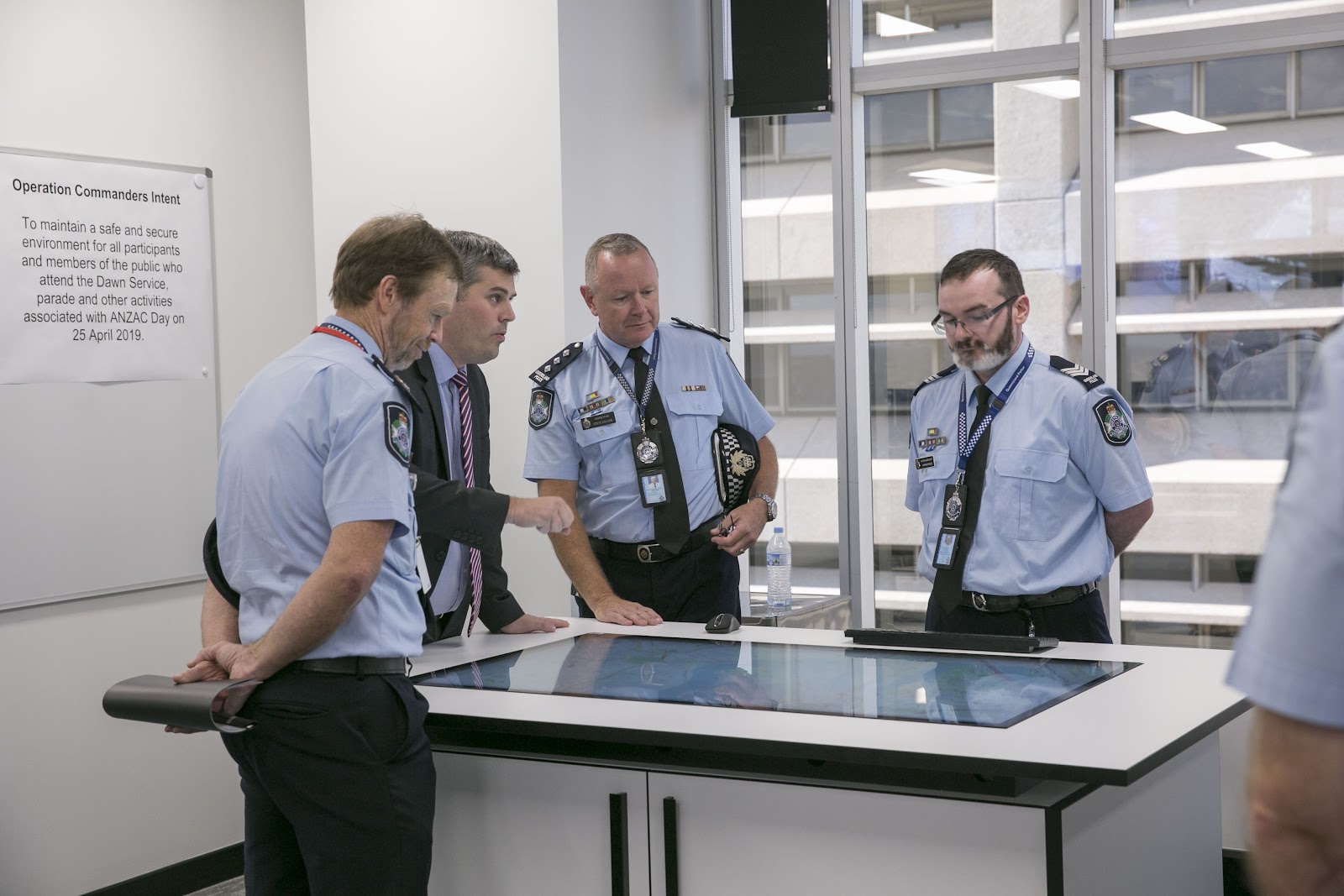
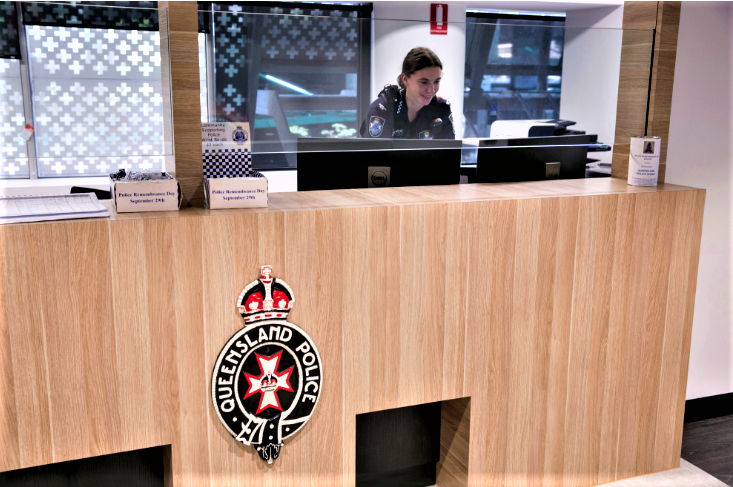
The new Brisbane City Police Station at 16 Mary Street has been opened and is now ready to service Brisbane CBD and inner-city suburbs including Paddington, Spring Hill, Milton, Red Hill, and Kelvin Grove.
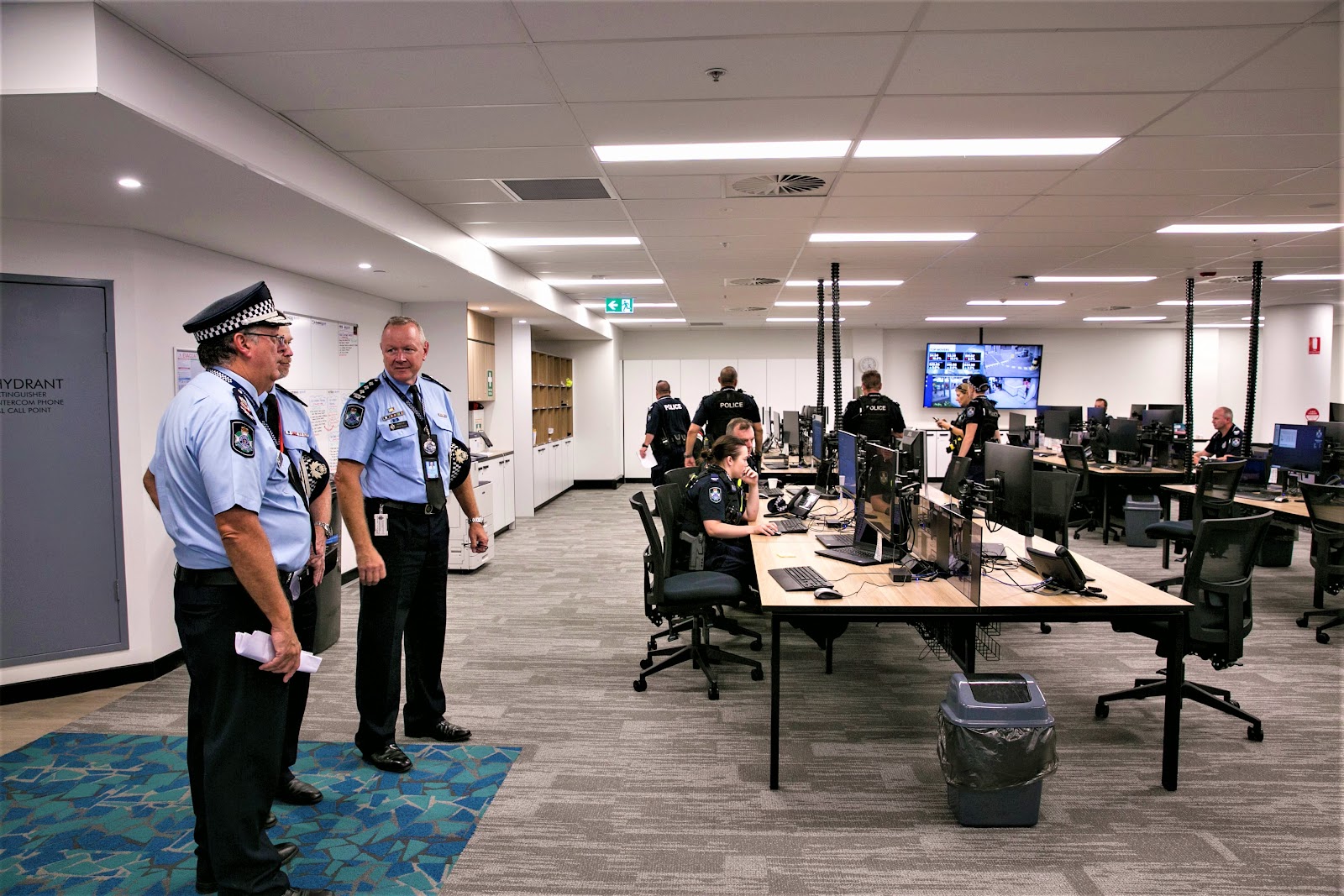
There will be over 160 officers that will be stationed at the new facility which features four holding cells, four interview rooms, operation rooms, lunch room, gym, and locker room.
Photo Credit: State of Queensland (Queensland Police Service) 2019 / mypolice.qld.gov.au
The $13.5-million new police station will house the City/Valley Patrol Group, the City/Valley intelligence section, the Brisbane Region Major Events and Planning unit, tactical crime squad, road policing unit, education and training, weapons licensing, criminal investigation branch, and child protection unit.
Photo Credit: State of Queensland (Queensland Police Service) 2019 / mypolice.qld.gov.au
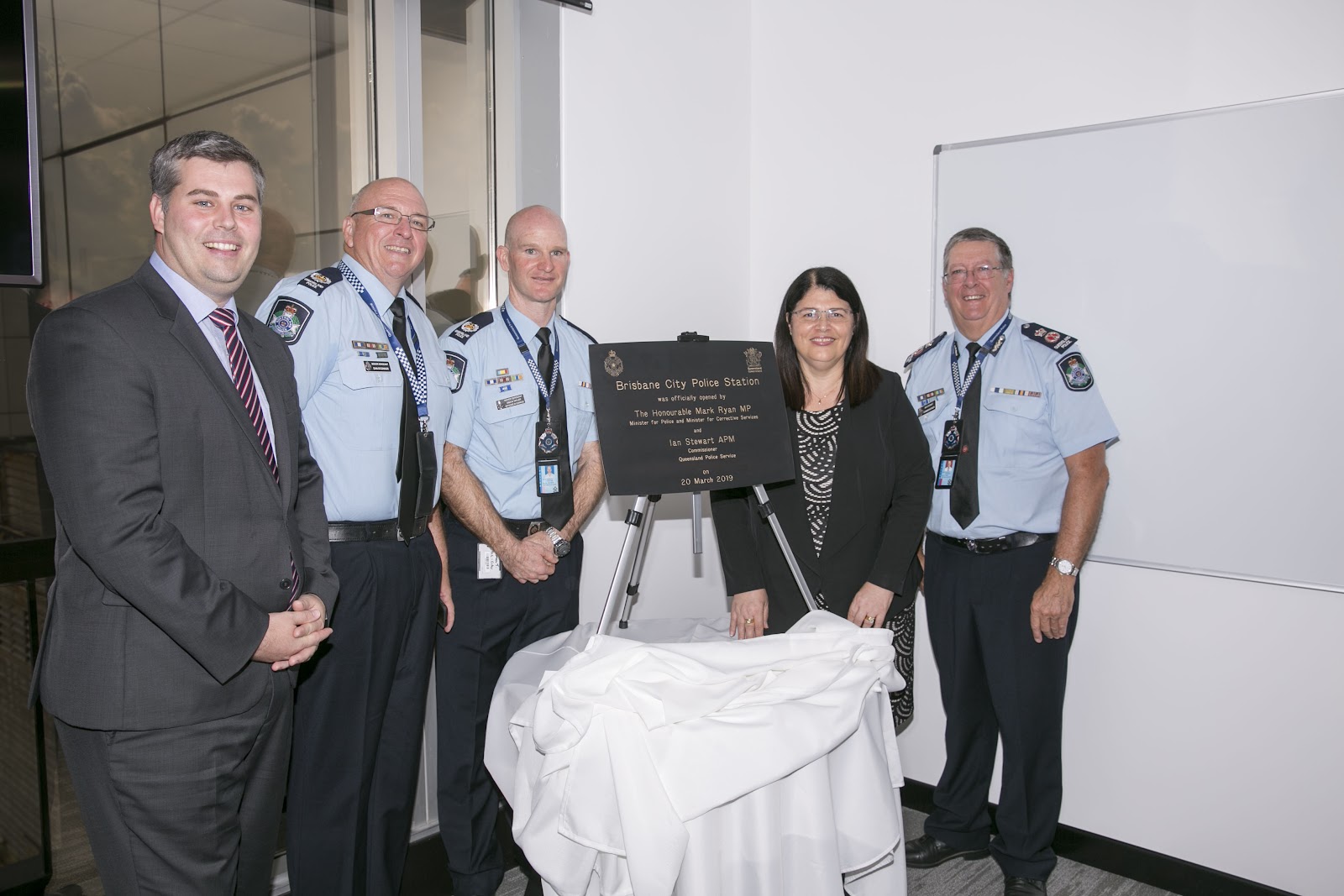
Member for McConnel Grace Grace, Minister for Police and Minister for Corrective Services — Honourable Mark Ryan MP, and Commissioner Ian Stewart were in attendance during the official opening of this world-class police station.
The new station “epitomised the continued commitment of the Queensland Police Service and the Queensland Government to keeping policing facilities at the highest standard,” Minister for Police and Minister for Corrective Services — Honourable Mark Ryan MP said.
“New constructions such as this are vital for police to continue to provide excellent policing services to the community,” Minister Ryan said.
Photo Credit: State of Queensland (Queensland Police Service) 2019 / mypolice.qld.gov.au
“This new station provides our frontline police with the technology and resources needed to deliver more efficient policing for the community,” Commissioner Ian Stewart said.
“The opening of this new station is both a continuation of the history of service the Queensland Police Service has offered to Brisbane and positive step into our future as a world-class police service,” Commissioner Stewart said.
Photo Credit: State of Queensland (Queensland Police Service) 2019 / mypolice.qld.gov.au
The new facility is a welcome investment, McConnel MP Grace Grace said, in the safety of the CBD and the inner-city community, which has significantly grown in recent years.
“The number of Queenslanders now calling the CBD and the inner-city fringe home has increased significantly over recent years with new job-generating residential and commercial developments,” Ms Grace said.
“It’s also the beating heart of Brisbane’s vibrant night-time entertainment economy.
“The new Brisbane City Police Station is a world-class facility with access to new technology that will not only benefit policing in our community, but all of Queensland,” Ms Grace said.
Are you looking for a creative but different way to spend your leisure time in Paddington? The Kimono workshop hosted by Japanese expert Kent Florist could be right up your alley.
You don’t need to be a skillful sewer to make your own Kimono dress as the technique is apparently quite easy to master.
In recent years, modern fashion has embraced the simplicity of Kimono dresses. This garment has become on trend because it can easily turn a dull outfit into a dramatic ensemble without looking too made up.
Kimono jackets or robes can be worn over a pair of skinny jeans or shorts and a basic shirt. Its fabric is comfortable and fun to mix and match with other outfits.
Set for Sunday, the 28th of April 2019, at 11:00 a.m. at 6 Cochrane Street, this Kimono workshop will teach you to make either a hip or thigh-long kimono jacket (haori) to spruce your day-to-day wardrobe or a simple robe (nagajuban) to wear for special events.
The one-time workshop cost $95 per person, which is already inclusive of the kimono cloth and sewing tools like thread and needle. Participants will also be served Japanese sweets and green tea during the break.
Kent Florist specializes in flower arrangements and its owner, Mikiko Inoue, also conducts regular Kokedama workshops for the green thumbs. Ms Innoe also runs For Japan Only, a novelty store that sells vintage Japanese items including Kimono, handbags, and shoes.
Online grocery shopping via Woolworths has now been made more convenient as the superstore, located at 107 Latrobe Terrace in Paddington, recently launched its Delivery Now service.
Under this delivery scheme, Woolworths customers may receive their purchases within a two-hour window. The company is introducing this very first speedy delivery service in Brisbane to keep abreast with the competition.
At least 38 Woolworths sites across Brisbane, Melbourne, and Sydney have already adopted Delivery Now. Aside from Paddington, residents in these suburbs in Brisbane may also take advantage of the short-term service seven days a week from 9:00 a.m. to 7:00 p.m.:
Ascot
Ashgrove
Bulimba
Camp Hill
Spring Hill
The company is looking to expand this service to more stores in Queensland based on the customers’ feedback and demands.
Woolworths’ Delivery Now has a delivery fee of $19 for 30 commonly needed items, such as food ingredients and baby products. When a customer is too sick to get up and buy medication, availing of Delivery Now’s two-hour service will also come quite handy.
This service, however, is different from the superstore’s existing delivery scheme, which charges a $15 delivery fee for grocery purchases amounting to $100 and up. Delivery Now, will also not be able to fulfill purchases of deli items, which requires preparation, and bulky items that might not fit in the delivery vehicle.
Zero-waste is more than just a fad… it’s a lifestyle. If you need some help in easing the transition to waste-free living, don’t miss Biome’s DIY Workshops in Paddington this month.
The “Introduction to Zero Waste” by founder Tracey Bailey and Biome Collective facilitator Jacq Driscoll will teach you how to reduce landfill waste in your life. It’s coming soon and those who have bought a ticket will be notified via mail about the event date.
If you’re looking forward to join any workshop this month, here are other events happening at Biome’s Collective Space in Paddington in April 2019:
Slow Fashion Pop Up Weekend (6th and 7th of April)
Biome joins the Fashion Revolution Week, a global movement towards a fashion industry that respects both people and planet. They will be showcasing their garments and accessories for one weekend only.
‘Blue Jean Sisters Project’ Make a Doll Workshop (13 April, 10:00 am – 12:00 pm)
Blue Jean Sisters’ is a project by artist Belinda Smith that raises awareness on human trafficking and sexual exploitation in the fashion industry. Participants need to have basic sewing skills to join. Those who cannot come in the morning session may join in the afternoon session, from 1:00 pm to 3:00 pm of the same date.
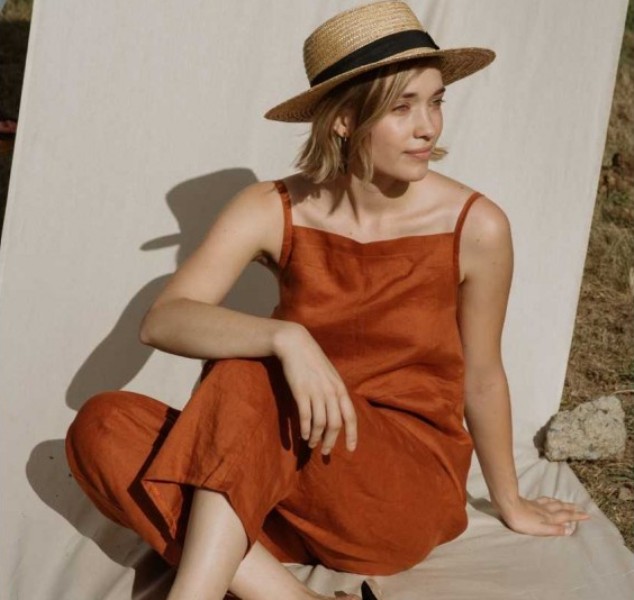
‘Linen Jumpsuit Workshop with Common Stitch’ (14 April, 10:00 am – 2:00 pm)
Learn how to make your own beautiful linen jumpsuit from scratch using deadstock fabrics pre-destined for landfill. You will be guided every stitch of the way by local and sustainable design team – Common Stitch. Sizes range from 6 to 20.
‘Lip Balm & Solid Perfume’ (17 April, 10:00 am – 11:00 am)
Come along to this hands-on workshop where you will learn to make an all natural lip balm and solid perfume using ingredients from their Naked Beauty Bar. You can make and take three personalised products.
Clothes Swap Event (20 April, 10:00 am – 12:00 pm)
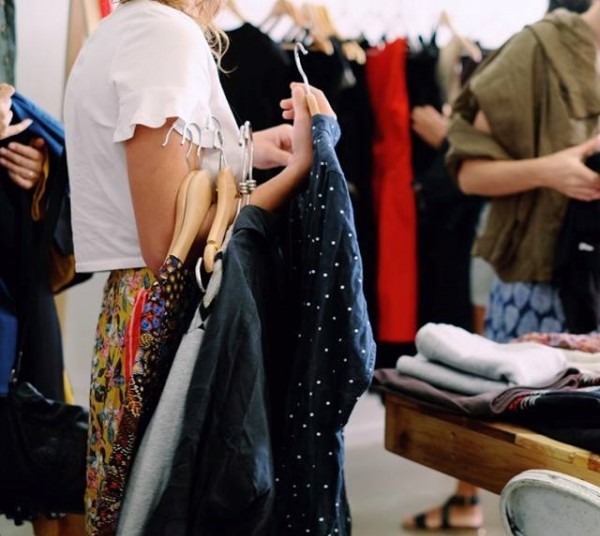
Do you have clothes that no longer spark joy? Maybe they will for someone else! Be part of the circular economy at a Biome Clothing Swap, where you can exchange your unwanted clothing that are still in great condition.
Does your skin care routine leave you feeling dazed and confused? At this workshop, learn waste free skin care habits using simple, toxin free ingredients. You can make and take three personalised products.
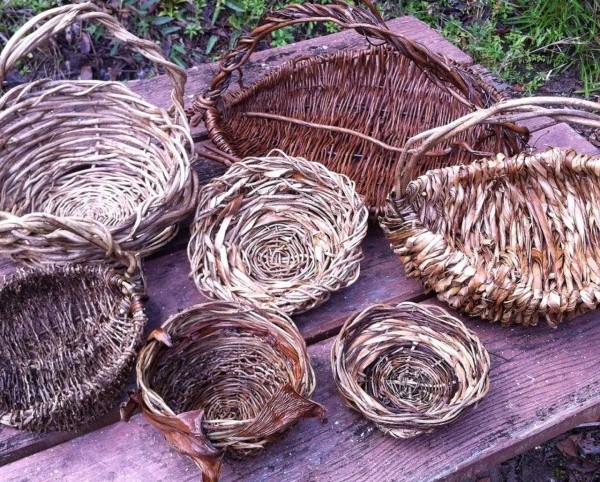
‘Basket Weaving Workshop’ with Wild Baskets(27 April, 1:00 pm – 4:00 pm )
One of their popular workshops, the basket weaving workshop will show you how to make and complete one bespoke melon Basket with Wild Baskets. It uses weed vines that are strangling the native environment, sourced from revegetation sites.
For further information about the upcoming DIY Workshops, check out the Biome website.
The Spring Hill Reservoirs in Wickham Terrace are definitely amongst the suburb’s most important hidden gems as they continue to serve the community for almost 150 years.
In Queensland, the service reservoirs are the first of a series of inground reservoirs. Moreover, they totally stand out as these are the only ones known to have been built of brick with arched baffle walls rather than concrete.
From being a part of Brisbane’s vital water reservoir, the heritage-listed structures now serve as great and unique performance space and live venue.
The Wickham Terrace service reservoirs are particularly significant in demonstrating the demographic growth as well as improvement in living standards and local politics in Brisbane during the years of early self-government.
The construction of the reservoirs is particularly a response to the growing population in Brisbane in the 1870s. When residents started to complain about mains not servicing higher areas, the Board of Waterworks decided to construct a smaller Service Reservoir near the observatory on Wickham Terrace.
The First Service Reservoir
Tenders for the construction of a reservoir in either concrete or brick were called in 1870.
The Board accepted a tender from Henry Holmes specifying the use of concrete. However, Holmes requested to change the walls to brick after preliminary excavations and the identification of cracks in concrete samples. Subsequently, he offered to withdraw his contract.
The Board of Waterworks then decided to complete the contract under its own Clerk of Works. Interestingly, 69,000 locally produced bricks were purchased to complete the reservoir.
The first reservoir was finally completed and filled with water on 24 February 1871.
Meeting Growing Demands in Brisbane
The Reservoir was an 18-metre by 9-metre open-air structure. It held 570,000 Litres or 126,000 gallons of water which came to a depth of 4.15 metres. The reservoir was filled for 10 hours every night to keep up with water demand for the following day.
The first reservoir had a significant effect on the standard of living in Brisbane as it helped in lowering water charges in the area.
In December 1872, a further 60 cm was added to the walls of the reservoir to increase its capacity and by 1876, an additional main from Enoggera Dam was laid to allow water to be reticulated to higher parts of town.
Service Reservoirs (2009). Photo credit: Heritage Branch staff/Queensland Heritage Register
Brisbane’s population surge in the late 1870s saw the need to construct an additional reservoir. W Innes and Son built the second and much larger reservoir in 1882.
Just a few years after the addition of the new reservoir, the Board of Waterworks also made other improvements in Brisbane’s water supply system to keep up with the population boom of the 1880s. These include the construction of the Gold Creek dam in 1885-1886, and the Highgate Hill service reservoir, which was of mass concrete rather than arched brick walls, in 1889.
The Board of Waterworks also considered roofing both reservoirs to prevent animals from falling into the water. However, these additions did not take place at the time since the Board was more concerned about the leaking condition of the reservoirs.
Furthermore, due to the declining gravity water supply, the service reservoirs only supply water to the lower parts of the city. The larger reservoir, on the other hand, retained water in case of emergency. Both reservoirs were removed from use between 1898 and 1906.
Spring Hill Reservoirs (interior). Photo credit: CC BY-SA 4.0/Reubot/Wikimedia Commons
Several improvements were made in the Spring Hill Reservoirs in the 1900s. They were again brought back into service to support the increasing needs of the growing city. Both reservoirs were roofed and the internal walls of the smaller reservoir were cement rendered to prevent leaking.
The service reservoirs remained to be an integral part of the Brisbane water supply system until 3 September 1962 when the water main from Enoggera Dam collapsed. The reservoirs were shut down since due to their comparatively small capacity and low elevation, they were unable to serve the new high-rise buildings within the inner city.
Service Reservoirs from SE (2016) Photo credit: Vic Bushing/Queensland Heritage Register
Brisbane City Council received several suggestions for the redevelopment of the Wickham Terrace service reservoirs in the 1980s. These include included converting the area into an art gallery, bus exchange, restaurant, and theatre in the round.
Unfortunately, poor access, fire risk, and ventilation issues delayed the redevelopment of the structure.
As part of Queensland’s 150th-anniversary celebrations, the service reservoirs had restoration works including the replacement of the roof. The revitalisation of the reservoirs increased the potential for public access.
In 2014, following a two-year negotiation with the Brisbane City Council, the Brisbane based Underground Opera Company completed a $150,000 temporary fit-out to allow the staging of a series of opera performances within the large reservoir. This was the first time that the public has been able to access the space.
Opera in the Reservoirs 2014. Photo credit: Underground Opera Company/Facebook
With the successful redevelopment of the space, the Spring Hill Reservoir now serves as a unique venue for various performances. Several events are now being scheduled in the venue including the popular Opera in the Reservoir.
Apart from providing an excellent space for live performances, the Spring Hill Reservoirs continue to be a reminder of the importance of having a reliable, accessible, and clean water supply. The structures also help in illustrating the technical advancements in the early development of Brisbane and Queensland.
Paddington’s restaurant scene will liven up with the addition of Nota, a sophisticated diner and bar offering modern European cuisine inspired by the best of local and seasonal produce.
Located in Given Terrace, in a space that was once occupied by French restaurant Montrachet, Nota has an inviting and warm ambiance, with exposed brick walls and rustic-themed interiors.
Not only is it nice to come here for the relaxing vibe, the food has also been getting a warm reception from impressed visitors. Barely into its first month, Nota has already been receiving rave reviews from locals, for offerings like the warm lamb salad and slow-cooked octopus.
Apart from gastronomic delights designed to whet your appetite, Nota also has cocktails, small-batch wines, and a selection of local beers curated by Matt Kirkegaard for that perfect post-work getaway with friends.
A brainchild of Cheese Platter owner Sebastiaan de Kort and business partner Kevin Docherty, the restaurant’s name literally means “familiar” in Latin. The owners wanted to create an environment where guests can share a meal with their nearest and dearest without the confinement of fine dining etiquette.
Nota is open on Wednesdays and Thursdays for dinner, from 5:00 pm until late and on Fridays and Saturdays from 11:00 am to 3pm and 5pm until late.
For more information and bookings, check out Nota’s website or follow them on Facebook.