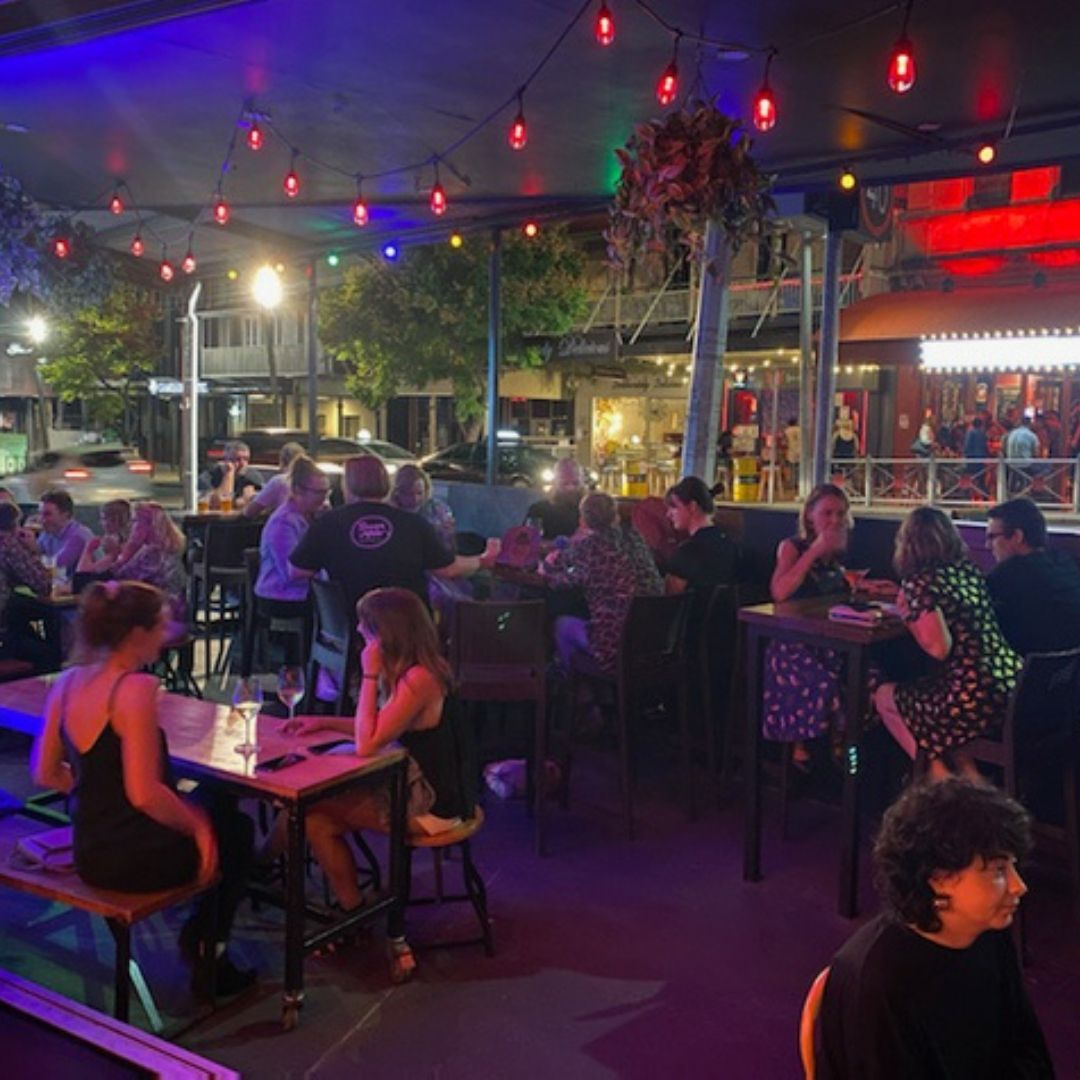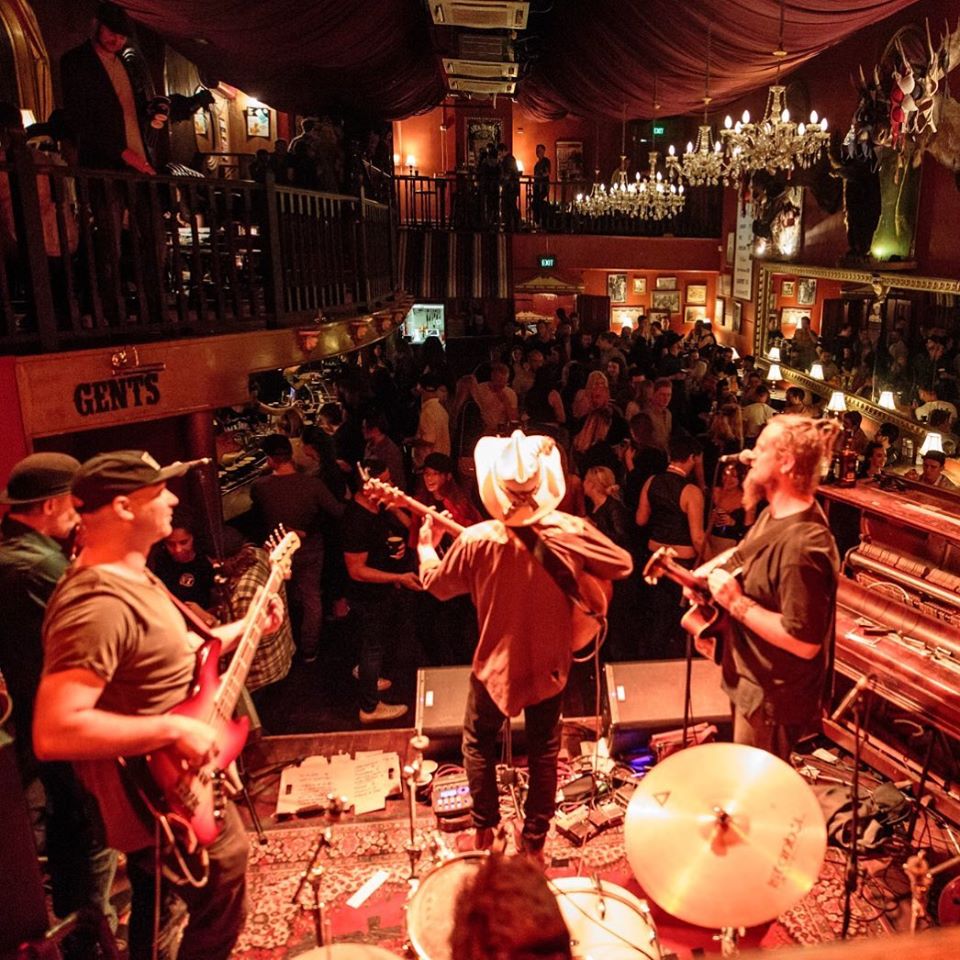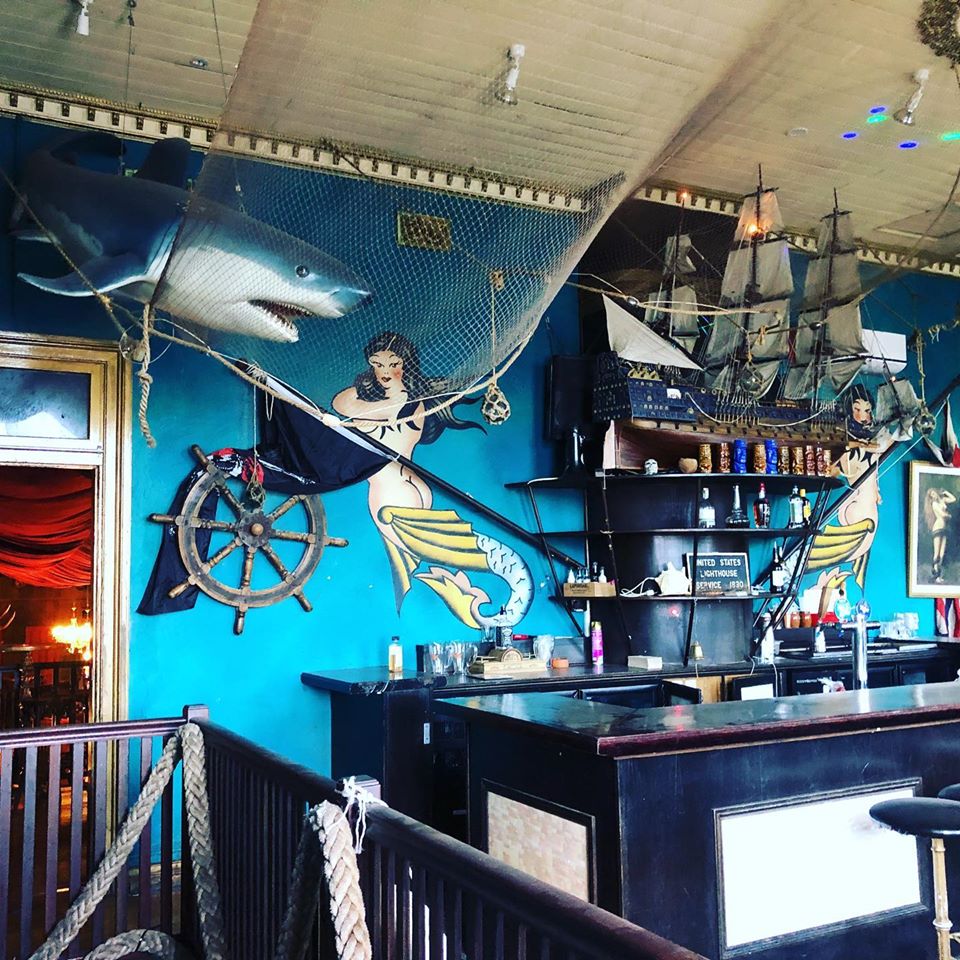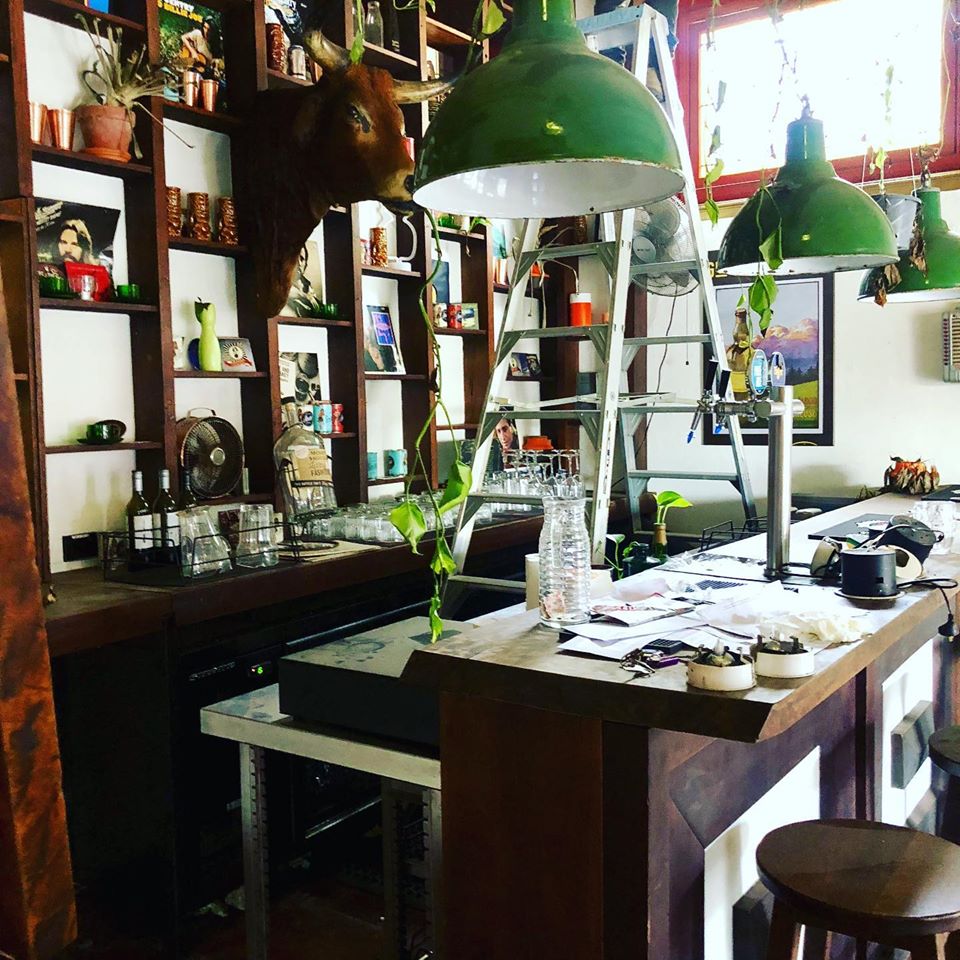



This well-loved Brisbane venue in Petrie Terrace is coming back to life in late February 2020 to once again reignite Petrie Terrace’s live entertainment scene.
Lefty’s Old Time Music Hall, in the heritage-listed Baroona Labor Hall, is known for being the perfect place for whiskey apples, southern-style food, and Americana rock. Last November 2019, this popular venue surprised everyone when it suddenly closed its doors and left Brisbane’s nightlife scene; but not for long, though.
This historic Caxton Street space is already set to reopen its doors on 27 February 2020 and will run under a new management group, Hallmark Group Australia — the same people behind Finn McCool’s, Retro’s Cocktail Lounge, Jammie Oliver’s Pizzeria, and Jammie’s Italian.
Apart from its new trade name — Lefty’s Music Hall — everything else that we’ve loved about this venue is preserved. The dive bar-style spot will still offer its famed whisky apple, honky-tonk saloon theme, and live music lineup. The crimson walls, vintage chandeliers, and sizeable mirrors displayed around the place will also be maintained.
Photo credit: Lefty’s Music Hall / Facebook
Also present in its reopening are the giant curved bar, candle-lit black leather booths, wall-mounted peacock and bear, smattering of moose heads, and heavily used dance floor and stage. Its return with an authentic spin will surely be appreciated mainly because it’s how the place became very popular.
Photo credit: Lefty’s Music Hall / Facebook
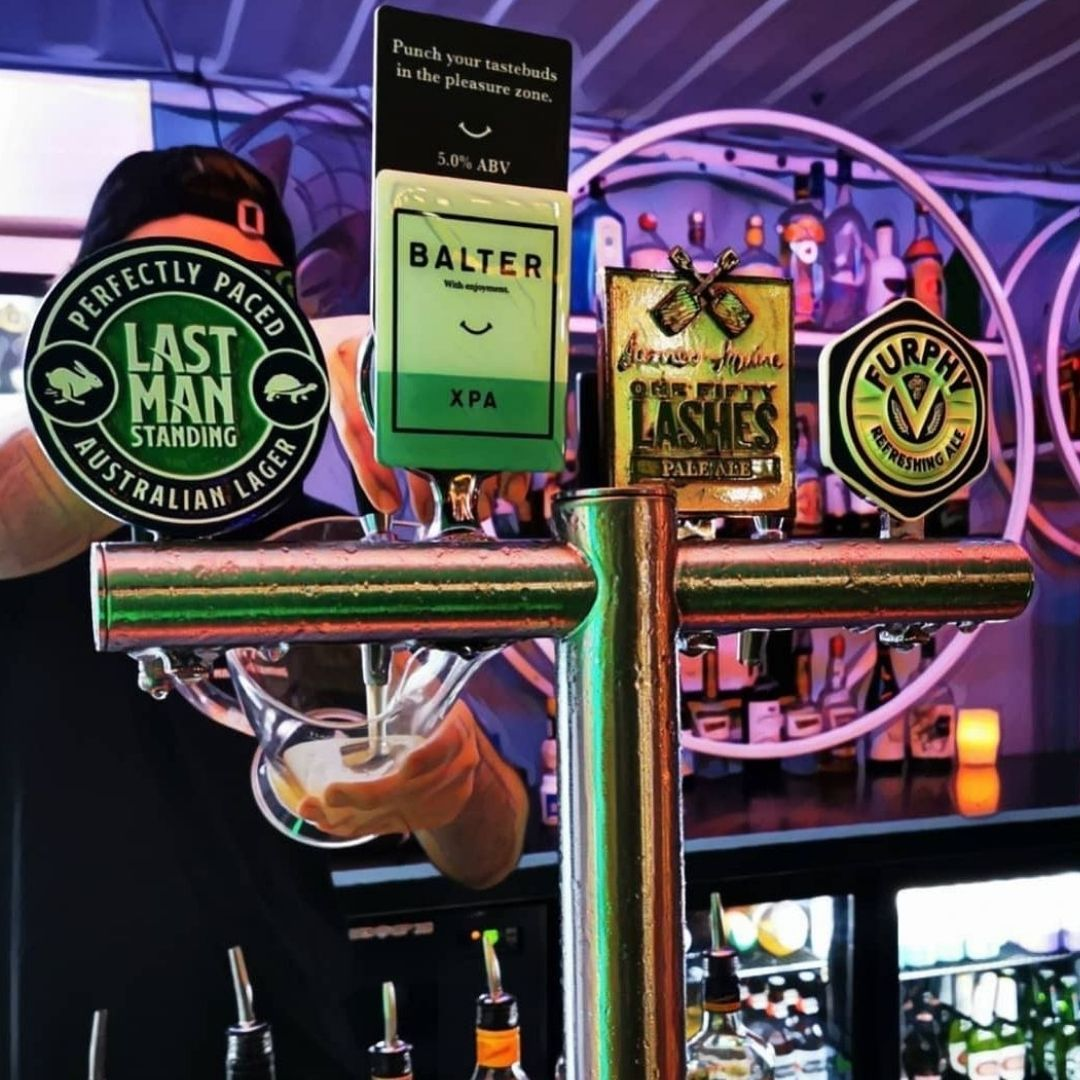
The specific food and menu that will be served on Lefty’s are not disclosed yet – aside from the well-known blend of whisky and freshly juiced apples that are heavily ruling the bar. What’s sure is that the bar will serve plenty of whisky and boutique beers.
They will all return in its reopening this 27th of February with Live Entertainment and the all-time favourite Whiskey Apples.
La Boite Theatre is undeniably one of Petrie Terrace’s most interesting landmarks. Considered as Australia’s first purpose-built arena theatre, the historic site helps in showcasing the development of theatre in Queensland.
The La Boite Theatre is key to restoring amateur theatre in Queensland. The theatre is also significant for serving as a purpose-designed building for the Brisbane Repertory Theatre Society (now La Boite Theatre Company). They are currently Australia’s oldest, continuously running theatre company and have played an important role in the development of theatre arts in Queensland.
History of La Boite Theatre
A group of local theatre enthusiasts founded the Brisbane Repertory Theatre Society during the growth of the ‘Little Theatre’ movement in 1925.
Brisbane theatre-goers warmly embraced the theatre group. In fact, newspapers reported that large and appreciative audiences frequented their shows through the 1920s and 1930s.
The group has since performed in many theatres including Her Majesty’s, the Bohemia, Cremorne, Theatre Royal, Rialto, and the Old and New Albert Halls. They also held a lease on the Princess Theatre in South Brisbane for several years.
Unfortunately, these theatres closed one by one which prompted the group to seek for new performance spaces.
The Society acquired two timber cottages on the corner of Hale and Sexton Streets, Petrie Terrace in the late 1950s. The site initially served as club rooms.
Subsequently, they purchased adjoining properties and decided to convert one of the houses into a theatre-in-the-round. At the time, there was no existing theatre-in-the-round in Brisbane despite the popularity of experimental productions. The society also felt that it is necessary to establish a permanent home ‘where the theatre’s image could flourish and members would be welcome at all times’.
The converted cottage initially seated 65 people and opened for performances in June 1967. Although the performance space was small and technical facilities were limited, the new theatre turned out to be an artistic success. The group named it La Boite which means ‘The Box’ referring to its box-like shape.
La Boite Theatre
La Boite Theatre with Blair Wilson. Credit: State Library of Queensland/Vimeo.
In 1971, Brisbane City Council approved the plan for a new theatre which replaced the converted house. Blair Wilson of Brisbane firm R Martin Wilson & Sons created the design which includes input from the theatre’s Artistic Director, Jennifer Blocksidge. It was the first purpose-built arena theatre in Australia.
Interestingly, in an attempt to save on the cost of building the theatre, Wilson used irregularly-shaped reject bricks which also added to its unusual character.
The La Boite Theatre officially opened on 11 June 1972.
With its continuous innovation, Brisbane Repertory Theatre established the Early Childhood Drama Project in 1975. Furthermore, it became a professional company in 1993.
Their growing needs of the company to consider moving. Towards the end of 2001, the theatre company announced that they would move to the new Creative Industries Complex at Kelvin Grove.
The Barracks in Paddington is important in the suburb as it serves as a landmark commercial precinct today. However, did you know the interesting history of the precinct?
From being amongst the earliest Brisbane gaol to becoming a popular underground night club in the 1990s, The Barracks certainly has quite a few stories to tell.
History
The Barracks was formerly known as the Petrie Terrace Police Depot. It is significant in the history of the suburb as it was occupied by the second purpose-built Brisbane Gaol from November 1860 until July 1883. The overcrowded Petrie Terrace Gaol was closed in 1883 upon the completion of a new gaol at Boggo Road, South Brisbane.
Aerial view of Petrie Terrace Gaol, Brisbane, 1862. The gaol was erected in 1860 to the design of the colonial architect Charles Tiffin. It was converted into a police barracks in 1883. Photo credit: John Oxley Library, State Library of Queensland/Wikimedia Commons
In 1885, the gaol reserve was divided between the newly established permanent Queensland Defence Force and the Queensland Police Force. The QDF occupied the 1864 military reserve and the northern end of the gaol reserve, the whole of which was renamed Victoria Barracks by mid-1885.
Photo credit: John Oxley Library, State Library of Queensland/Wikimedia Commons
The Queensland Police Force occupied the remainder of the gaol reserve as a police depot and training centre. The police occupied the former gaol reserve for a century until the mid-1980s. However, the site was officially gazetted as a reserve for police purposes in 1901.
Petrie Terrace Police Depot
The former gaol was officially recognized as Petrie Terrace Police Depot from 1850-1960. Additions to the building included the construction of stables in 1912 and a police garage and workshop in 1936.
View of the brick barracks at the police depot on Petrie Terrace in Brisbane, 1951 Photo credit: John Oxley Library, State Library of Queensland/Wikimedia Commons
In 1938, work commenced on the construction of a new three-storeyed, brick and concrete police barracks at the Petrie Terrace Police Depot, on land formerly utilised as a parade and drill ground.
The new barracks, designed by Raymond Clare Nowland, was considered as one of the best investments that the Government had made at the time.
During WWII a brick building to house the Police Wireless Transmission Station VKR was erected in the southwest corner of the police reserve. Military police attached to the Australian Army, Royal Australian Navy, Royal Australian Air Force, United States Army, United States Shore Patrol, and the Royal Navy utilised the police wireless transmission station at Petrie Terrace.
Use of the Petrie Terrace Police Depot as a training facility ceased in 1973, but the Depot continued to serve other police purposes until the mid-1980s.
In 1987 the State Government sold the former police reserve and buildings to private enterprise.
Photo credit: Heritage Branch Staff
The Former Police Stables functioned as a nightclub through the 1990s, while the Former Police Wireless Transmission Station was converted into a restaurant.
After suffering from high levels of vandalism, the former Police Depot was developed to what is now known as The Barracks in 2007.
Photo credit: Heritage Branch Staff
The $120 million mixed-use development was completed in 2008 and is now a popular landmark retail and commercial precinct in Paddington.
The three heritage listed buildings from the Police era remaining on the site are the stables (1912), the three storey brick barracks (1939) and the radio communications centre (1941).
Photo credit: The Barracks/Facebook
In 2009, The Barracks won two prestigious UDIA Awards for Urban Renewal and best large Retail/Commercial development.
Learn more about The Barracks in Paddington by visitng their official website.