Queensland Academy of Creative Industries sits in the centre of Kelvin Grove and accepts students from across Queensland who want a mix of creative learning and an academically demanding program. The school operates as a selective, state-funded campus that serves students from Year 10 to Year 12.
The school promotes a close community where students support one another. Staff describe teamwork as a central value across the campus. Student-created artwork fills hallways, and the school includes theatre facilities, a dance studio, design rooms with 3D printers and production booths.
Photo Credit: Google Maps
Students produce visual pieces for the school environment, including the Blue Goose tuckshop branding. The goose theme appears throughout the campus and represents collective effort. Lockers are used without locks because students are expected to respect one another’s belongings.
Academic Program And The IB Structure
Queensland Academy of Creative Industries delivers the International Baccalaureate Diploma Program across Years 11 and 12. The program includes Theory of Knowledge, the Extended Essay and the Creativity, Activity and Service requirement.
Photo Credit: Google Maps
Staff say the IB structure supports students in independent research and study. Many subjects operate at a high level equal to first year university courses. The school states that this prepares students for the expectations of higher education.
Entry, Diversity And Student Pathways
Entry begins in Year 10 and is based on applications from families across the state. The school evaluates each application to identify students who fit its learning environment and expectations. Enrolment sits at more than 480 students, with girls making up most of the cohort. Queensland Academy of Creative Industries also accepts a small number of international students.
Photo Credit: Google Maps
Students choose the school for its subjects in dance, music, theatre, visual arts and film, while others combine creative subjects with science pathways. Past students have moved into university study in Australia and overseas. A smaller number work in creative fields including music and film.
Costs And Access For Families
The school does not charge tuition because it is part of the state system. Families pay for equipment such as laptops, textbooks and calculators, costing about $850 in the first year.
They also pay the International Baccalaureate fee for the two-year program, which was $2571 in 2025. The school’s Index of Community Socio-Educational Advantage value places about half of the student population in the higher quarter of socio-educational advantage nationally.
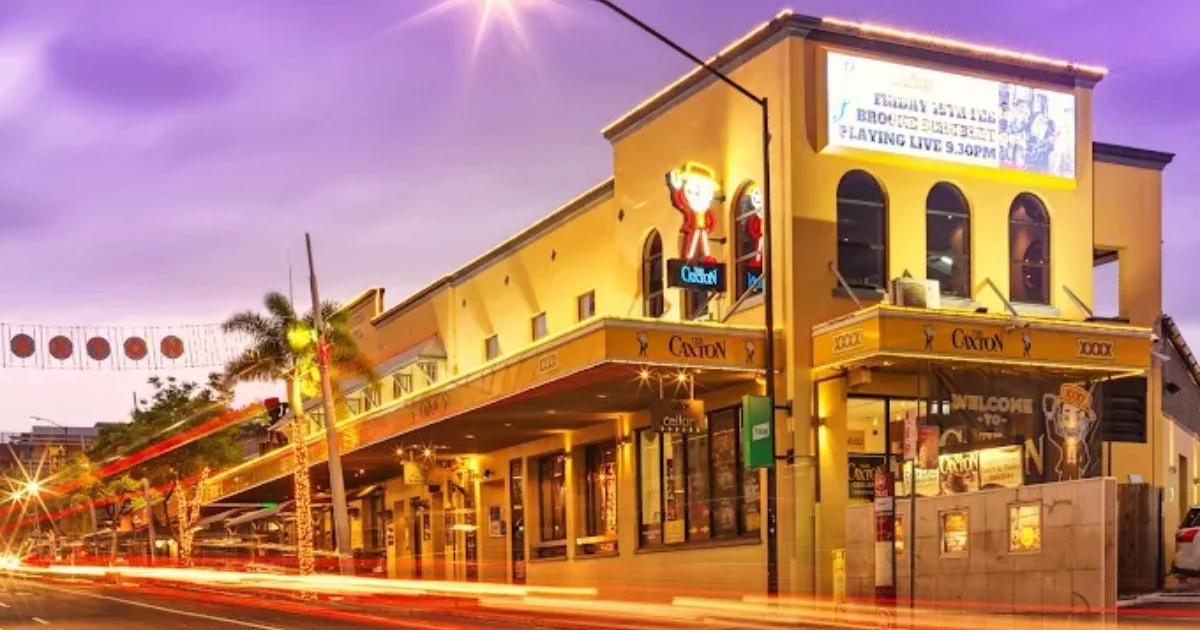
Brisbane’s most famous sporting pub, the Caxton Hotel, has a new owner. After nearly three decades under the stewardship of the Farquhar family, the historic Petrie Terrace venue has been sold in an approximately $50 million deal backed by Sydney Roosters chairman and NSW billionaire, Nick Politis.
The Caxton Hotel has been closely linked to Brisbane’s sporting and social events for more than a century. Originally established in 1864 and rebuilt in 1884 following a fire, the venue has stood on Caxton Street in Petrie Terrace for more than 150 years.
Photo credit: The Caxton Hotel/Google Maps
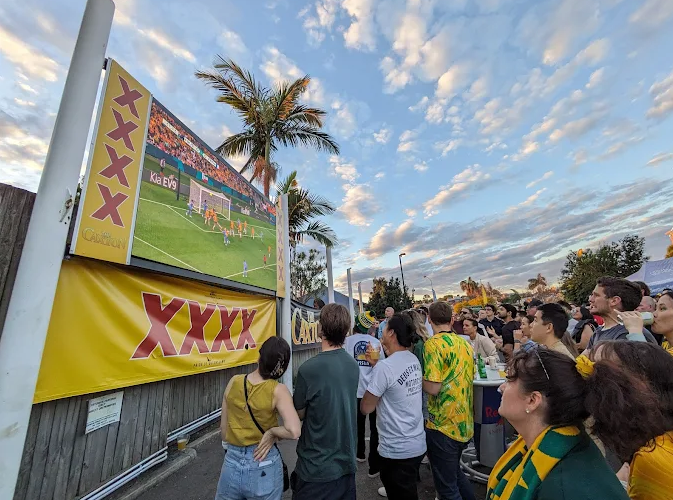
Its proximity to Suncorp Stadium (formerly Lang Park) has made it the go‑to spot for pre‑ and post‑match gatherings across sporting codes, especially rugby league. The nearby ‘running of the buses’ tradition during State of Origin sees team buses travel down Caxton Street, just metres from the venue.
Photo credit: Michael Copland/Google Maps
Under the Farquhar family, who owned the pub for nearly 30 years, the Caxton evolved into a multi‑faceted hospitality hub. Their management introduced tiers of offering including the Char Grill & Terrace Bar, the Cauldron Bar, gaming facilities, function spaces and live entertainment areas. In 2023 the Farquhar brothers were inducted into the AHA National Hall of Fame in recognition of their contribution to Queensland’s hospitality sector.
The venue is large‑scale, with multiple bars and external space allowing it to host thousands of patrons. It has been reported to handle up to 3,000 guests across its bars and car‑park areas. The site has been described as the unofficial headquarters for sporting celebrations in Brisbane.
A New Chapter: Nick Politis and SEQ Hospitality
Nick Politis (Photo credit: roosters.com.au)
The sale of the Caxton Hotel was conducted off‑market and negotiated by Leon Alaban and Drew Mitchell of Savills Australia and New Zealand. Politis’ company, SEQ Hospitality Group, in which he holds a controlling interest via Eumundi Group, is adding the Caxton to its growing southeast Queensland portfolio of hotels and hospitality assets. Already the group owns a number of venues including the Treetops Tavern, the Ashmore Tavern and the Queens Arms Hotel in New Farm.
For Politis, whose net worth is estimated in the multiple billions, this purchase adds to his interests in sport, real‑estate and hospitality. The acquisition places him in direct competition with nearby NRL‑owned venues, such as the Beetson Hotel (formerly the Gambaro Hotel), which has been transformed into a sports‑bar experience by the ARL Commission.
Although based in Sydney, Politis has long‑standing ties to Queensland, and the acquisition continues the venue’s strong connection to the rugby‑league community. With SEQ Hospitality overseeing operations, the Caxton Hotel is set to continue its longstanding role as a landmark in Brisbane’s cultural and sporting landscape.
With the transaction finalised, fans in Brisbane can expect the Caxton Hotel to remain a major destination for sport, entertainment and community gatherings. Its long history, combined with new ownership and management, positions it to stay an important hub for generations of supporters.
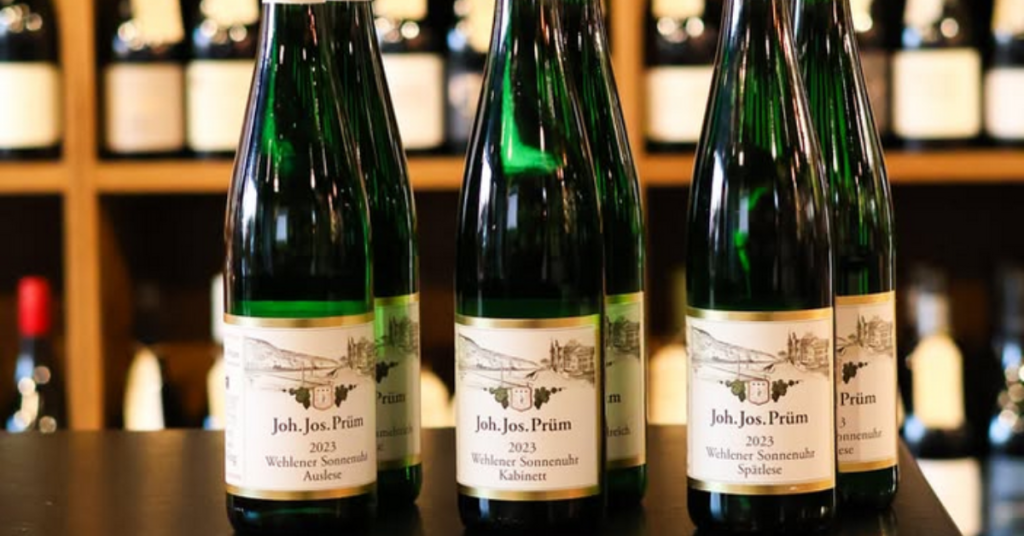
A humble Red Hill wine store sparked a quiet revolution across Brisbane, creating a new wave of independent shops focused on teaching curious locals how to drink better.
For years, buying alcohol in Brisbane was a predictable trip under fluorescent lights, facing walls of familiar labels. But a change has been brewing, starting in the suburbs. A new generation of independent bottle shops is offering a different experience, one that feels more like visiting a bookshop than a supermarket. These spaces are warm, human-scale, and designed to encourage browsing and conversation.
This shift was pioneered by Craft Wine Store, which began in Red Hill in 2012. Its founders, Tony and Tanya Harper, had spent decades in hospitality and wanted to offer something different. They set a clear rule: if a wine was advertised in major chain catalogues, they would not stock it. Tanya Harper explained that they were reacting against a retail scene where hundreds of shops all sold the same few brands. They wanted to provide something more interesting.
That “bookshop” philosophy is now common across Brisbane’s independent scene. These shops are not just places to buy alcohol; they are becoming community gathering points. Dan Wilson brought this idea to his LPO Neighbourhood Wine Store in Tarragindi. After running restaurants in London, he returned to Brisbane wanting to create a local hub, similar to places where he had built community overseas.
His shop, which started in March 2025 in a former post office, keeps eight to 12 bottles open for tasting every day. This approach blurs the line between a retail space and a bar. Wilson said the wines are there for education, conversation, and the joy a new experience can bring. This model is made possible by a newer Queensland wine merchant licence, which allows small businesses to host tastings and let customers linger, moving away from a simple transaction.
This new model is heavily focused on education. Wineism, which began in late 2021 in Albion, operates as both a bar and a bottle shop. Co-owner Ian Trinkle, a former sommelier, uses his background to make wine less mysterious. He believes people have good palates but often lack the specific vocabulary.
Before starting Wineism, Trinkle was already teaching formal WSET wine courses. He continues that educational approach in the shop, whether a customer is asking about a bottle at the bar or signing up for a class. He noted there is a huge appetite for education, pointing to the high volume of enquiries he gets weekly. At the original Craft store in Red Hill, education is more casual. Its weekly tastings have become a neighbourhood event, described by Harper as equal parts socialising and learning, full of chatter and familiar faces.
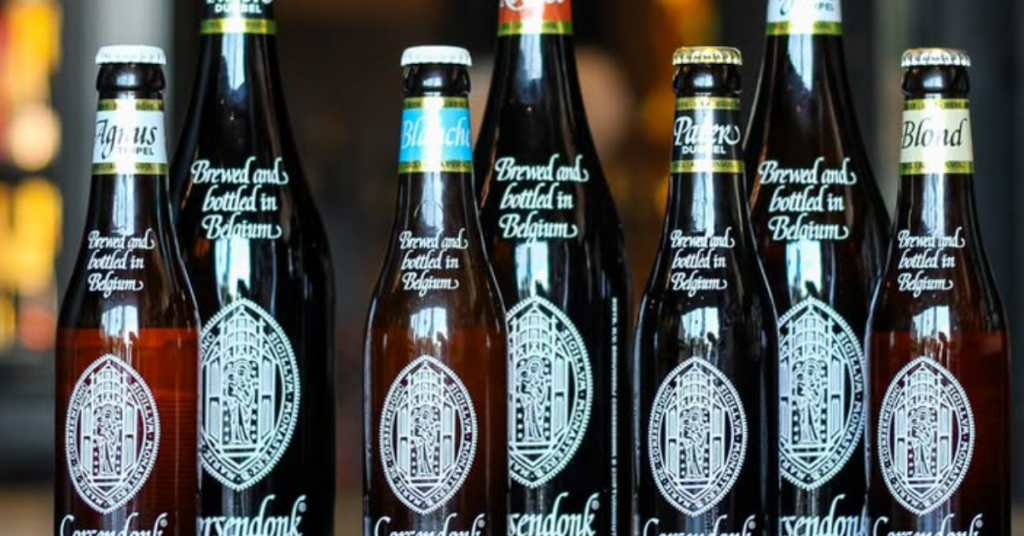
These shops assume their customers are curious, not just thirsty. By hosting free weekly tastings of wine, spirits, and beer, shops like Cru Bar & Cellar, The Reserve Cellar, and The Wine Emporium are helping expand palates across the city. They also give small producers a chance to reach customers who would otherwise never find them.
Tanya Harper observed how much tastes have evolved, noting that a gin once considered “premium” 15 years ago now sits among hundreds of local options. She stated that independent shops exist to fulfil a thirst they helped create. As people grew bored with big, familiar brands, these stores were ready to offer them a different, more interesting experience. In a market long shaped by supermarkets, each new independent shop represents a win for discovery and community.
With average life expectancy now stretching into the mid-80s, many Australians are realising that the family home—once a symbol of success—can quietly become a source of work and worry.
Nearly three-quarters of over-75s still live in houses larger than they need, while about 30 per cent are considering a move that fits their lifestyle today rather than the one they built decades ago.
Those themes will be be at the heart of Coffee & Conversations on 12 November 2025, where locals can hear about Somerset Indooroopilly—a new village that allows locals to downsize in the area they know and love.
Set beside the Indooroopilly Golf Club, Somerset is a series of light-filled apartments around shared gardens, terraces and a café rather than cul-de-sacs and fences. The aim is to make life simpler without making it smaller.
Designed by Cox Architecture and built by Woollam Constructions, the whole complex is shaped around the concept of rightsizing: a lifestyle that trades maintenance for meaning, routine for connection, and isolation for ease.
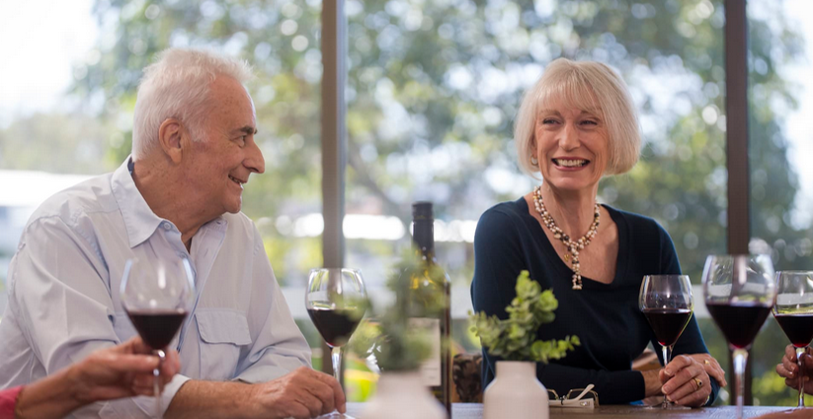
The shift speaks to a broader cultural change. Retirement communities are no longer seen as endpoints but as extensions of an active life. Research shows residents in such settings are physically healthier, more socially engaged and report higher overall happiness than those ageing alone. It’s less about giving things up than gaining back time—the chance to travel, volunteer or just enjoy an unhurried morning coffee.
Research shows that residents of well-designed retirement villages are more active, more socially engaged and less likely to need hospital care than peers who continue living alone.
People living in retirement communities can experience a reduction in patterns of hospitalisations, have the potential to reduced need for GP visits, and can stay healthy living independently.
Increasingly, people are choosing communities that give them freedom and flexibility, not just a smaller footprint. In practice, that means more time spent walking, reading, travelling—or simply enjoying a catch-up with friends—without the endless to-do list that comes with a large property.
At Somerset, that philosophy is built into everyday life, capturing that balance through thoughtful design. Apartments open onto gardens and shared terraces; the café hums with conversation; and facilities like the pool, gym, and library encourage activity without pressure.
Each home includes a 24-hour monitored EEVI system for peace of mind, while a Village Manager and Wellness Advisor ensure help is close by but never intrusive. “Knowing the place is managed, looked after and secure—that’s a big factor,” one resident said. “It’s lovely knowing you’re in a safe area, surrounded by good people.”
The community is pet-friendly, the gardens maintained, and the atmosphere quietly sociable. “Moving here gave me freedom,” said another resident. “I can just close the door and go.”
For many, that’s the essence of rightsizing—choosing a space that fits this stage of life as comfortably as the last one did. “When you make the choice sooner rather than later, you give yourself the gift of freedom and the chance to enjoy more of what matters,” Aura Director Mark Taylor said at a recent Somerset event.
And for anyone curious, participating in Coffee & Conversations on 12 November 2025 offers the simplest introduction: a walk through the gardens, a cup of coffee, and a conversation about how less maintenance can make room for more living.
Aura Holdings is a Proud Promotional Partner of Brisbane Suburbs Online News
The Wesley Hospital in Auchenflower continues to strengthen its commitment to patient wellbeing through a volunteer-led art collection featuring more than a thousand donated works.
The Wesley Hospital’s art program traces back to the 1990s when volunteers began curating donated artworks to create a calm and uplifting environment for patients, visitors, and staff. In December 2022, volunteers displayed a summer-themed exhibition by Sunshine Coast artist Tony Coles titled A Time to Reset, encouraging reflection and relaxation during the festive season.
Photo Credit: The Wesley Hospital/Facebook
Expanding the Collection and Volunteer Efforts
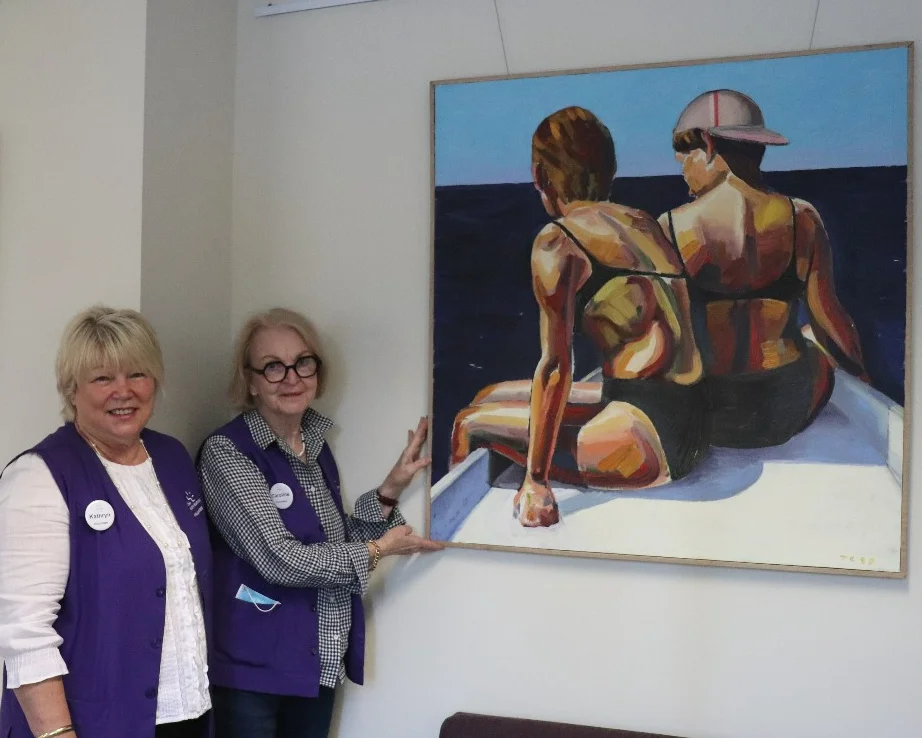
By 2025, the hospital’s collection had grown to include more than 1,000 paintings, prints, photographs, and drawings contributed by international, Australian, and Indigenous artists. Volunteers Caroline McCormack and Kathy Praine have taken key roles in rotating and maintaining the collection across wards and corridors, supported by the Volunteer Coordinator.
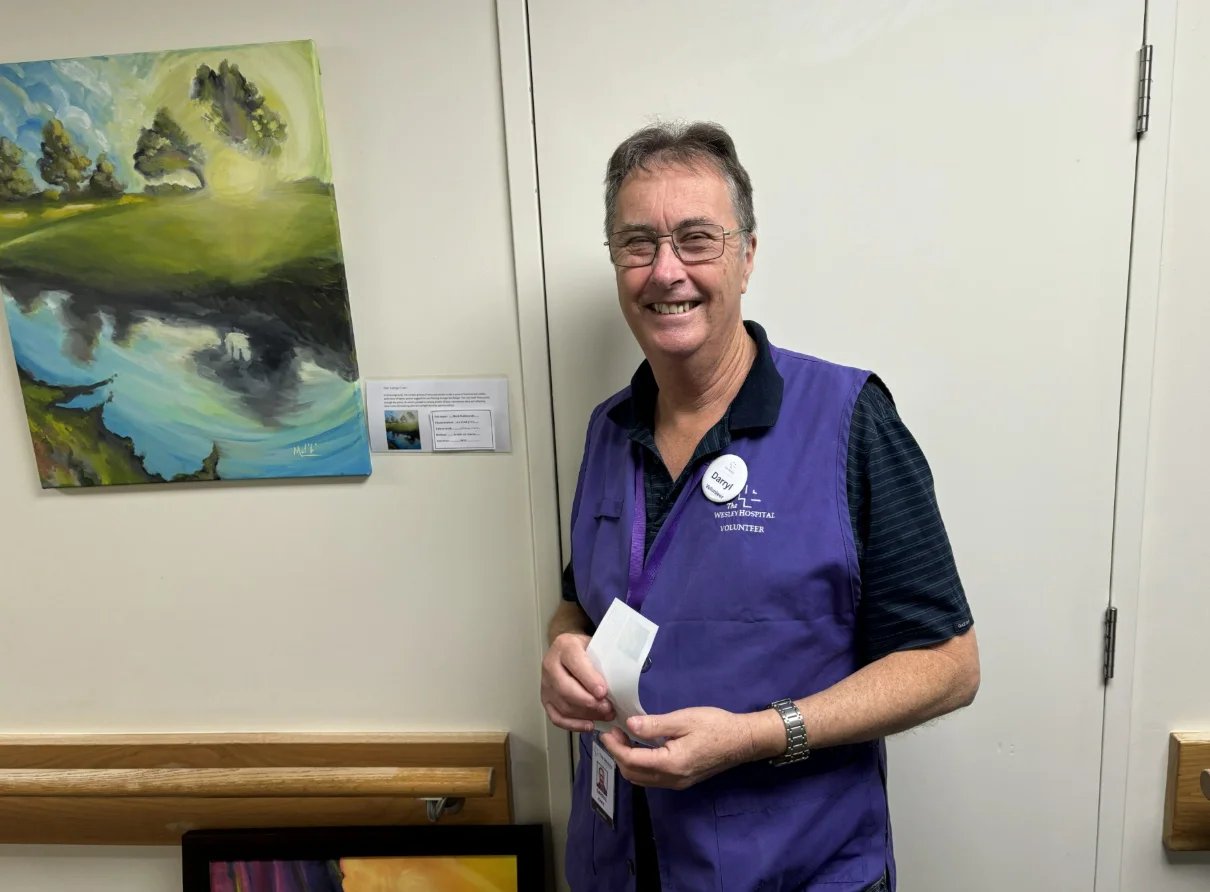
Their work ensures that new artworks are regularly displayed, fostering an atmosphere that complements the hospital’s holistic approach to care. In 2025, Darryl, a new volunteer and former diversional therapist, joined the curation team to assist with cataloguing and preserving the growing collection.
Photo Credit: The Wesley Hospital/Facebook
Community Contributions Enhance the Program
The collection also reflects the generosity of patients, staff, and local artists. In 2024, artist and former patient Glenise Clelland donated paintings inspired by her travels in Italy to help brighten patients’ days. Palliative Care doctor and photographer Dr Ralph McConaghy donated nature photographs captured in Iceland, New Zealand, Tasmania, and Brisbane’s Mt Coot-tha Botanic Gardens, bringing touches of natural beauty to the hospital’s Palliative Care Ward.
The Wesley Hospital’s art program represents more than decoration — it symbolises connection, creativity, and care. Through the combined efforts of volunteers and donors, the Auchenflower hospital continues to use art as a tool for comfort, reflection, and healing for all who walk its halls.
Aware Real Estate has acquired The Barracks in Petrie Terrace for about $150 million, with plans to activate new leasing and upgrade facilities across the mixed-use precinct.
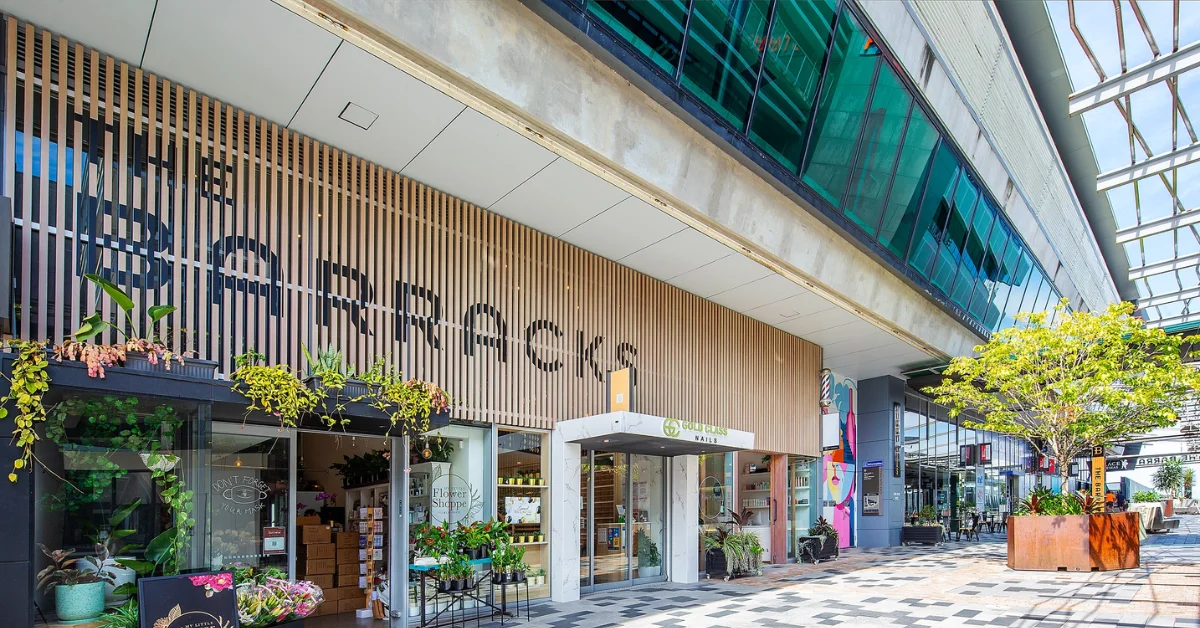
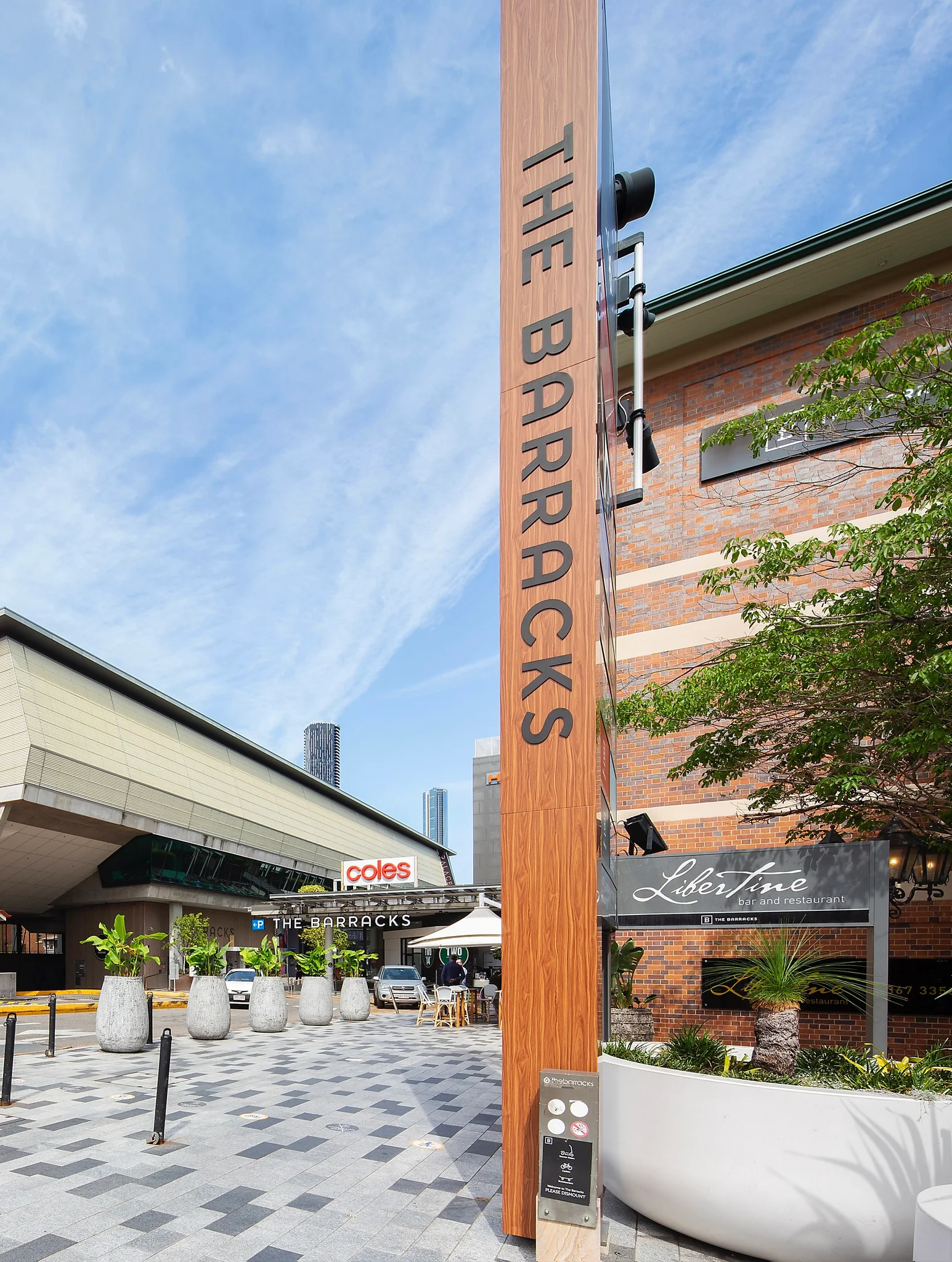
The Barracks at 61 Petrie Terrace was developed in 2008 by Property Solutions with QM Properties. The 1.09-hectare site integrates three heritage-listed buildings with a modern A-grade office tower and retail spaces, totalling 19,433sq m across five buildings. It includes 10,393sq m of office space, 9040sq m of retail tenancies and 451 car bays.
The precinct was acquired in 2018 for $162.32 million by Fortius Brisbane Barracks Trust, an unlisted single-asset vehicle.
Photo Credit: The Barracks/Facebook
Details of the 2025 Acquisition
On 30 and 31 October 2025, Aware Real Estate exchanged contracts to purchase full freehold ownership of The Barracks for approximately $150 million. The sale was managed by JLL and CBRE. Navigator Property Group advised Aware Real Estate during the transaction and will continue to work with the group on long-term asset planning.
Photo Credit: The Barracks/Facebook
Planned Upgrades and Leasing Activation
Aware Real Estate has outlined several value-creation strategies for the precinct. These include activating vacant food and beverage tenancies, improving the presentation of the centre and undertaking upgrades to the office buildings. The group is also preparing for a future relaunch of the precinct once key works are completed.
Market Factors Influencing the Purchase
The purchase aligns with Aware Real Estate’s broader Queensland expansion, following its acquisition of 145 Ann Street for $215.5 million. The group noted strong performance in Brisbane across office, retail and industrial assets.
Nearby development activity includes new residential, build-to-rent and student accommodation projects. Aware Real Estate also expects long-term uplift from infrastructure linked to the Brisbane 2032 Olympic Games.
Photo Credit: The Barracks/Facebook
Environmental Credentials
The Barracks holds 6-Star NABERS Energy and Water ratings across both modern and heritage office buildings. A rooftop solar installation of about 335kW supports peak load reduction across the precinct.
The group plans to improve retail activation and building performance before relaunching the precinct. Upgrades are expected to enhance the role of The Barracks as a mixed-use destination in Petrie Terrace.
The worst house on one of the most coveted streets in Auchenflower has been transformed into a luxury residence after a mammoth renovation that tested the limits of a local family’s determination and budget.
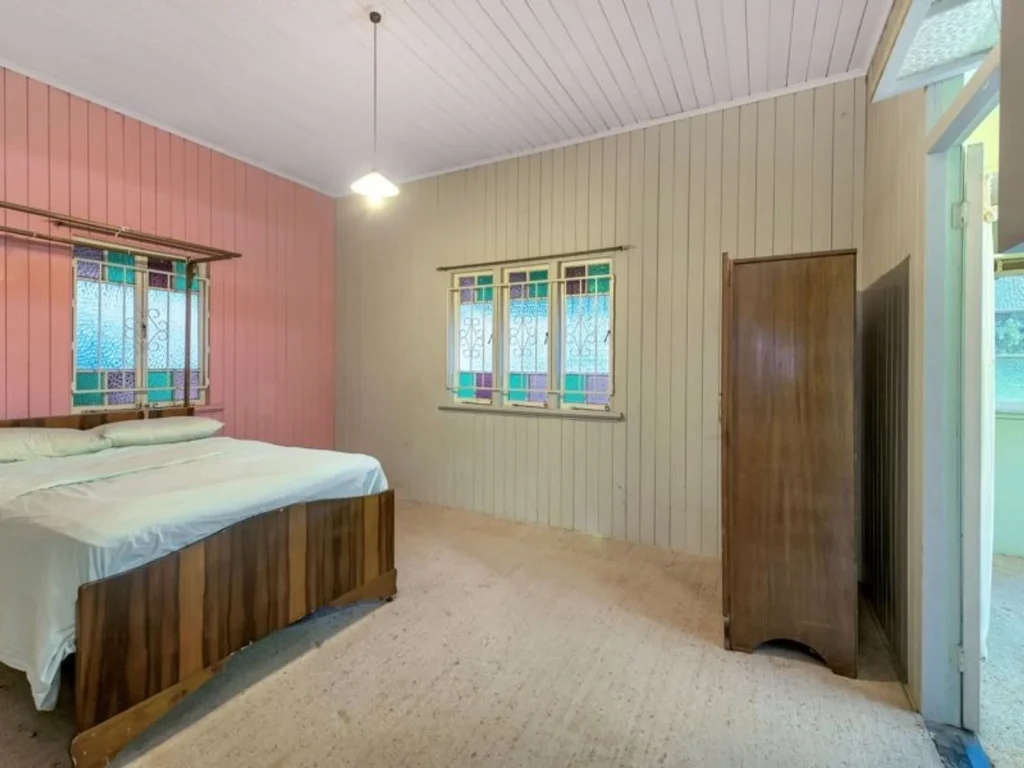
Anita and Paul Brown purchased the dilapidated property at 112 Annie Street for $1.45 million in 2021, drawn by its prime location despite its shocking condition. The house literally shook when walked through, featured dated pink and green decor, and harboured a backyard overrun with native monsteras sheltering countless huntsman spiders.
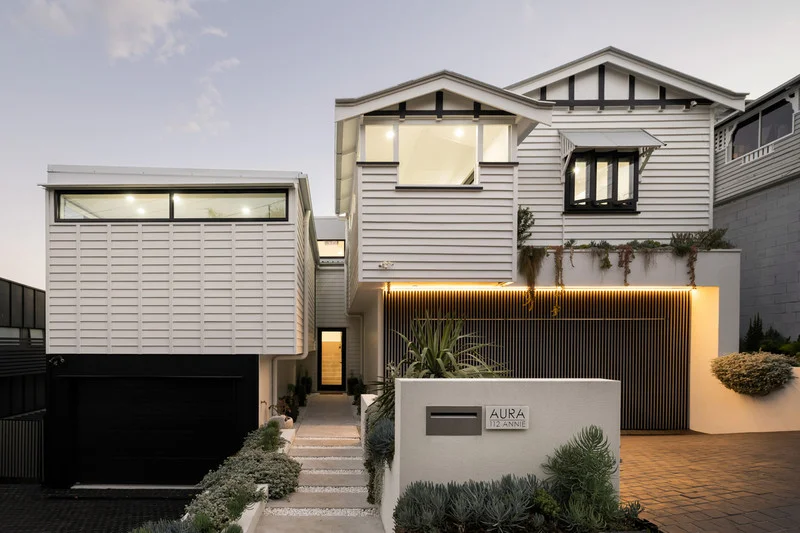
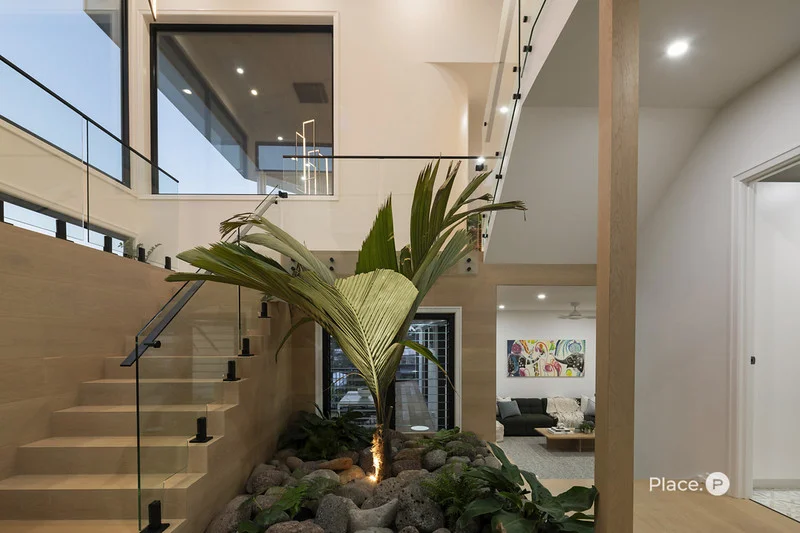
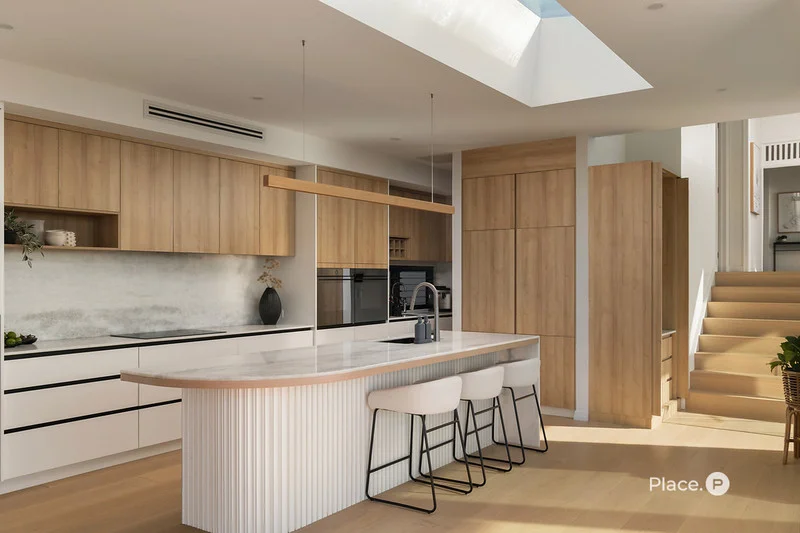
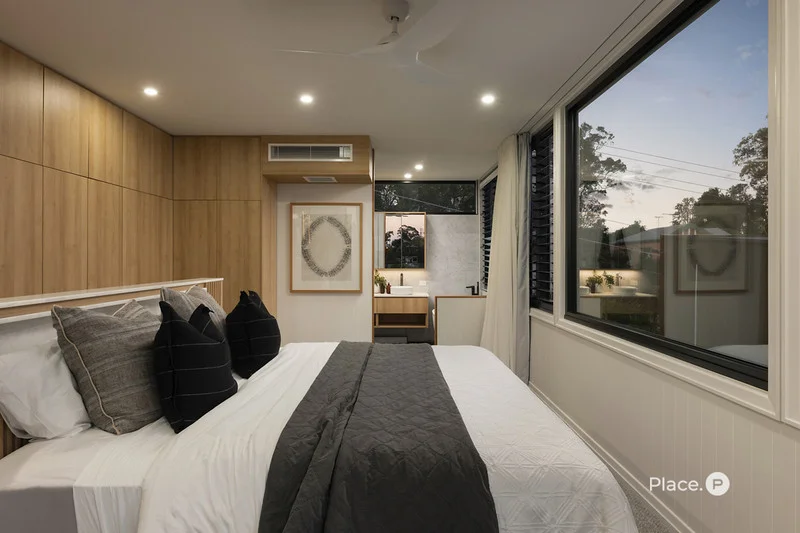
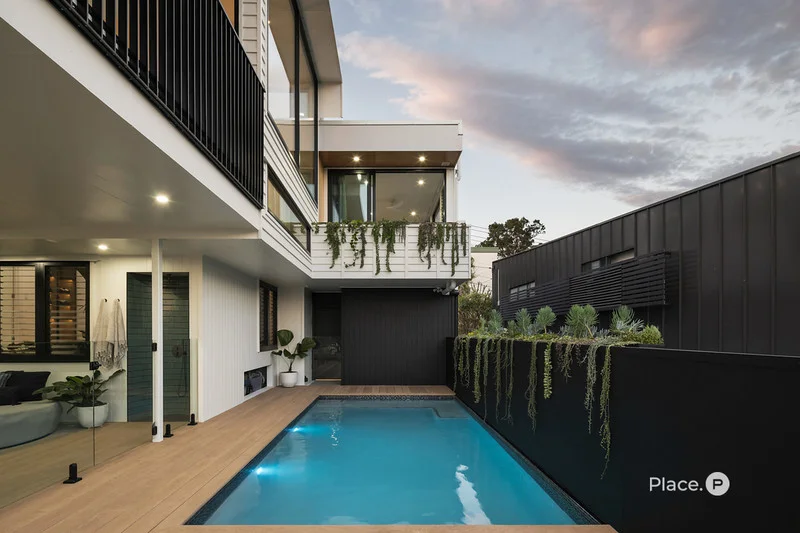
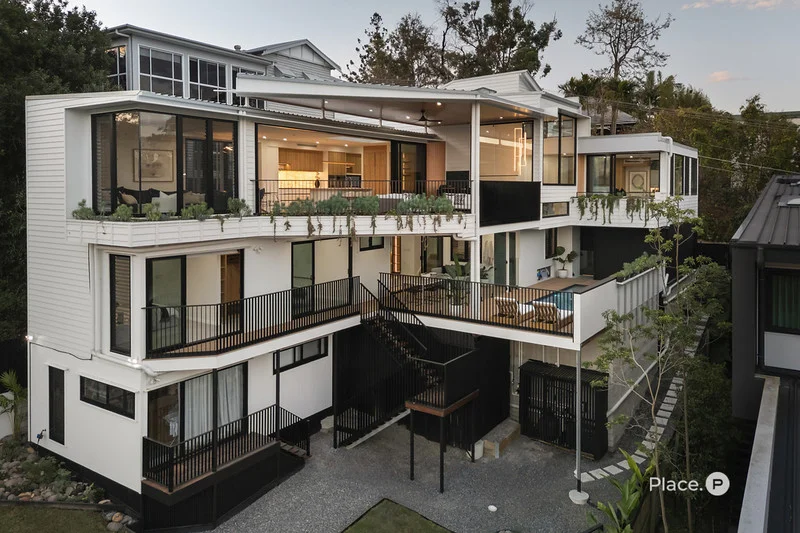
Three years and approximately $5 million later, the home now called Aura has been reborn as a three-level residence featuring six bedrooms, four bathrooms, a pool, wine cellar, and a self-contained granny flat. The renovation was completed over 18 months, with the original house raised and relocated on the block.
“It was honestly so dodgy. Back then my husband was a big guy, weighing about 140 kilograms and the whole place shook when he walked through it,” Mrs Brown said.
The couple, who have two young children, saw potential where others saw problems. The property was one of the last unrenovated homes on the street, and its position just three houses from the top made it particularly attractive.
To better understand the property before beginning work, the Browns moved into the rundown house for 12 months, studying how the sun moved across the site and where breezes came through. This informed their decision to install an entire wall of double-glazed glass along the eastern side to maximise the Brisbane city views.
The sloping block presented the biggest technical and financial challenge, with substantial money invested in retaining walls that remain hidden but essential to the home’s structural integrity.
Mr Brown took on the monumental task of clearing the monstera jungle by hand to make way for construction, an effort his wife describes as “the most epic thing ever”. The physical demands of the project saw Mr Brown’s weight drop from 140 kilograms to around 90 kilograms.
The renovation budget blew out significantly due to pandemic-related delays, soaring construction costs, and extensive custom ordering including bespoke windows. Turkish marble was hand-selected by Mr Brown on an overseas trip, adding to the home’s luxury finishes which include rainfall showers and multiple living areas.
To fund the project, the Browns liquidated three other investment properties. Mrs Brown, who bought her first house at 19 in Lismore for $100,000 while still studying, has built a substantial property portfolio over the years through strategic purchases and renovations.
The home is now listed for best offer by 1 November through Place Nundah’s Thomas Coussens and Place Ascot’s Drew Davies. While the agents haven’t disclosed a specific price expectation, the total investment of approximately $6.45 million provides an indication of the property’s value.
Mr Davies said the renovation quality surpasses anything he’s seen in the market, with strong interest from both interstate and local buyers following a pre-sale social media campaign.
Mrs Brown’s property advice, which she plans to pass on to her daughters Olivia, 11, and Penelope, 6, is straightforward: “Buy the biggest block of land you can afford as close the city as possible. It’s all about land banking now.”
Despite the enormous effort invested in creating what she calls “the ultimate family home”, Mrs Brown acknowledges it will be difficult to hand over the keys when the property sells.
The Petrie Terrace Heritage Trail takes you through the historic portion of this inner-city suburb. Take a walk through the western part of the Brisbane CBD and discover the people and events that shaped the rich history of Paddington’s neighbouring suburb, Petrie Terrace.
A 2.7 kilometre trail with 18 points of interest, the Petrie Terrace Heritage Trail may take a two-hour walk to explore.
First Stops on Caxton Street
Start your journey on Lang Park, formerly the North Brisbane Burial Ground. The burial ground, also known as the Paddington Cemetery was in use from 1843 to 1875, during which time up to 10,000 people may have been buried.
By 1910 the cemetery fell into disrepair and it was proposed the grounds be turned into a recreation reserve. When the Paddington Cemetery Act was passed a year later, the government relocated the remains to another cemetery.
The creation of a parkland began in 1914. It was named Lang Park in honour of John Dunmore Lang’s contribution to the Brisbane area. Fast-forward to present day, the burial ground is now part of Suncorp Stadium.
Walk further to Caxton Street and visit the Ithaca Playground, now called the Neal Macrossan Playground. The Playground Association of Queensland established the playground in 1918 to provide recreational and educational facilities in disadvantaged areas.
Turn to Wellington Street and you will see Stombuco’s terrace houses, the fine examples of Brisbane’s 19th century terrace houses. The terraces were designed by Andrea Stombuco, who also designed some of Brisbane’s most beautiful buildings like the “Rhyndarra” in Yeronga and All Hallows Convent School in Fortitude Valley.
Crossing Musgrave Road
Before heading to Petrie Terrace, you will find the Normanby Hotel, one of the city’s landmarks. The heritage-listed hotel demonstrates an early Brisbane use of Queen Anne stylistic elements in commercial design.
A four-minute walk from the hotel will take you to a ridge along Petrie Terrace that used to be an important place for many Aboriginal people. The Ipswich, Rosewood, and Wivenhoe tribes camped in the vicinity until the Europeans settled and developed the inner-city suburb.
Stroll Countess Street then turn left to Princess Street and you will find the Hardgrave Park. Named after Petrie Terrace resident and local politician John Hardgrave, the 1.08ha park is the earliest gazetted park reserve in Brisbane.
Explore Petrie Terrace and you will soon end up at Princess Row where you will see some of the oldest surviving terrace houses in Brisbane. Head south and you will reach the “Shawn” Flats, characterized by Old English and Mediterranean sets of flats built in 1936 for widow Margaret Murphy.
Walk down Cricket Street and you will reach the Petrie Terrace gullies. In the 19th Century, parts of it experienced overcrowded conditions. It was believed that the base of the hill’s close proximity to the cemetery contributed to the locals’ unhealthy conditions. The closure of the cemetery at the bottom of the hill and the establishment of a new cemetery in Toowong addressed the community’s concern.
Head west Toward Menzies Street and you will see an example of Petrie Terrace modest timber cottages. The cottages along the street were built on small proportions of land, a reflection of the crowded conditions on the hill in the lates 1800s.
Go northeast and you will reach Victoria Barracks. This has been an important military facility since the 1860s. A minute walk leads to the Brisbane Gaol that used to be the site of Queensland’s second purpose-built prison before the establishment of the police barracks.
The southwest part will bring you to The Prince Alfred Hotel, named in the honour of Queen Victoria’s son, Alfred. It is currently owned by a private company and now known as The Lord Alfred Hotel.
Toward Weetman Street awaits the Oddfellows Wall built in 1891. It is now Lefty’s Old Time Music Hall, a popular Brisbane night spot. The next trail, located in the Street Side Bar reminds of the groups of “larrikin” or the teenage male delinquents who caused havoc in Petrie Terrace in the late 19th Century.
Turn right onto Sheriff Street then turn left onto Hale Street, where you will find the La Boite Theatre. It was Australia’s first purpose-built arena theatre. In 2001, La Boite moved to a venue in Kelvin Grove. The Petrie Terrace theatre has been sensitively converted into offices.
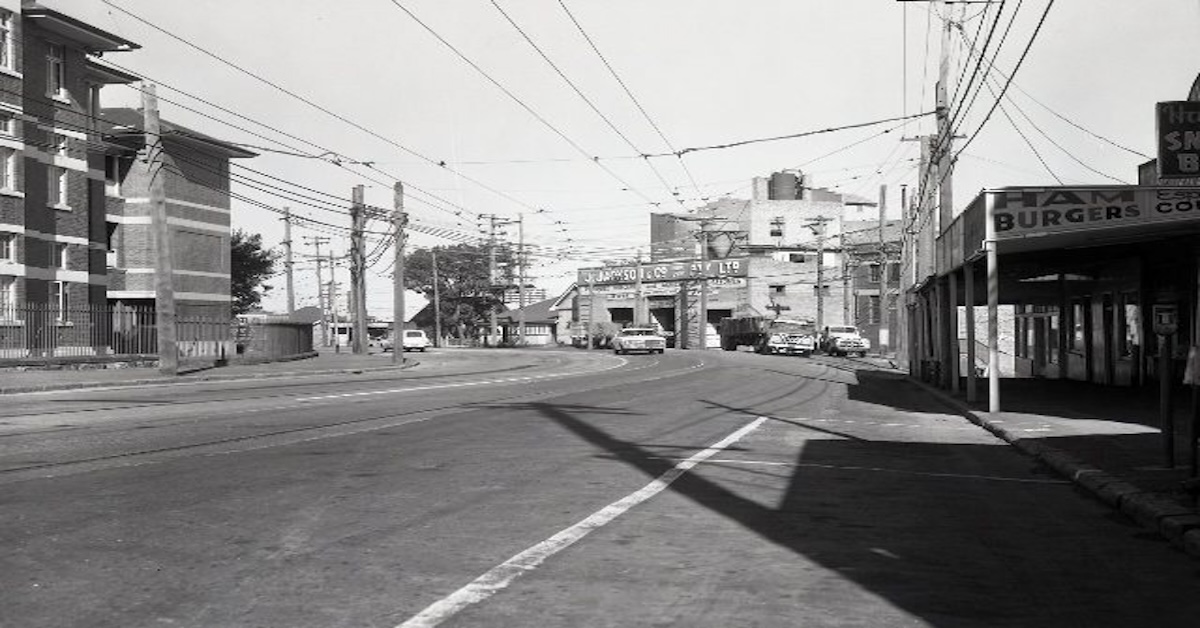
Explore Sexton Street and you will reach the second to the last stop, the Jackson & Co’s Granary. In 1947, a terrible tragedy took place on this site. The use of carbon disulphide in an enclosed building caused a massive explosion and killed four people.
About 500 metres from the Jackson & Co’s Granary takes you to the last point of interest of the Petrie Terrace Heritage Trail. The Police Barracks back in the 1930s is now more popular to the locals as The Barracks, a landmark retail and commercial precinct.
Whilst some of the points of interests are private properties, walking through this trail lets you discover the rich history of Petrie Terrace.
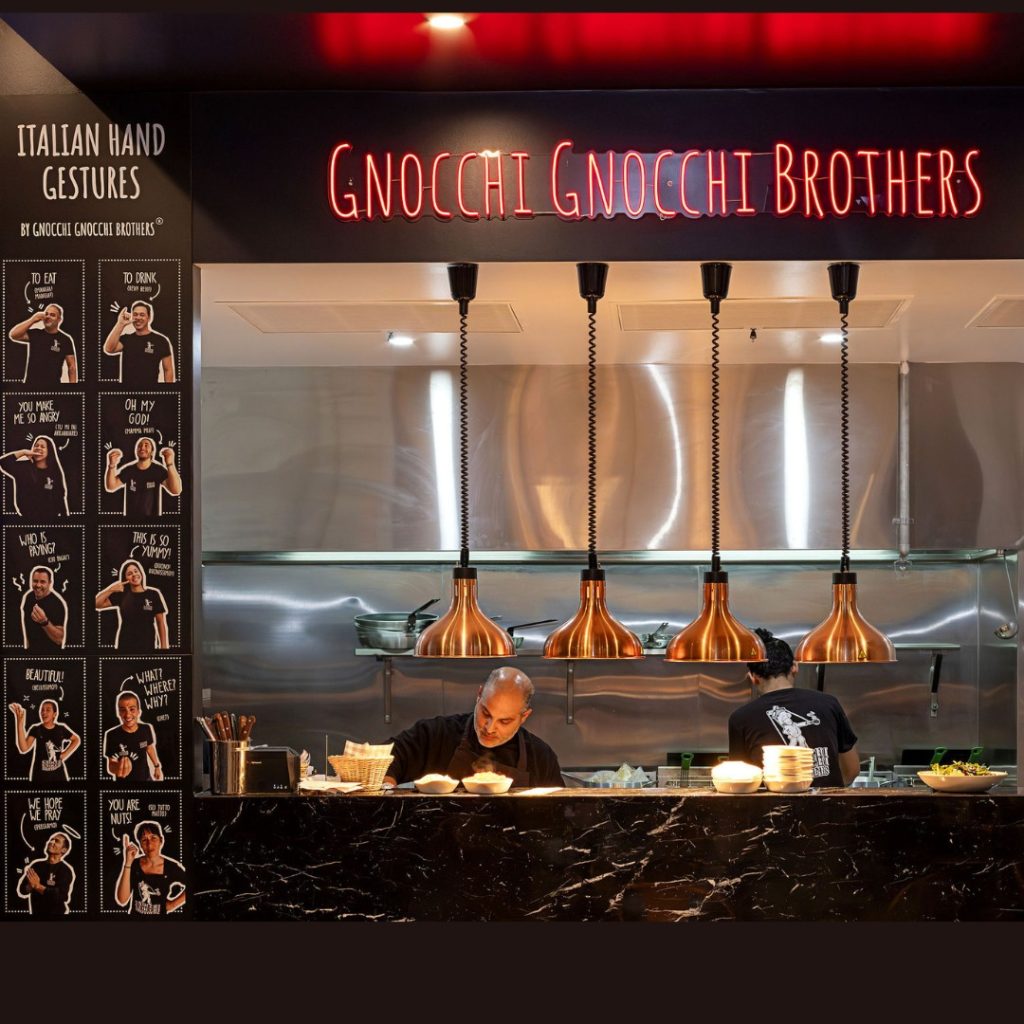
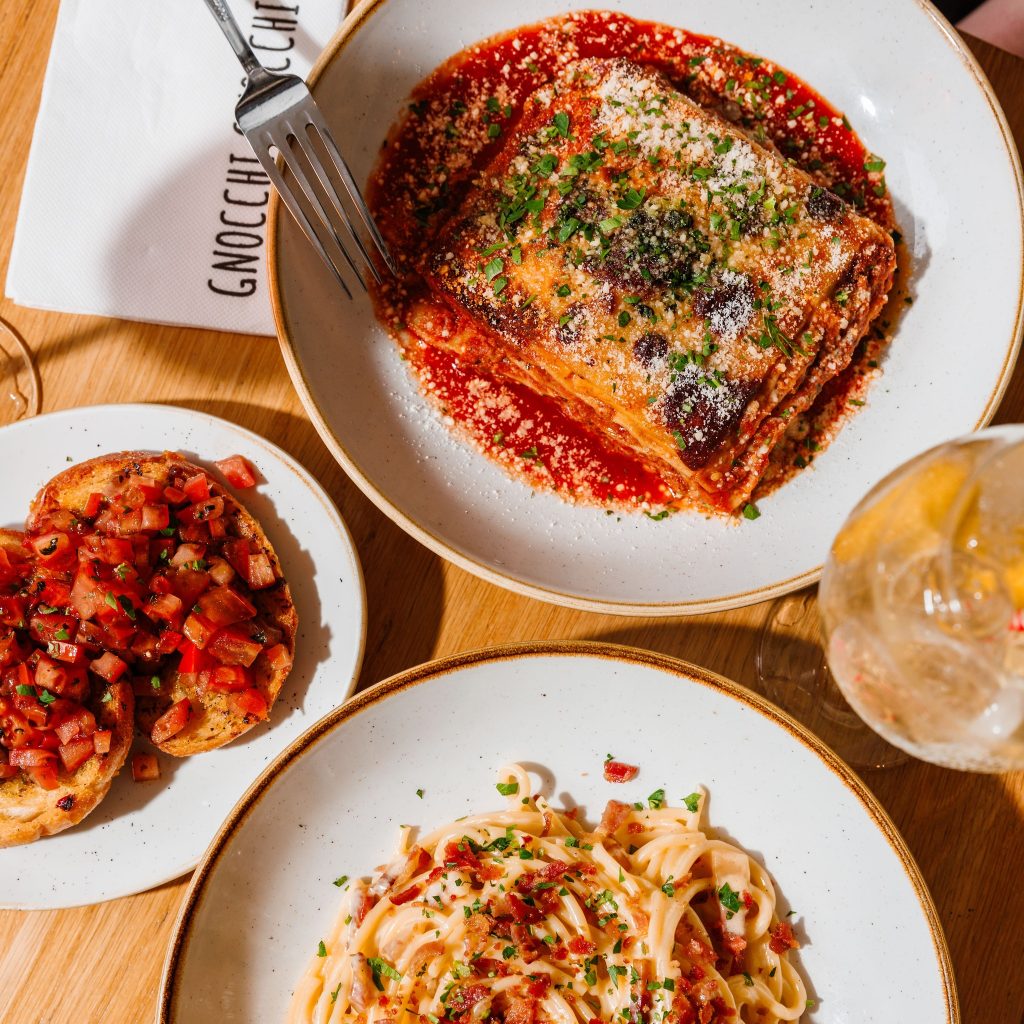
Paddington’s own Gnocchi Gnocchi Brothers has been named a finalist in the 2025 Lord Mayor’s Business Awards, bringing wider recognition to a restaurant that has become a regular choice for many local diners. The eatery is best known for its handmade gnocchi and Italian menu, and it attracts both regulars and visitors from across Brisbane.
Gnocchi Gnocchi Brothers has been shortlisted in the ANZ-sponsored High-Growth category. According to the LMBA category outline, the High-Growth award recognises companies that have scaled significantly — for example through growth in revenue, staff or new markets — while demonstrating sustainable and strategic expansion.
Photo credit: Facebook/Gnocchi Gnocchi Brothers
Being a High-Growth finalist places the Paddington restaurant alongside a group of fast-expanding enterprises from sectors such as retail, technology and hospitality.
A moment for the team
The restaurant itself has shared the news on its social channels, describing the finalist nod as a “true testament” to the journey of its co-founders, Ben and Theo, and the support of their team and customers. The business has framed the recognition as a milestone in its growth and has thanked the local community for its backing.
About the awards
The Lord Mayor’s Business Awards (LMBA) are running in their 20th year and recognise business achievement across Brisbane. This year’s program has shortlisted businesses from a wide range of sectors, and winners will be announced at a gala dinner at Brisbane City Hall on Thursday 6 November 2025. The awards are presented across multiple categories and aim to highlight innovation, growth and community impact in the city.
The 2025 shortlist includes 44 finalists across the awards program. For a small Paddington business, the nomination provides a chance to be seen on a larger stage; the awards organisers note that being a finalist or winner can raise a business’s profile and open new connections.
What it means locally
Photo credit: Facebook/Gnocchi Gnocchi Brothers
For Paddington, the finalist announcement highlights how neighbourhood hospitality can compete for citywide recognition. The LMBA shortlist brings together long-standing local names and emerging innovators; for the restaurant, the nomination is likely to increase interest from diners and business peers alike, regardless of the final result on 6 November.
Whether or not Gnocchi Gnocchi Brothers takes home the trophy, the nomination itself emphasises the role small and growing businesses play in Brisbane’s economy — and gives Paddington one more reason to celebrate a local food business that has quietly increased its footprint across the city.
A shared vision between a brunch expert, a pastry specialist, and a Thai cook has resulted in Paddington Social. In this collaborative new eatery, each of the three chefs can showcase their individual mastery from a single kitchen.
Nestled in a crooked old house just a stone’s throw from Lang Park, Paddington Social is creating a buzz for its novel approach to dining. Instead of blending culinary styles, the establishment celebrates the mastery of three individual chefs. The project is the combined vision of chefs Gibb ‘Gibbi’ Mookachonpan, Tyler Sargent, and Alex Senee.
Together, they have created a warm and relaxed space where the focus is on showcasing their specific talents, offering locals a variety of high-quality dining experiences under one roof. The sparsely decorated environment, with its light woods and navy blue accents, allows the carefully crafted food to take centre stage.
The innovative model means the menu transforms throughout the day. Mornings and lunchtime are curated by Tyler Sargent, who puts a creative spin on comfort food. His menu features lively dishes such as a spicy chorizo scotch egg and a hearty smoked mushroom mac and cheese served on sourdough. For those with a sweet tooth, English-trained pastry chef Gibbi Mookachonpan offers a selection of freshly made cakes and pastries, with her fragrant Pandan croissants becoming a local favourite.
As evening approaches, the space transitions to host Lek’s Thai Popup Kitchen. From Tuesday to Saturday evenings, Alex Senee takes over, presenting a menu filled with the classic sweet, spicy, and sour flavours of Thailand. His offerings include traditional noodles and curries, alongside modern interpretations such as Larb Calamari and Massaman Pork Curry Puffs.
Beyond the diverse food offerings, Paddington Social aims to be a genuine gathering place for the community. Guests can settle in on the verandah or at long indoor tables for a quick coffee or a lingering meal. Encouraging a social atmosphere is a specialised spritz menu, featuring classics like mimosas and peach bellinis. It provides the perfect excuse for locals to turn a simple catch-up into a long, relaxed brunch, cementing the venue’s role as Paddington’s new go-to social spot.




















_with_posters_for_the_play_%22Cosi%22.jpg)